
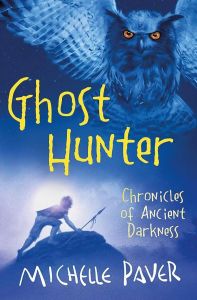
Many years ago, I read a book in Michelle Paver’s The Chronicles of Ancient Darkness which had a being known as a Tokoroth in it. On seeing it mentioned again as a “tokolosh” during a TV documentary, I thought it was time to do a little investigation…
In Zulu and Xhosa mythology, the Tokoloshe is a dwarf-type water spirit. It can be mischievous and often evil, and it gains the power of invisibility by drinking water or from swallowing a stone – however it is usually visible to children, animals, and people with the “sight.”
Other names for the Tokoloshe include tikoloshe, tikolosh, tonkolosh, tonkolosi, tokolotshe, thokolosi, or the hili.
At its least evil, the tokoloshe is used as a cautionary being to scare children into behaving, but at its worst, it can cause illness or even death to its victims.
People protect themselves from these beings by sleeping in beds raised off the ground. Pastors and traditional healers called sangomas are believed to have the power to get rid of them.
Practitioners of harmful magic summon the tokoloshe to do damage to others. They are usually a witch doctor or shaman performing magic to deliver revenge on behalf of a client. In return for the birth of the tokoloshe, the client has to promise the soul of a loved one in exchange, but they cannot choose who that person will be. The tokoloshe is the one who decides what soul to take away.
The shaman finds a dead body for the tokoloshe to inhabit, then penetrates its eye sockets and brain with a hot, iron rod or poker, or even a nail. The rod is believed to prevent the body from thinking for itself.
Then, the shaman sprinkles the corpse with a certain powder that causes it to shrink. After the tokoloshe takes possession of the shrunken body, it is released to cause terror and trouble for its intended victim, claiming the soul of the client’s loved one for weeks, months, or even years.
The phantom Tokoloshe began with folklore tales told by the Bantu people of South Africa. Back then, people kept dying in their rondavels (cone-roofed huts) during the night, and no explanation could be found as to why, so they blamed the deaths on the Tokoloshe, imagined as a short, primate-like man with brown or black hair, whose head reached hip-height, or 3 feet tall. Traditionally, the Bantu people slept on the floor on grass mats surrounding a wood fire, which helped keep them warm in the sub-freezing winter nights on the African inland plateau.
The nocturnal deaths were in fact caused by the fire drawing too much oxygen out of the air, leaving carbon monoxide instead. Carbon monoxide is heavier than air, so it sank to the ground and asphyxiated people in their sleep.
Eventually, the Bantu people realised that those who slept off the ground escaped the tokoloshe. According to legend, you must slot a few bricks under each leg of your bed to keep the tokoloshe away at night.
This being is also believed to bite off the toes of sleeping people (frostbite, perhaps?), move objects, make weird sounds and cold spots, and can leave long scratches on sleepers’ bodies with its long, bony fingers.
The Tokoloshe could be seen as a type of zombie, gremlin, or even a poltergeist. It can wander about, causing harm to schoolchildren. According to the Zulu shaman Credo Mutwa, a tokoloshe can take on many different shapes. It can sometimes appear as a bearish humanoid, or a small, withered, grey being with gouged-out eyes and a hole in its forehead. It can change itself into a cat or a dog or some other innocuous animal so it can sneak into houses.
The tokoloshe has also been described as a goblin-like entity the size of a small child, that can shrink itself to avoid detection. It has a large head disproportionate to its body, long, skinny arms, and short, stumpy legs. It can have a sharp face and pointed ears, sharp teeth or fangs, and bulging, red, or glowing eyes.
The Tokoloshe is fast and ghostly, and has a taste for curdled milk, blood, or ashes. It is still regarded with fear and superstition by South African peoples today, and is believed to sexually assault men and women, beat or choke people while they sleep, and steal things like clothes or livestock. Some folk believe the 3 foot tall being has a 6 foot long penis (!) with which it impregnates young women. Shamans keep the tokoloshe docile by cutting the hair around its eyes.
The only method of destroying a tokoloshe is to find and eliminate the muthi or muti, or remnants of the magic that was done by the shaman – this can be different oils, herbal balms, the body parts of animals, ashes, and blood. This concoction is often buried close to the home of the tokoloshe’s intended target, and is used by the witch or umthakathi to awaken the spiritual forces needed to summon the Tokoloshe.
However, some tales have it that the Tokoloshe is summoned from rivers and ponds, or a calabash full of enchanted water, with incantations spoken over it and charms mixed in. Other stories describe the Tokoloshe as a type of witch’s familiar conjured from thin air or an animal like a cat, baboon, or snake.
Prevention or appeasement of the tokoloshe (aside from raising beds with bricks) involves scattering blessed salts around doorframes and windowsills. Tokoloshe salts are often dyed in various colours. Traditional Zulu healers or izinyanga give herbal medicines and charms, or perform cleansing ceremonies to repel Tokoloshe attacks.
In 2009, there were some cases of female, human-sized tokoloshe who claimed to have the name Livashni. This hasn’t been logically explained yet.
Sources
https://en.wikipedia.org/wiki/Tokoloshe
https://cryptidz.fandom.com/wiki/Tokoloshe
Reddit (r/mythology)
https://astonishinglegends.com/astonishing-legends/2019/2/16/the-tokoloshe
https://oriire.com/article/tokoloshe—fear-witchcraft-and-the-unseen-forces-of-zulu-society
 Nightwalks