AVAILABLE NOW


A Dark Heritage:
The Nighthunter
Logan Bartholom, Nighthunter to the Emperor, wakes with Ghost-induced amnesia in a manor in Little Beddin, Ossyan. All he has from his previous life is a magical sword and a talking dog from Hell. To find his true identity and discover what happened to him, he must go on a dangerous journey to a land where magecraft is still legal, in the company of a child with terrifying powers and his own would-be murderer… who is falling in love with him.
On the way to Thosea they discover a cult which sacrifices people’s souls to a Ghost masquerading as a god. Logan finds out he can travel through time and to different worlds. And they encounter many individuals and beings who are attracted by Cailte’s budding magical powers…
A Dark Heritage is a fantasy / horror novel set in a magical world where prehistoric animals coexist with humans and the Dead return as different species of Ghost.

Hansen Adcock is a writer of short SF stories and novels. His most recent book is A Dark Heritage: The Nighthunter, available from Golden Storyline Books
- I’m Owl About Them Owls
After reading Alan Garner’s “The Owl Service” recently I went on to learn about the Welsh myth of Blodeuwedd. Then I went on a deep-dive into the folklore surrounding owls…
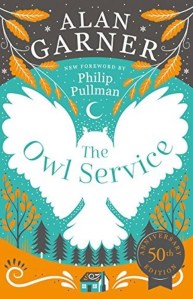
For those that don’t already know, Alan Garner (the author who gave us The Weirdstone of Brisingamen, one of my all-time favourite books) wrote a short novel called The Owl Service, published in 1967. The plot was based on one of the Welsh myths from The Mabinogion, the story of Blodeuwedd (lit. “Flower Face”), a woman made out of flowers by a magician so that his cursed nephew could have a wife.
In the novel, three teenagers are on holiday in Wales – Alison, her stepbrother Roger, and Gwyn, the son of the housekeeper of the house Alison has inherited – and they unwittingly trigger off a repeat of the events in the Welsh myth after they discover a pile of old plates in the attic, which appear to have a floral pattern on them in the shape of owls’ faces and bodies.
The Myth
Arianrhod (goddess of the moon, fertility, fate, and reincarnation) placed a tynged (a fate, curse, taboo, or vow) on one of her sons, Lleu Llaw Gyffes. The tynged was that Lleu would never marry a human woman.
Lleu’s uncle Gwydion, a powerful wizard and brother to Arianrhod, got wind of this and created Lleu a wife by his magic, using the flowers of oak, broom, and meadowsweet. He named her Blodeuwedd.
Blodeuwedd and Lleu were married, but obviously in these kinds of tales nobody bothers to ask the woman what she wants for herself. Blodeuwedd fell head-over-heels for Gronw Pebr, a warrior and hunter from Penllyn.
Blodeuwedd and Gronw plotted to murder Lleu so they could be together at last…
However, Lleu was only vulnerable to death in certain circumstances. He had to have one foot on a bath and one foot on a goat. He then had to be stabbed with a spear — and not just any spear, but one created for a year during Mass.
Blodeuwedd asked Lleu to show her exactly how he’d have to stand for someone to be able to kill him. Lleu had no inkling about his wife’s true motives — he and Blodeuwedd had been happily married so far.
As Lleu stood on the bath and the goat, Gronw appeared from somewhere and threw the requisite spear at him. Lleu escaped by changing into an eagle and flew away.
Blodeuwedd and Gronw lived together for a while after Lleu’s disappearance. But Lleu asked Gwydion to help him get revenge, and he returned and killed Gronw Pebr, making him stand in the same spot that Lleu was stabbed in. Gronw tried to use a large stone in the ground as a shield to hide behind, but Lleu’s spear miraculously passed through the stone and killed Gronw anyway, leaving a hole in the rock.
Gwydion then changed Blodeuwedd into an owl, which meant she was never able to show her face in daylight ever again and all other birds would shun her.
Interestingly, Arianrhod herself is sometimes symbolised by an owl, representing wisdom, though in Welsh tradition the owl is often seen as a bird of ill omen, darkness, and death. Sometimes, if an owl is heard amongst houses, the Welsh believe that an unmarried girl has lost her virginity, and if a pregnant woman hears an owl call, that means her child will be blessed.
In The Owl Service, Alison, Roger, and Gwyn find themselves re-enacting this love triangle, betrayal, and perhaps transformation (the ending was kind of a cliffhanger that could be interpreted either way, in my opinion). Alison was the reincarnation of Blodeuwedd, though I wasn’t exactly sure whether Gwyn was Gronw and Roger was Lleu, or vice versa, or whether they were swapping between the two as the book continued and their characters evolved over time.
Owls were first depicted in cave art 30,000 years ago, drawn upon the rock walls in Chauvet Cave in France.
In ancient cultures, the owl was symbolic of the afterlife and was believed to escort deceased souls to the underworld. It was also a guide or helping spirit according to Siberian and Inuit shamans, who wore owl feathers in their caps or on their collars. The Inuits had a story explaining the features of the owl, where a beautiful girl was transformed into an owl with a long beak, then in her owl guise she took fright at something and flew into the wall of her house, squashing her face and beak flat.
In many Indigenous North American cultures, owls were a connection to the mystical and otherworldly, with the power to bestow good luck on anyone who came across them. They were associated with magic and the supernatural, believed to be able to converse with spirits and the afterlife. Sometimes they were seen as the souls of living or recently deceased people. Some tribes saw owls as incarnations of gods, for example the Hopis thought the Burrowing Owl was the god of the dead.
Some of the Indigenous North Americans also viewed owls as creatures of safety and protection, able to guard the home and ward off evil spirits, and saw them as fierce warriors, allies, and protectors of the people.
Other Indigneous tribes saw owls as harbingers of disease and death. Some tribes referred to dying as “crossing the owl’s bridge.”
For other Indigenous peoples of the Americas, the owl is also associated with their god of death, The Skeleton Man. However the owl does not just symbolise death but also rebirth and regeneration – their Great Goddess has an owl companion too.
The Newuk tribe believed that when a bad person died, he became a Barn Owl, but if a good person died, he became a Great Horned Owl.
A common belief amongst the Zuni tribe was that putting an owl’s feather under a woman while she was in labour would help her deliver a healthy baby, and that placing an owl feather in a baby’s cot would ward off evil spirits.
For more about what the different Indigenous Americans believed about owls, visit https://www.owlpages.com/owls/articles.php?a=62
In Mexico, owls are associated with the underworld because they burrow underground. Hearing an owl’s hoot is believed to predict a death. The Mexican folk saint, Santa Muerte, is sometimes shown with an owl who helps her to find her way in the darkness. In Mexican folklore, La Lechuza, a shape-shifting witch, has the body of an owl and the face of an old woman.
In Guatemala, owls are associated with prosperity and abundance. People there store money in owl-shaped banks rather than piggy-banks.
In Peruvian art, owls carry defeated warriors to the world of the dead and occasionally they personify shamans, whose power to cure supernatural illness is strengthened by the strong vision of the owl.
The Greek goddess of wisdom and intellect, Athena, had a Little Owl as a companion. It sat on her blind side so she was able to see the whole truth. This owl was protected and lived in the Acropolis in large numbers. It was believed a magical “inner light” gave owls their night vision. The ancient Greeks therefore looked upon the owl with reverence and the backs of Athenian coins often had owls engraved on them. The owl’s sharp senses and intelligence mirrored Athena’s, and the bird’s nocturnal life represented the pursuit of knowledge even in dark times. The owl’s hoot was a call to learning.
The Romans thought owls were omens of coming disaster. Hearing an owl call meant there would be an imminent death – it’s said that the deaths of many famous Romans were predicted by an owl’s hoot, e.g. Julius Caesar, Augustus, and Agrippa. Whilst the Greeks thought that seeing an owl meant victory in battle, the Romans saw it as a presentiment of defeat. To them, a dream of an owl was an omen of shipwreck for sailors or of robbery. To prevent the evil “caused” by an owl, the Romans believed the owl should be killed and nailed to the door of an affected house.
Both Greeks and Romans believed that witches shape-shifted into owls to drink the blood of babies. In some other cultures, owls were thought to be the messengers of witches, and their calls heralded the approach of a witch.
In medieval Europe, the owl was a sign of doom, a harbinger of death. It was shown in art and literature as a messenger of the underworld. In Germany and East Europe, if an owl was found in a barn it was a sign of imminent death.
In British folklore, a screeching Barn Owl predicts an incoming storm or cold weather. During a storm, if a Barn Owl is heard, it is a sign the storm is almost over.
Odo of Cheriton, a preacher in Kent in the 12th Century, said the owl is nocturnal because it had stolen the rose – a prize awarded for beauty – and other birds punished it for that by only allowing it to come out at night.
In Malaya, it was thought that owls ate new-born babies, the Swahili people believed they brought sickness to children.
In Arabia, it was said that owls were evil spirits who abducted children in the night. At the same time, they thought that every female owl laid two eggs – one that could make hair fall out, the other egg having the power to restore lost hair.
In Algeria, they believed that if the right eye of an Eagle Owl was put into the hand of a sleeping woman, that woman would tell you the entire truth about whatever you wanted to know.
In Yorkshire, England, owl broth is seen as an old remedy for whooping cough, and the powdered, charred, hard-boiled eggs were meant to improve eyesight.
Until recently, owls were still being nailed to barn gates in the UK to protect barns from lightning strikes and bad luck. Having or carrying around owl feathers, eyeballs, hearts, bones, or even entire owl corpses was supposed to give protection against rabies or epilepsy in the old days, and give qualities such as courage, energy, or wisdom. Healers in medieval Europe would prescribe owls to their clients, including warriors who needed strength, and lovers who wanted to win the affections of someone using magic.
18th and 19th-century UK poets such as Robert Blair and William Wordsworth used the Barn Owl as a “bird of doom” in their writing.
People in those centuries also believed that the screech of an owl flying past the window of a sick person meant they would shortly die.
Alcoholism was treated with owl eggs in old folk remedies. The person who drank a lot of alcohol was prescribed raw owl eggs, and it was also believed that if a young child was given this treatment, it gave them a lifetime of protection against becoming an alcoholic.
In India, food made from owls was thought to have medicinal properties, effective for curing seizures in children (owl’s eye broth) and healing rheumatism (owl’s meat). Eating the eyes of an owl was said to make a person able to see in the dark, whilst owl’s meat was also believed to be an aphrodisiac. There was also a superstition about the number of owl hoots predicting certain events (which has a parallel to seeing numbers of magpies in the UK):
Numbers of Hoots:
1 = impending death
2 = success in imminent venture
3 = a woman will enter the family through marriage
4 = disturbance
5 = imminent travel
6 = guests will arrive
7 = mental distress
8 = sudden death
9 = good luck
Because the owl is able to rotate its head so far, it was believed you could get an owl to wring its own neck by walking in circles around it! (Owls can actually rotate their heads 270 degrees, not 360.)
Another odd belief: it has been suggested that a Barn Owl’s breath might glow in the dark and that, along with its silent flight, could be the reason behind certain sightings of UFOs! Another theory is that the glowing comes from the owl’s body, due to luminous mould or fungi sticking to its plumage.
Some cultures (like the Babylonians and the Romans) tried to augur the future by watching owls’ flight patterns.
In India, the owl is often associated with the goddess of learning (Saraswati) and with Kali (the goddess of death and destruction).
Perhaps over a thousand owls, including the endangered Brown Fish Owl, are killed every year during Diwali by black-magic wizards to try to ward off evil luck and obtain powers. However, owls are associated with the goddess of wealth (Lakshmi) who is the one the celebration is held in honour of. (When Lakshmi travels without Vishnu, she rides upon an owl – her vahan or vehicle – but when she journeys abroad with Vishnu they both ride on the eagle known as Garuda). Black magic and voodoo practitioners make amulets from the bones, beaks, and talons of owls. In some parts of India, wearing owl feathers or talons as talismans are thought to guard against evil or ward off illness.
The owls are also hunted during Diwali because during that festival, Lakshmi is believed to descend to Earth, and the idea is to get rid of the vehicle she would use to depart, thereby trapping her – and the resulting good luck – inside the home. Owls with ear tufts, like the Indian Eagle Owl, are often targeted.
In Russia, hunters used to carry owl claws around with them so their souls could use them to climb up to heaven if they died. The Kalmuks held owls as sacred because one was said to have saved the life of Genghis Khan.
While many cultures believe owls are bad (in Cameroon, it’s only referred to as “the bird that makes you afraid”), other cultures see owls as benevolent. For example, in Babylon, owl amulets were used for protection by pregnant women, the French people of Lorraine think owls can help spinsters find husbands, and in Romania, the souls of repentant sinners are believed to ascend to heaven in the form of Snowy Owls.
In France, owls were also looked upon with much esteem, for example the European Eagle Owl was named Hibou Grand-Duc and the long-eared owl was called Hibou Moyen-Duc. This may have originated from the Middle Ages when nobles below the rank of Duke weren’t allowed to wear plumes of feathers, so the “eared” owls must have the rank of a Duke. However this attitude of reverence changed, as the European Eagle Owl was known as vermin by the French until the late 1960s.
Blakiston’s Fish Owl is one of the most important gods of the Ainu peoples of Hokkaidu, in Japan. They call it kotan kor kamuy, or “god of the village” / “god who defends the village”. Owls are seen as incredibly lucky in Japan, featuring a lot in Japanese art. Japanese people may carry an owl-shaped good luck charm.
In China, a common moniker for owls, (especially “eared” owls) is “cat-eared hawk.” Another Chinese name for the owl is xiao. These owls have a legend attached to them – the story being that they were evil birds which consumed their own mothers. The Chinese character representing xiao is utilised in expressions to do with bravery but also ferocity. In China, the owl was also the bird of a storm god.
The hooting of an owl is hu in Chinese, which means “digging”. In China, hearing the owl hoot is a sign to begin digging a grave. Owls here are believed to have powers, such as the ability to steal your soul. If an owl is seen near a house in China, they burn dried bushes to scare it away.
In Poland, it was said that girls who died with no husbands changed into doves, and those who died as wives changed into owls. It was also believed that owls didn’t emerge in daylight because they were too beautiful and prone to being mobbed by other birds out of jealousy.
In Etruscan culture owls were associated with their god of darkness.
In Slavic mythology, the owl was one form assumed by Strzyga, a female vampiric demon who flew through forests and attacked unsuspecting travellers. She was said to relish blood and entrails.
The Mayan god of darkness, Ah Puch, was sometimes depicted with an owl’s head.
Some African tribes saw owls as the messengers of witches and wizards (hello, Harry Potter?) and the ancient Egyptians described them guiding souls to the afterlife in their Book of the Dead. In South Africa, many believe when an owl lands on the roof of a house or building and hoots, it has been sent by a sangoma (witch doctor) to deliver a terrible curse.
There are still superstitions about owls in parts of North America, for example in the Ozark Mountains, the sound of a screech owl can signify illness or approaching death. Children are warned never to imitate the owl’s call for fear that the owl will keep returning to the house, or even descend the chimney into the house and scatter the fire onto the floor, thereby burning the house down!
In New Hampshire, big owls were unlucky and meant death, but small owls such as screech owls were lucky and were thought to bring presents.
More information about species of owls and the legends associated with them:
Sources / Further Reading:
http://www.pauldfrost.co.uk/intro_o2.html
https://katescorner.co.uk/what-does-the-owl-symbolise/
https://www.pugdundeesafaris.com/blog/myths-about-owls/
https://www.houseofgoodfortune.org/bonheur-blog/owls-good-or-bad-luck
- All That Remains of Ghost Towns
The book I’m currently rewriting contains a shanty town that plays an important role in the story, so let’s take a look at some ghost towns…
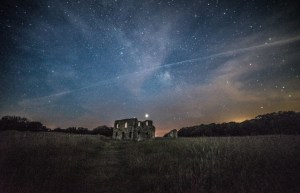
image by Whitechappel79 (Pixabay.com) Britain’s Atlantis
It’s real name is Dunwich, in Suffolk, England. This was a busy port in medieval times and it was the capital of East Anglia (or the Kingdom of the Eastern Angles) in Anglo-Saxon times.
It also contained large churches and monasteries and was a hub for religious activity. The town grew prosperous through ship-building and trade and had a good fishing fleet.
Violent storms have destroyed much of Dunwich and some of it has been submerged by the North Sea. All that remains is a ruined 13th century Franciscan friary on a cliff-edge, the chapel of a medieval leper hospital, a tiny village consisting of 120 people, and a museum about the town’s history.
The name “Dunwich” may have been taken from here by H.P. Lovecraft for the fictional town of the same name near Massachussetts in his cosmic horror story “The Dunwich Horror.”
Boreraig, Isle of Skye (Scotland)
The residents of Boreraig were forced to leave by rich landowners in the 1850s so their sheep had extra room to graze. This was a widespread thing known as the Highland Clearances. Some of them even burned the roofs of the cottages to make sure the villagers wouldn’t return.
The farmland near Boreraig was abandoned in the 20th century. Now all that remains are a few collapsed stone houses, weathered and worn, forming part of a popular hiking route. There is a church topped with grass, and piles of grey rock chipped from the old Marble Quarry.
Tyneham, Dorset (England)
Known as “Dorset’s lost village,” this abandoned place is so well-preserved it appears to have frozen in time. In December 1943, it was acquired by the army for training purposes in World War II, and the original residents were only given a month to vacate the area.
It was supposed to be a temporary evacuation, but the army made a mandatory purchase order after the war, which meant the villagers were never allowed to come back.
It is still being used by the army, but parts of it are open to the public on holidays and weekends. There are roofless stone cottages full of daily objects left behind and plants growing wild, an old phonebox, and an empty school that has intact workbooks in it. Postcards are dotted about all over the village with stories of the former residents written on their backs.
Hallsands, Devon (England)
This tiny fishing village on the South Devon coast was attacked by a ferocious storm on January the 26th, 1917. Waves and high winds poured across the coast, flooding buildings and submerging them in freezing cold water.
By midnight, four houses were entirely gone. The inhabitants packed their bags and evacuated to the nearby cliffs.
In 24 hours, 29 houses were obliterated, along with the careers and belongings of all the villagers.
Before World War I, vast amounts of shingle had been removed from the coast nearby to enlarge Plymouth Docks, and that shingle had been protecting Hallsands from the water.
Bits of some houses and the old chapel still exist, but visitors have to see the village from a viewing platform at a distance — erosion has made it too dangerous to physically set foot there!
Hirta, St Kilda (Scotland)
St Kilda is a volcanic archipelago off the Western coast of the Outer Hebrides. There are four islands – Hirta, Soay, Borerary, and Dun. Hirta is the biggest.
Between 4000 and 5000 years ago, Hirta was settled by its first humans who made a self-sufficient civilisation. The other three islands didn’t have anyone living on them. Needless to say life on the island was difficult, and its last inhabitants left for the mainland in the 1930s.
Fragments of the settlement can still be seen, along with a huge colony of Atlantic puffins! In 1986 it became a dual UNESCO World Heritage site.
Wharram Percy, East Yorkshire (England)
This is one of the biggest and well-preserved medieval villages in Britain, located in a valley in the Yorkshire Wolds.
It may have been founded in the 9th or 10th centuries and was recorded in the Domesday Book under the name “Warran.” It had its heyday from the 12th to the 14th century.
A noble family named “Percy” owned the land and also lived there. Wharram Percy was occupied for six centuries then abandoned in 1500 — the last few families were kicked out to make space for sheep-grazing.
The only medieval building left is a ruined church, along with the foundations of two manor houses and about forty peasant homes with outbuildings, somewhat visible but reclaimed by grass.
Since 1948, Wharram Percy has been heavily researched, and is the most famous abandoned medieval village in Europe.
Imber, Wiltshire (England)
Imber on Salisbury Plain was also taken over by the military.
In 1943, the MoD evacuated Imber’s community, giving them forty-seven days’ notice to get out and make way for a training ground for American soldiers.
After the army bought the village and its environs, Salisbury Plain became the biggest military training ground in the United Kingdom.
The situation was supposed to be temporary but after the war ended, the villagers were not allowed to go back and Imber was permanently taken over by the army.
Today, the village is a shell of its old self, though its empty buildings are still used for military training. The village is mostly closed, but sometimes opens to the public on certain days of the year.
Tide Mills, East Sussex (England)
This used to be a cornmill village hundreds of years ago, founded in the 1760s after the Duke of Newcastle allowed three West Sussex corn merchants to build a tidal mill and a dam, then the village expanded around it. The mill was in business for over 100 years and closed in 1883.
Because of bad living conditions, Tide Mills was condemned in 1937, and anyone who still refused to leave it was forcibly evicted.
It was empty by 1940, and not much of it is left now apart from a few house foundations, flint walls, and three arches under the mill. Nature has taken it back into her embrace, plants covering most of the stones and birds nesting in the fields close by.
Samson, Isles of Scilly (England)
Samson is the biggest uninhabited island in the Scilly Isles. It’s named after Saint Samson of Dol, one of the people who are said to have founded the Kingdom of Brittany. He visited the islands in the 6th century.
Samson was lived in by farmers and fishermen until 1855, when Augustus Smith, (the Lord Proprietor of the islands) decided to move the small and starving population to other islands.
Samson contains more prehistoric sites per acre than any of the other islands. Multiple ruins dot the landscape – old burial grounds, roundhouses, 19th-century cottages, graves.
Samson has also been part of a Site of Special Scientific Interest ever since 1971 because it has biological characteristics that make it worth studying – especially the colonies of seabirds that are now its current residents.
Hallaig, Isle of Raasay (Scotland)
Another village that fell foul of the Highland Clearances. Situated on the Isle of Raasay, this was a lively and friendly community until the 1850s, when the population was evicted so the land could be utilised for sheep-farming.
The village became famous after the Gaelic poet Sorley MacLean (or Somhairle MacGill-Eain) penned Hallaig, a poem inspired by it – some of his relatives had been affected by the mass eviction. It was MacLean’s best-known poem and he’s now thought of as one of the great Scottish poets from the 20th century.
‘Tha tìm, am fiadh, an coille Hallaig’
Tha bùird is tàirnean air an uinneig
trom faca mi an Àird an Iar
’s tha mo ghaol aig Allt Hallaig
’na craoibh bheithe, ’s bha i riamheadar an t-Inbhir ’s Poll a’ Bhainne,
thall ’s a-bhos mu Bhaile Chùirn:
tha i ’na beithe, ’na calltainn,
’na caorann dhìrich sheang ùir.Ann an Sgreapadal mo chinnidh,
far robh Tarmad ’s Eachann Mòr,
tha ’n nigheanan ’s am mic ’nan coille
a’ gabhail suas ri taobh an lòin.Uaibhreach a-nochd na coilich ghiuthais
a’ gairm air mullach Cnoc an Rà,
dìreach an druim ris a’ ghealaich –
chan iadsan coille mo ghràidh.Fuirichidh mi ris a’ bheithe
gus an tig i mach an Càrn,
gus am bi am bearradh uile
o Bheinn na Lice fa sgàil.Mura tig ’s ann theàrnas mi a Hallaig
a dh’ionnsaigh Sàbaid nam marbh,
far a bheil an sluagh a’ tathaich,
gach aon ghinealach a dh’fhalbh.Tha iad fhathast ann a Hallaig,
Clann Ghill-Eain ’s Clann MhicLeòid,
na bh’ ann ri linn Mhic Ghille Chaluim:
chunnacas na mairbh beò.Na fir ’nan laighe air an lèanaig
aig ceann gach taighe a bh’ ann,
na h-igheanan ’nan coille bheithe,
dìreach an druim, crom an ceann.Eadar an Leac is na Feàrnaibh
tha ’n rathad mòr fo chòinnich chiùin,
’s na h-igheanan ’nam badan sàmhach
a’ dol a Clachan mar o thùs.Agus a’ tilleadh às a’ Chlachan,
à Suidhisnis ’s à tir nam beò;
a chuile tè òg uallach
gun bhristeadh cridhe an sgeòil.O Allt na Feàrnaibh gus an fhaoilinn
tha soilleir an dìomhaireachd nam beann
chan eil ach coitheanal nan nighean
a’ cumail na coiseachd gun cheann.A’ tilleadh a Hallaig anns an fheasgar,
anns a’ chamhanaich bhalbh bheò,
a’ lìonadh nan leathadan casa,
an gàireachdaich ’nam chluais ’na ceò,’s am bòidhche ’na sgleò air mo chridhe
mun tig an ciaradh air na caoil,
’s nuair theàrnas grian air cùl Dhùn Cana
thig peilear dian à gunna Ghaoil;’s buailear am fiadh a tha ’na thuaineal
a’ snòtach nan làraichean feòir;
thig reothadh air a shùil sa choille:
chan fhaighear lorg air fhuil rim bheò.Translation:
‘Time, the deer, is in the wood of Hallaig’
The window is nailed and boarded
through which I saw the West
and my love is at the Burn of Hallaig,
a birch tree, and she has always beenbetween Inver and Milk Hollow,
here and there about Baile-chuirn:
she is a birch, a hazel,
a straight, slender young rowan.In Screapadal of my people
where Norman and Big Hector were,
their daughters and their sons are a wood
going up beside the stream.Proud tonight the pine cocks
crowing on the top of Cnoc an Ra,
straight their backs in the moonlight –
they are not the wood I love.I will wait for the birch wood
until it comes up by the cairn,
until the whole ridge from Beinn na Lice
will be under its shade.If it does not, I will go down to Hallaig,
to the Sabbath of the dead,
where the people are frequenting,
every single generation gone.They are still in Hallaig,
MacLeans and MacLeods,
all who were there in the time of Mac Gille Chaluim:
the dead have been seen alive.The men lying on the green
at the end of every house that was,
the girls a wood of birches,
straight their backs, bent their heads.Between the Leac and Fearns
the road is under mild moss
and the girls in silent bands
go to Clachan as in the beginning,and return from Clachan,
from Suisnish and the land of the living;
each one young and light-stepping,
without the heartbreak of the tale.From the Burn of Fearns to the raised beach
that is clear in the mystery of the hills,
there is only the congregation of the girls
keeping up the endless walk,coming back to Hallaig in the evening,
in the dumb living twilight,
filling the steep slopes,
their laughter a mist in my ears,and their beauty a film on my heart
before the dimness comes on the kyles,
and when the sun goes down behind Dun Cana
a vehement bullet will come from the gun of Love;and will strike the deer that goes dizzily,
sniffing at the grass-grown ruined homes;
his eye will freeze in the wood,
his blood will not be traced while I live.
Cwmorthin, Gwynedd (Wales)
This old mining village in a valley in Gwynedd saw a lot of action in the 19th-century slate rush.
Cwmorthin held many working-class families who joined the farmers that already resided in the area for many years. It’s reckoned that some kind of community has been here since the 11th century.
After the slate industry declined by the 1940s, the Victorian town was deserted. All that remains now are some decrepit cottages, old quarry buildings, and a farmhouse. The place overlooks a nice lake, and the surroundings make it look so mystical its popular with hikers.
Mardale Green, Cumbria (England)
In August 1935, Mardale Church held one last service before the inhabitants of Mardale Green had to pack their belongings and leave for ever.
The church was demolished shortly after, the bodies in the graveyard dug up and reinterred elsewhere, along with the houses, farm buildings, and the village pub.
The remains of Mardale Green were then flooded – deliberately. It was all part of a plan to get water to nearby cities using the Haweswater Reservoir.
At the time of writing this, the remnants of the destroyed village resurface every few years whenever the water levels in the reservoir become low – usually because of drought or whenever water is in higher demand. When that occurs, ruins of the old church, the demarcations of streets and houses, and a 17th-century bridge can all be seen. That must be quite a surreal sight.
The shanty town in the second book of The Nighthunter series has a shanty town in it (not exactly a ghost town, but it is surrounded by ghosts). It’s name is Coven, and you can find out more about it here.
- The Crow King and the Tengu
Whilst I was halfway through writing a book of short stories (still a work in progress) about a particular character, “The Crow King” – a sort of minor bird-god – I found out about the Tengu, and noticed a bizarre and uncanny resemblance. I thought I’d share my findings and how this serendipity occurred here.
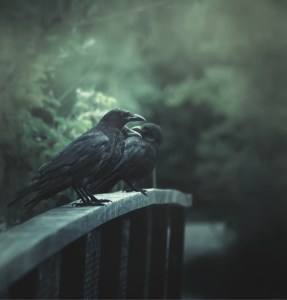
image by Sponchia on pixabay.com Back in 2011 or 2012, I suffered an odd dream. During childhood and adolescence I was often having crazy and detailed dreams (possibly to do with sleep paralysis, but that’s something I’ll do a post about later) and since the age of 13 I kept lengthy records of what I dreamt. This encouraged more deranged nightly adventures that were even more vivid, until it got to the point where not only was I dreaming from the viewpoint of different animal species and genders, or people of a different age or culture to me (sometimes from multiple viewpoints simultaneously), or having long dreams set in the past or far into the future, but I was having dreams which did odd constricting and expanding things to time. For example, I would dream something that seemed to take place over the course of three hours, when I’d only been asleep for a few minutes.
Anyway… the odd dream I had in 2011 or 2012 was the most lovely yet sad, disturbing, and disorientating one yet. The events of the dream took place over 3 days and 3 nights, although I was only asleep in reality for one night (and spent the rest of the week wondering why it wasn’t three days later).
In this squashed-time dream, I was an older man who could transform himself into a crow who still kept his human mind and memories whilst in that other shape. I had left a race of people similar to me who were suffering from a fatal, contagious, incurable disease, and the purpose of my journey was to find the cure. I was in a town I didn’t recognise as anything like anywhere I’d been in real life, but it was like London crossed with Berlin and close to the sea.
An elderly wizard was trying to help me. He approached me in a cafe and somehow stopped time so everyone around us froze in place. He said to find the cure to my people’s illness, I had to fly to the Moon and carry the cure all the way back to my people in my beak without swallowing or dropping it. He gave me a (rather troublesome) fairy to act as my guide, and together we worked out that to reach the Moon I had to wait for its light to paint a pathway on the surface of the ocean during the small hours of night, then follow that path.
(I never actually reached the Moon, because I got sidetracked rescuing someone who was being threatened by a group of men on the roof of a block of flats. I told the men to “get in that bin” and they were so afraid of me they jumped into a nearby skip, which meant I woke myself up laughing.)
However, traces of the character I had just been stayed with me for years afterwards and I knew I had to write his story, so that’s what I’m in the process of doing (as well as juggling other writing projects).
Fast-forward to 2025. I started watching anime series on Netflix and one caught my eye: “Witchwatch.” It was funny, suspenseful, amazing, with a cast of unhinged characters I quickly grew to care about:
One of the characters (Kanshi Kazamatsuri) appeared to have control over, and an affinity with, crows. Though he (like the other characters) was human-looking, he was in fact a “tengu.” What was even weirder was his ability to control the winds, because a few years before this I’d made the decision to make my crow-sorceror protagonist the child of a Wind Goddess.
It looked like the universe was waving a flag at me by this stage, so I started to do some research into what exactly a tengu was.
Tengus
Tengus are a form of yokai (supernatural beings) or kami (gods or spirits) in Japanese folklore. They are mischievous and bird-like, though the word “tengu” means “Heavenly / Celestial Dog.”
Tengu used to be believed to take the shape of birds of prey and were often shown with avian, monkey, and human characteristics. They often had a red face and a long nose.
In Buddhism, tengu were seen as evil demons and omens of war, but over the years their image became less harsh, and now they are seen as protective spirits of mountains and forests (though still dangerous).
Early images of tengu showed them as kite-like creatures who could take on the shape of humans with wings, avian heads or beaks (this detail is very similar to what I dreamt). The beak was most likely humanised into a long nose sometime in the 14th century.
Tengu are often shown holding a magical feather-fan with which they can either grow or shrink people’s noses (oo-er) or control the winds.
The term “tengu” may have originated from a Chinese folkloric demon called the tiangou, a canine man-eating monster that resembled a comet. The tiangou was said to make a sound like thunder and cause war wherever it landed. One story from 1791 described the tiangou as having an upright stance and a sharp beak, which is interesting.
The first mention of a tengu in Japan was in a story from 720AD, in which a comet appeared and the Buddhist priest Bin identified it as a “Celestial dog, the sound of whose barking is like thunder.” This comet preceded a war. The Chinese letters for tengu were used in this story, but followed by the phonetic letters for “heavenly fox” (amatsukisune). Perhaps this tengu was a mixture of the tiangou and the fox spirits known as huli jing, before the meaning of the word expanded to include local Japanese kami (and therefore the “true” appearance of the tengu).
Some scholars have speculated that the tengu’s image comes from the Hindu god Garuda, who was also a race of non-human beings in Buddhist scripture. The garuda are also humanoid with wings and bird-beaks. The tengu may be derived from an ancient Shinto bird-demon which was blended with the tiangou and the garuda when Buddhism arrived in Japan – though there hasn’t been much evidence to prove this.
In a collection of old Buddhist stories (from about 794 – 1185, or the Heian period), tengu were angry trickster spirits who would mislead people with false images of the Buddha, abduct monks and leave them stranded in remote areas, possess women and try to seduce holy men using their bodies, rob temples, and give those who worshipped them unspeakable powers. Their actual form was like a kite’s, but they usually disguised themselves as priests or nuns.
In the 12th and 13th centuries, tengu became the ghosts of angry or heretical priests who had fallen into the tengu-realm or tengudo. They would possess people (often women and girls) and speak through their mouths. They started to target the royal family – an Empress was possessed, and an Emperor was made blind by a tengu. One nefarious tengu was even the ghost of an Emperor!
Stories from the 13th century had tengus abducting boys as well as priests – the boys were often released, but the priests would be found tied to the tops of high places like trees, and all the victims would come back close to death or close to insanity, sometimes having been fooled into eating animal faeces.
Between 1185 and 1333, tengu had been sorted into two classes, “daitengu” or greater tengu, who had been knowledgeable men in life, and “kotengu” who were ignorant. There was a list of the names of the most well-known daitengu by this point, and daitengu were more human-looking but with long noses, while the kotengu were more bird-like. The kotengu were sometimes called karasu-tengu or Crow Tengu. (Hmm…)
(There are other creatures who don’t fit the bird-image which are also called tengu – for example, the river tengu who is believed to make strange fireballs and annoy fishermen in the Greater Tokyo area.)
As time went on, tengu were seen as either good or bad, though it was believed the good tengu were under the command of the bad ones. The good ones had become demons through lesser sins like pride or ambition, but were still basically the same law-abiding people they had been in life.
From the 14th century onwards, tengu were held to possess a lot of knowledge about combat and martial arts skills.
In the 17th century, the tengu became gentler, sometimes seen as protecting or blessing Buddhist institutions rather than setting them on fire. One tale from the 18th century had a tengu taking on the form of a yamabushi (a Japanese mountain ascetic) and serving the abbot of a Zen monastery until the abbot guessed he wasn’t human.
In the 18th and 19th centuries, tengu became known as the dangerous protectors of certain forests. Some people in Japan believe that tengu detest mackarel, and have used this fish as an amulet to protect themselves from a tengu haunting or kidnapping them.
Tengu are worshipped as good kami (gods or spirits) in certain regions of Japan. One of the main deities is Izuna Shugen, which is also associated with fox sorcery, interestingly enough (I love foxes!)
Japanese mythology is incredibly complex and fascinating and I know I have barely scratched the surface here. To read more about the history and origins of the tengu and about books that mention them, and some summaries of folktales about them, you can visit this page:
https://en.wikipedia.org/wiki/Tengu
I sense I will be doing a deeper dive into kami and yokai in my spare time over the next few months. If you have recommendations for books about them, please let me know in the comments!
You can also reach Hansen at hansentorauthor@gmail.com
 Nightwalks