AVAILABLE NOW


A Dark Heritage:
The Nighthunter
Logan Bartholom, Nighthunter to the Emperor, wakes with Ghost-induced amnesia in a manor in Little Beddin, Ossyan. All he has from his previous life is a magical sword and a talking dog from Hell. To find his true identity and discover what happened to him, he must go on a dangerous journey to a land where magecraft is still legal, in the company of a child with terrifying powers and his own would-be murderer… who is falling in love with him.
On the way to Thosea they discover a cult which sacrifices people’s souls to a Ghost masquerading as a god. Logan finds out he can travel through time and to different worlds. And they encounter many individuals and beings who are attracted by Cailte’s budding magical powers…
A Dark Heritage is a fantasy / horror novel set in a magical world where prehistoric animals coexist with humans and the Dead return as different species of Ghost.

Hansen Adcock is a writer of short SF stories and novels. His most recent book is A Dark Heritage: The Nighthunter, available from Golden Storyline Books

- Chambers of Bone
There is a bizarre underground crypt, or chapel complex, in Rome where thousands of skulls and other skeletal parts have been arranged in various ways, studding the walls and ceilings, since 1631.
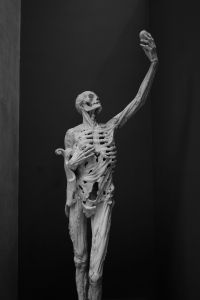
Image by Valentin Ciccarone on Unsplash.com
This warren of chapels lies beneath the church of Santa Maria della Concezione dei Cappuccini on the Via Vittorio Veneto, near Piazza Barberini. The bones are from 3700 bodies that are thought to have been Capuchin friars buried by the Order. It is believed that during the Terror of France hundreds of years ago, the Capuchin monks brought 300 carts of dead friars to the church from their old monastery, fleeing from the guillotine and having to renounce their faith.
Friar Michael of Bergamo was in charge of the bones’ arrangement in the crypt, and the soil was imported from Palestine or perhaps Jerusalem at the behest of Pope Urban VIII.
As the monks died, the longest-buried monks would be exhumed to create space for the newly deceased ones. The exhumed bones were added to the decorations in the crypt. Bodies usually decomposed in the soil for thirty years before their exhumation, and they were buried without coffins.
The crypt is a corridor about thirty metres long with six rooms branching off of it, five of which contain displays of bones from friars who passed away between 1528 and 1870. The corridor is decorated with triangles of jawbones and a rosette of shoulder bones, with a chandelier hanging from an eight-pointed star.
- The Crypt of the Resurrection. This has a picture of Jesus raising Lazarus from the dead at the far end, framed by various parts of skeletons. The room is decorated with skulls, femurs, and tibiae in triangular arcosolia that contain two Capuchins. The vault is patterned with rosettes of sacral bones, vertebrae frames, and arches of ribs. Seven monks are buried in the floor. The corridor wall has hearts and crowned coats of arms, with a skull erupting from basins.
- The Mass Chapel. This one has no bones in it, and is used to celebrate Mass for the Dead. In the altar-piece (painted by Jan Francois Courtois), Jesus and Mary are asking St Felix of Cantalice, St Francis of Assisi, and St Anthony of Padua to release souls from Purgatory. There is a plaque with the acronym “DOM” (Deo optimo maximo, or “To God, the best and greatest”) which was once used to refer to the Roman god Jupiter but was later adopted by Christians. The plaque on the left wall contains the actual heart of Maria Felice Peretti (1656), the grand-niece of Pope Sixtus V and a supporter of the Order. The room also contains the tomb of the papal Zouaves, who died defending papal states at the Battle of Porta Pia. Giuseppe Matteo Orsini (1660) is buried inside the right wall.
- Crypt of the Skulls. Here, Capuchins lie or stand in niches decorated with bones and skulls. The back wall is decorated with a winged hourglass, denoting the passing of Time. The vault is studded with stripes of fibulae and shoulderblades and showcases a central sphere decorated with flowers and ribs. Crosses upon the ground mark the graves of seven Capuchins.
- Crypt of the Pelvises / Crypt of the Basins. The side walls hold Capuchins reclining under arcosolia, and the back wall features more bones and skulls. There are three Capuchins in niches, the middle one under a canopy adorned with bones and vertebrae, skulls and rosettes. The vault is studded with bands of pelvises, vertebrae, and long bones, ending in eight-pointed stars. The rosette in the centre is made of vertebrae and shoulderblades. There are lateral crosses symbolising the instruments of Jesus’s Passion, and they mark the burial of seven Capuchins.
- Crypt of the Tibiae and Femurs. The side walls have niches holding statues of Capuchins, including Friar Antonio de Canton and Father Raimondo da Olot, who translated the biography of St Francis into Arabic. Bones and skulls decorate the arches and capitals. The back wall and vault have many bones in floral patterns and crosses made from vertebrae. There is a huge candelabra and a splay decorated with a sacrum and a winged skull.
- Crypt of the Three Skeletons. This contains three young skeletons. The middle skeleton (which is likely to be a Barberini princess) is enveloped by an oval, a symbol of life coming into birth. Her right hand holds a scythe, the symbol of death, and her left hand holds some scales, symbolising the good and evil actions weighed when a human soul is judged. The room is decorated with bones in intricate floral patterns. A placard written in five languages says “What you are now, we used to be; what we are now, you will be.”
The displays of bones aren’t supposed to be macabre, but a quiet reminder of the speedy passing of life on Earth and human mortality.
The Marquis de Sade visited the crypts in 1775. Nathaniel Hawthorne described the place’s grotesque nature in his 1860 novel, The Marble Faun.
After 1851, the crypt was only open to the public – for a fee – for the seven days after All Souls’ Day.
Nowadays, the Capuchin crypt museum is open to the public every day apart from Easter, November the 2nd, and the Christmas and New Years’ days.
Sources
La cripta dei Cappuccini
- OK Punk Writer, Make My Day
What is punk writing? Punk genres use the technology of a certain time and take that usage to fantasy extremes. You could say there is a punk genre for every decade of the 20th century. Cyberpunk came first, then Steampunk, and the other genres blossomed from those two branches. Traditionally, punk genres were also about rebellion and social isolation, but that isn’t always the case nowadays. Here is a list of punk genres.
Image by LOGAN WEAVER on Unsplash.com
Aetherpunk (or magicpunk, etc) :- This tends to be used alongside another genre – such as steampunk – and its technology is based on magic.
Apunkalypse :- The name for many connected punk genres, all set in a post-apocalyptic world.
Anthropunk (or Furpunk) :- This is a relatively new one, where biotechnology has fused humans and animals to make real-life furries. It’s popular in Ao3 furry writing communities.
Atompunk :- Examples of this are Futurama and The Incredibles. This genre focuses on things like the nuclear revolution and the space race, taking place in the context of the Civil Rights movement and the Vietnam War. This was a time when technology was progressing fast and society was struggling to adapt to the changes.
Biopunk :- similar to Cyberpunk. This involves biological hacking, gene modification and body enhancement. Think genetic tracking, cloning, and designer babies. Unlike cyberpunk, this looks at the idea of humans vs. post-humans.
Bronzepunk (or Sandalpunk) :- This deals with retrofuturistic civilisations based on technology from the times of Aristotle and Plato, and is sometimes combined with aetherpunk. Think columns, Spartans, and sandals. Inspired by the architecture of the Athenians and the Antikythera mechanism, and the fact that the Romans invented the idea of steam engines (but hadn’t a clue what to do with them, in reality). Examples: Disney’s Atlantis movie, Gods of Egypt.
Capepunk :- set in worlds where superheroes are real.
Castlepunk (or Middlepunk) :- set in the Middle Ages and uses the technology from that time.
Cattlepunk :- like Steampunk, but in the American Wild West. Think Cowboys & Aliens, or the Doctor Who episode ‘A Town Called Mercy.’
Clockpunk :- like pre-steampunk. Everything runs on clockwork, often with an 18th century thing about it inspired by the Georgians and the court of Versailles. Some mechanisms in clockpunk are possible in theory, but wouldn’t be efficient in real life. An example of clockpunk might be ‘The Girl in the Fireplace’ episode of Doctor Who, or the movie Hugo.
Cyberpunk :- one of the oldest punk genres, looking at the close future and rapid technological changes. It often includes dystopias and governments using technology to invade and control people’s lives. The main characters are often alienated from this grim society. The vibe is dark, cynical, and industrial. Think Blade Runner and The Matrix. Cyberpunk originated in the New Wave sci-fi of the 1960s, with authors like Samuel R. Delaney, Harlan Ellison, Philip K. Dick, and J. G. Ballard. John Brunner’s 1975 novel The Shockwave Rider may have been the first Cyberpunk book, though the word cyberpunk wasn’t invented until Bruce Bethke used it in a short story in Amazing Stories in 1983. Gardner Dozois, the editor of Isaac Asimov’s Science Fiction Magazine, jumped on the word and described the genre as “bizarre, hard-edged, high-tech stuff.” William Gibson’s Neuromancer was released that year.
Deiselpunk :- This takes both World Wars and the span of time between them and takes the technology and aesthetic of that era to another level.
Decopunk :- a subgenre of Deiselpunk, only this one concentrates more on Art Deco style and has more of an optimistic outlook.
Desertpunk :- This concerns the use of technology in very harsh desert settings, usually in a post-apocalyptic time. There may be social struggles, warlords, gangs, and a grungy aesthetic. A good example of desertpunk is the Mad Max film.
Dreadpunk :- set in pre-20th century with technology from that time, only with more supernatural elements from literature, e.g. vampires.
Dungeonpunk :- A close cousin to aetherpunk but grittier, mixing in sword & sorcery tropes. An example of this is Adventure Time.
Ecopunk (or Greenpunk) :- an optimistic genre that focuses on the environment and green solutions to humanity’s problems. Think anti-corporate sentiments, cottage industry, reusing and recycling, homegrown, DIY stuff.
Formicapunk (or Modem Punk, or Cassette Futurism) :- This is to do with 1970s and 1980s culture. Loud colours, blocky computer screens, postmodern architecture. An example of this would be Stranger Things.
Gothic Punk :- Early 2000s architecture, big cities, and dark, ominous supernatural stuff. An example of this would be Hellboy.
Hopepunk :- Alexandra Rowland invented this term in 2017. This genre looks at resistance and activism through hope, positivity, and kindness. Gentleness, coziness and cute stuff, like the recent trend of cozy fantasy books currently in the market.
Lunarpunk :- a subgenre of Solarpunk, without the art nouveau stuff. Instead it is gothic and dark, involving pagan, Wiccan or Satanic-style aesthetics.
Mythpunk :- This uses folklore tropes to contradict storytelling “norms”. This word was invented by Catherynne M. Valentine to describe her own writing in 2006.
Nanopunk :- similar to Cyberpunk and Biopunk, except with its main focus on nanotechnology, or tiny robots doing things for humans, enhancing humans, or being used in weaponry. Includes lots of chrome, shiny surfaces, and stark colours.
Oceanpunk :- like Desertpunk, only everywhere is flooded. Some Oceanpunk stories use Pacific Islander imagery. Can include floating cities, travelling ship settlements, and underwater cities.
Piratepunk :- like Oceanpunk, but more to do with pirates.
Plaguepunk :- set in a narrow bit of time between the Black Death and the Renaissance.
Raypunk :- similar to Atompunk, but doesn’t usually include nuclear power.
Silkpunk :- like Steampunk but set in Japan, China, and Korea. Instead of steamships, expect to find such things as battle kites, fireworks being utilised as weapons, terracotta robots, Asian herbal law, argumentative Chinese gods, immortal Emperors, and East Asian architecture. The genre was invented by Ken Liu for his novel The Grace of Kings.
Solarpunk :- similar to Ecopunk, but involving art nouveau and African-style architecture, still with an insistence on radical social change. In contrast to the dystopias of Cyberpunk, this genre is often about utopias and harmony between technology and nature.
Splatterpunk :- This doesn’t have to have a lot of technology in it, because it’s main focus is lots of gore. The word was invented in 1986 by David J Schow to describe horror that uses graphic violence.
Steampunk :- one of the most well-known genres. It evolved from Cyberpunk and was named in the mid-1980s by author K. W. Jeter to describe his own work and writing by Tim Powers and James Blaylock. Victorian era, technology based on steam power, gears and cogs. More specifically, it tends to focus on the 19th century British Empire. This time in history had a lot of technological change and social upheaval, e.g. the Luddite riots. A good example in this genre is The League of Extraordinary Gentlemen by Alan Moore.
Steelpunk :- concentrates on the late 20th century, featuring rivets and mechanical contraptions.
Stonepunk :- uses Stone Age technology in an advanced way. It’s usually seen as a joke amongst the punk genres. Example: The Flintstones.
Teslapunk :- similar to Atompunk and Raypunk, but doesn’t usually involve nuclear power. Uses electricity instead of steam.
Tidalpunk :- Solarpunk but at sea, rebuilding after climate change or catastrophe using tidal power.
Transistorpunk :- focuses on the Cold War and the 1960s era.
Sources
https://write.as/nerd-for-hire/punk-subgenres-101
Different punk: A to Z of punk genres
https://www.writing.com/main/books/entry_id/1081142-20241214-Punk-Genres
- Fairies in Welsh Folklore: The Gwyllion
The Gwyllion is a mountain-dwelling spirit or faery in Welsh folklore, uncanny feminine entities that lead travellers away from the path into the mist and darkness…
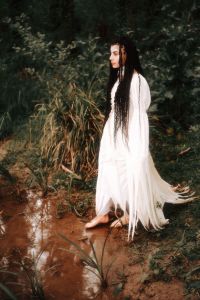
Image by Wolrider YURTSEVEN on pexels.com
Gwyllion (or Gwyllon) is the plural form of Gwyll or Yr Wyll, meaning “twilight,” “gloaming,” or “the wild.” The word is often applied to a type of ghost or spirit, or sometimes to night-wanderers (human or supernatural). These beings are seen as outlaws of the wild and up to no good, and they often resemble mysterious women or strange, elderly hags in ash-coloured clothing and oblong, four-cornered hats, an apron over one shoulder and a wooden milk-can in one hand. Travellers never see their faces, because when they do appear in the distance they are always facing away from the person seeing them, and never turns around.
One of the Gwyllion is the Old Woman of the Mist, who appears on the slopes wrapped in ragged clothing, her face half-hidden by a hood or veils of drifting clouds. Sometimes, she merely stands there watching you. Sometimes, she gestures for you to follow her. Or, she wails – a sound described in nineteenth-century stories as being “like a child crying itself hoarse on a cold stone floor.”
The word gwyllion was coined in the 17th century by the Welsh lexicographer, Dr John Davies of Mallwyd. The word was eventually associated with the mountain faeries / spirits beginning with Edmund Jones, a minister who was born in Aberystruth in 1702 and was obsessed with these beings. People nicknamed him the Old Prophet, and he spent tens of years collecting and writing down stories of apparitions told to him by people around Pontypool. He published these accounts in 1780 as the book A Relation of Apparitions of Spirits in the County of Monmouth and the Principality of Wales. 100 years after that, the American consul of Cardiff (Wirt Sikes) retold the material from Edmund Jones in a book named British Goblins. He filed the mountain apparitions under the heading “The Gwyllion,” and the name stuck. Wirt described them as belonging “to the twilight between ghost and fairy.”
Gwyllion are female faeries of terrifying aspect who haunt lonely roads in the Welsh mountains of Monmouthshire and Breconshire, and they lead travellers astray. They are gloomy spirits akin to hags or witches, distinct from the Ellyllon (Welsh elves) who are usually more benevolent. While they aren’t good entities, they aren’t inherently evil, either. They are more like lost souls, wandering endlessly.
The Gwyllion are often encountered at night or during misty days, and even if you’re perfectly familiar with the road you’re on, they can and will make you get lost.
Gwyllion often entered the houses of people in the parish of Aberystruth, especially in stormy weather. The elderly faery women were always made welcome out of fear of what they might do if offended. They would be given clean water and great care was taken to not have any knives or cutting tools in the corner beside the fire (where faeries would usually like to sit). It was good to be hospitable to them while indoors, but outside, it was a different story.
One such gwyll is known as The Old Woman and was haunting the Black Mountain in Breconshire. A man – Robert Williams of Llangattock, near Crickhowell – happened to meet her there at the same time that he became lost. Thinking she was human, he called after her to wait, but she never replied. He assumed she was deaf and tried to overtake her, but she led him further and further astray, always out of his reach, until he stumbled upon a marsh. She cackled, and, suspecting she was a gwyll, he drew his knife – and she disappeared.
It is interesting to note that many Welsh ghosts and faeries are afraid of knives, and can be banished by them. Perhaps this is because faeries are vulnerable to cold iron, or maybe the knife exorcism is an echo of Excalibur and the role it played in pre-medieval times. Other ways to make the Gwyllion vanish or protect yourself from their tricks is to offer them some food, such as a bit of cheese or a crust of bread, or to nod politely to them and wish them “nos da,” (good evening).
There was an Old Woman of the Mountain haunting Llanhyddel Mountain in Monmouthshire as well. She was seen as the ghost of a woman who was viewed as a witch when she was living. Her name was Juan White. A Monmouthshire man writing to Sikes in 1870 said he remembered her as the tenant of a ruined cottage on Lasgarn Hill near Pontypool when he was a boy, and that at midnight she appeared carrying her own head under her arm. As a gwyll, she uttered strange cries and shouts throughout her mountain to frighten travellers. (Gwyllion are believed to cry a sound like “wow-up,” based on the Welsh cry of distress: wwb, or ww-bwb. People of Aberystruth could hear that sound from many different directions in a short amount of time.)
There were also gwyllion on Bedwellty Mountain at night. A traveller – Evan Thomas – was crossing the mountain towards home in the valley of Ebwy Fawr and saw several spirits dancing around him and heard the sounds of a bugle overhead while invisible hunters rode past. Evan drew his knife, and they all vanished.
John ap John from Cwm Celyn, was chased across Milfre Mountain by disembodied shouts moving from Bryn Mawr to Bwlch y Llwyn to the Gilfach fields, and the cries always resounded in the direction he was heading in (towards Caerleon fair, and it was before dawn). He was struck by the trundling of a coach on a path that no coach would be able to use, and the same shouts sounded as if they were sitting on top of it. John dived off the road and waited face-down in heather until the sounds had abated. He stood and the birds had started singing, there were sheep on the hill, and the terror deserted him.
The Gwyllion have been associated with goats, too. There is a tale of a man named Cadwaladr who cared greatly for his goat, Jenny. However, he lost his temper with her for running off into the hills and caused her to tumble off a steep incline by throwing a rock at her. He clambered down to where she lay dying, and she licked his hand while he cried and sat with her head on his arm until the moon rose. At that point, she became a young woman with brown eyes. She hung her black slipper on the end of a moonbeam and held out her hand, which was beautiful but still felt like a hoof when he grasped it, and she led him up the slopes. Up on the summit, a vapoured crowd of goats with shadowy horns circled around him, bleating, and the king of the goats drove its head into Cadwaladr’s stomach, pushing him over a crag. The man then woke to find himself utterly alone and goatless in the sunshine, with the birds singing like nothing had happened.
Edmund Jones noted that the Old Women / Gwyllion had moved out of the open hills of Wales since about 1800, and into the coal-pits and holes of the Earth instead.
The Welsh faeries are known as the Tylwyth Teg, meaning “Fair Family,” and the Irish equivalent are the Aos Si. In Welsh folklore, the Ellyllon are found in valleys and groves and are loosely equivalent to elves, the Coblynau are found in mines and are similar to dwarves, brownies or household faeries are the Bwbachod, and nymphs (or at least, faeries of lakes and streams) are known as the Gwragedd Annwn. The Gwyllion are found in mountains and could be seen as hags, witches, the Irish folkloric idea of “stray sod” or even will-o-the-wisps (which I wrote a few posts about a while ago).
Sources:
https://sacred-texts.com/neu/celt/wfl/wfl04.htm
https://en.wikipedia.org/wiki/Gwyllion
https://en.wikipedia.org/wiki/Tylwyth_Teg
Gwyllion
The Welsh Gwyllion

