Since the dawn of civilisation in Japan, there have been spirits and deities known as kami, which became part of the ancient Shinto religion. There are thousands of different types of kami, categorised in different ways.
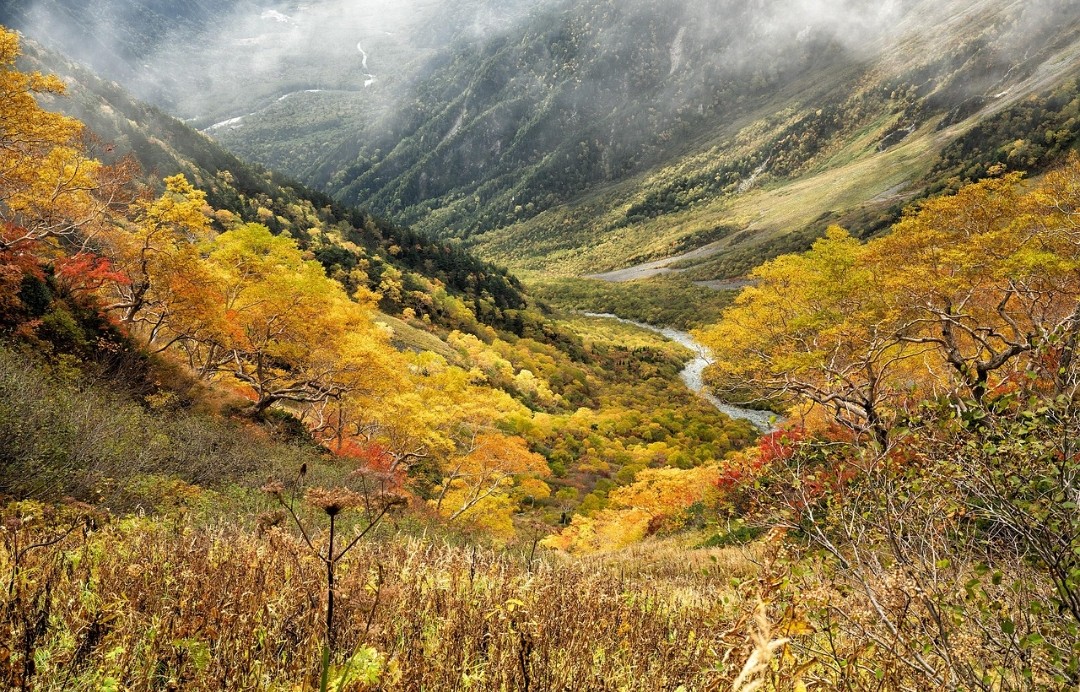
The Japanese kami (or kamigami in the plural) are not only gods, goddesses, and ghosts. They can be personifications of elements in the landscape (mountains, rivers, lakes) or forces of nature (e.g. earthquakes, typhoons, floods, volcanic eruptions) or the spirits of revered dead people – or even the spirits of family ancestors. Traditionally, leaders like the Emperor could become kami after they died.
Some kami are thought of as the ancient forebears of entire clans. Some kamigami can be yokai as well (for example, the tengu, which I did some research on a few weeks ago), though the yokai are something a little bit different to kami.
Hidden from human eyes in the world known as shinkai, kami possess both good and evil qualities. They are manifestations of musubi or the energy of the cosmos. They’re in charge of the awesome aspects of nature and are sequestered in sacred places, natural phenomena, or the people during rituals that ask for their blessing. Kami never stay in one place of worship, but are always moving from place to place. Like the gods of ancient Greece or the Norse gods, kami have flaws and aren’t always omniscient or omnipotent. They are incapable of ignoble actions though.
The Shinto religion has no known founder, main doctrine, or religious texts. The Records of Ancient Matters, written in 712 AD, contains some of the earliest records of creation myth, and also describes kami.
Being capable of both extreme good and extreme evil, kami have two minds or two souls – a nurturing, loving mindset or nigi-mitama if respected and paid attention to, and a destructive mindset or ara-mitama if they are disrespected or ignored.
In Yamakage Shinto, kami have an extra two souls on top of the first couple – happy (saki-mitama) and mysterious (kushi-mitama).
The Records of Ancient Matters list 300 different classes of kami, all with different functions, e.g. the kami of winds, the kami of roads, and so on. This book and the Chronicles of Japan in 720 AD recorded ancient myths and laid out genealogies for the main kami, especially those thought to be related to the Imperial Family. These books also describe how the kami shaped the world and human society.
In return for humans keeping them content, the kami have a duty to enact the function of the place, object, or idea they reside in. The number of kami has grown throughout the centuries since the Record of Ancient Matters was written – in contemporary times, there are over 2,446000 kami enshrined in Tokyo’s Yasukuni Shrine alone.
Various kami have had their roles change over time as well. The kami originally in charge of smallpox became responsible for all contagious illnesses, and the kami of boils and growths became responsible for cancers and cancer treatments.
History
In the early Shinto or Koshinto animistic beliefs that occurred before Buddhism arrived (during the Jomon period, 10,000 BC – 300 BC) kami were earth spirits assisting the hunter-gatherers in daily life. They were gods of the mountains and sea, ghosts, the sun, waterfalls, boulders, animals, trees, grasses, thunder, echoes, foxes or fox spirits, or Asian dragons.
As the growing of rice became more widespread in Japan, the kami were held responsible for things needed for growing crops and sustenance, such as rain, rice, and earth. Ceremonies were conducted to persuade the kami to help grow and protect the harvest, and these rituals were a symbol of strength and power for the Emperors.
There is one early story of the first Emperor being the grandson of the sun goddess Amaterasu. The goddess sent him down to Earth with five grains of rice from the fields of heaven, which he used to cultivate the wilderness.
The sacred spirit kami or Goryo came along a bit later, after social and political strife. The Goryo were angry spirits of the dead whose lives ended too soon, but the worship from followers of Shinto quelled them. Nowadays, they are believed to punish the people who disrespect the kami.
As time went on, the worship of Kami incorporated elements from Buddhism and other foreign religions. Dead heroes, emperors, and scholars became enshrined and expanded the roster of divine beings.
The ancestral spirits who are kami include ancestors of the Imperial House of Japan, ancestors of noble families, as well as the ancestors of all people. Other spirits who are kami are spirits of the land, skills, and occupations, spirits of heroes or of those who have done great deeds or shown great virtue, or who have helped human welfare, culture or civilisation in some way, those who have died for the community, and the “pitiable dead.” (Spirits that are weaker than humans are also considered kami, not just spirits superior to humans.)
There are three main types of kami: Amatsukami, (the heavenly deities), Kunitsukami (the earthly gods), and Magatsukami (the destructive or evil kami). Deceased humans who become kami are classified as Hitogami (human kami). These types aren’t rigidly set in stone because kami have flexible and constantly evolving natures.
Examples of Kami
- The sun goddess and chief goddess of Shinto, Amaterasu Omikami
- Ebisu (one of the seven gods of fortune)
- Fujin (god of the wind, half-human, half-demon. Brother of Raijin / Raiden)
- Hachiman (god of war, was originally god of fishing and agriculture)
- Inari Okami (goddess of agriculture and rice, business, fertility, and the protection of women. Associated with foxes or the kitsune, the many-tailed fox messenger)
- Izanagi-no-Mikoto (the first human male)
- Izanami-no-Mikoto (the first human female)
- Kotoamatsukami (the primary kami trinity, progenitors that appeared from nothing, created the world)
- Omoikane (god of wisdom)
- Raijin / Raiden (god of thunder, lightning, and storms)
- Ryujin (dragon god of the sea and storms, the ancestor of Jinmu, the first Emperor of Japan in the myths)
- Susanoo-no-Mikoto (god of the sea and storms, also a trickster god)
- Sarutahiko Okami (the kami of earth)
- Tenjin (god of poetry and scholarship)
- Tsukuyomi-no-Mikoto (the moon god)
- Suijin (kami of water. Associated with dragons, snakes, and Kappa)
More major and minor kami are listed here: https://en.wikipedia.org/wiki/List_of_Japanese_deities
Appearances and Powers
Kami don’t have fixed anthropomorphic forms like the gods of Western religions. Unseen, they are perceived through their effects or symbolised by objects or places.
For example, the sun goddess Amaterasu is symbolised by mirrors or the red circle on the Japanese flag. Hachiman is symbolised by a pigeon. Tenjin is represented by an ox.
The huge cedars on Yakushima Island are treated as living kami, embodying the spirit of the Earth. They are an example of yorishiro, temporary vessels kami are called to descend into to worship them. Other such vessels can be mirrors, stones, mountains…
However, in art and myth, some kami are shown with humanoid shapes or animal traits like the fox messengers of Inari.
As well as controlling events in nature, kami are believed to give good luck, health, protection, or inspire creativity or bravery.
Kami have been included in animes like Spirited Away and Princess Mononoke. They have inspired mangas, video games, and traditional art.
Sources
https://en.wikipedia.org/wiki/Kami
What Is Kami? Shinto Gods & Sacred Spirits in Japan Explained
https://www.kanpai-japan.com/religion-and-spirituality-in-japan/the-main-shinto-gods
https://japaneserituals.com/kami/
https://japan-avenue.com/blogs/japan/kami
Kami

