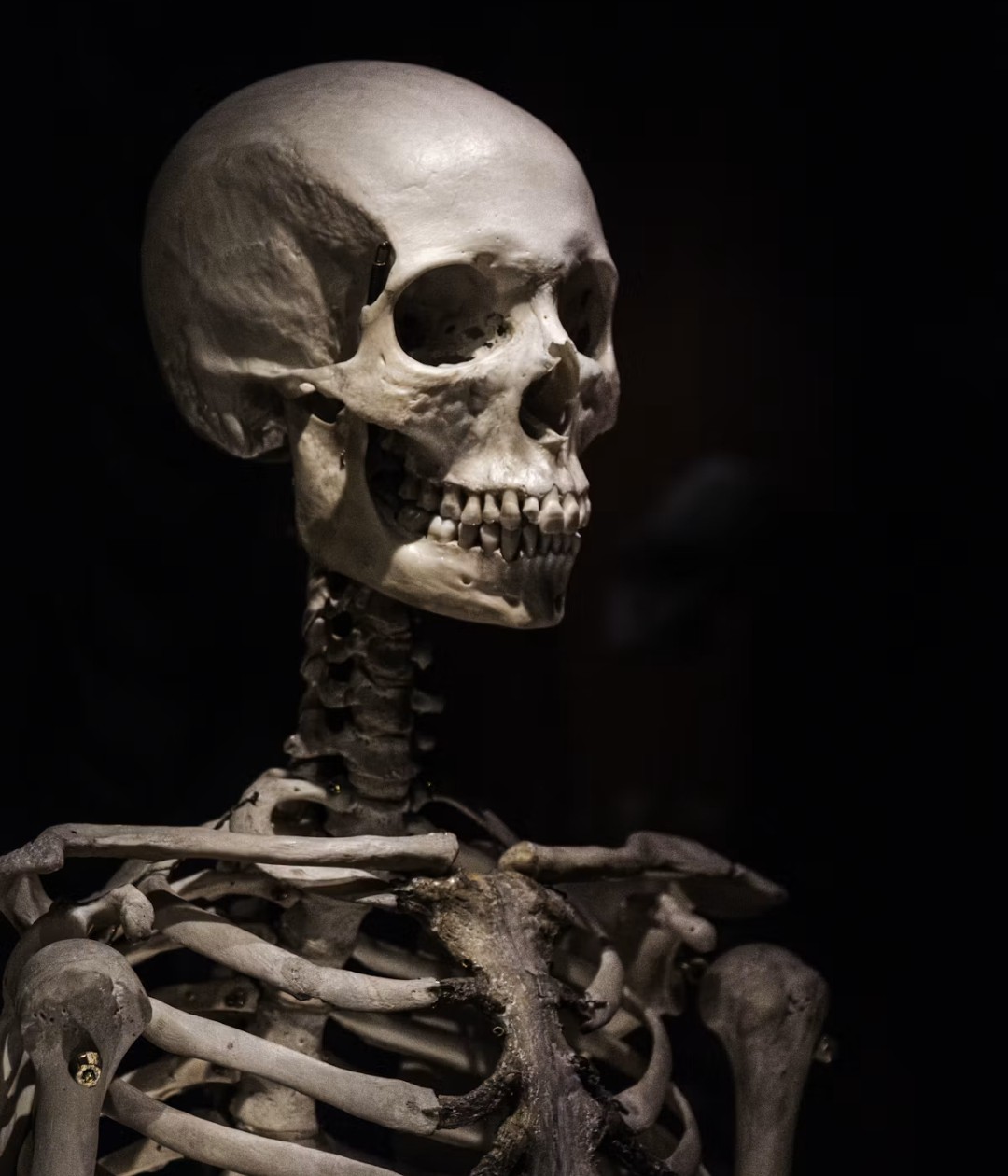
There is a bizarre underground crypt, or chapel complex, in Rome where thousands of skulls and other skeletal parts have been arranged in various ways, studding the walls and ceilings, since 1631.
This warren of chapels lies beneath the church of Santa Maria della Concezione dei Cappuccini on the Via Vittorio Veneto, near Piazza Barberini. The bones are from 3700 bodies that are thought to have been Capuchin friars buried by the Order. It is believed that during the Terror of France hundreds of years ago, the Capuchin monks brought 300 carts of dead friars to the church from their old monastery, fleeing from the guillotine and having to renounce their faith.
Friar Michael of Bergamo was in charge of the bones’ arrangement in the crypt, and the soil was imported from Palestine or perhaps Jerusalem at the behest of Pope Urban VIII.
As the monks died, the longest-buried monks would be exhumed to create space for the newly deceased ones. The exhumed bones were added to the decorations in the crypt. Bodies usually decomposed in the soil for thirty years before their exhumation, and they were buried without coffins.
The crypt is a corridor about thirty metres long with six rooms branching off of it, five of which contain displays of bones from friars who passed away between 1528 and 1870. The corridor is decorated with triangles of jawbones and a rosette of shoulder bones, with a chandelier hanging from an eight-pointed star.
- The Crypt of the Resurrection. This has a picture of Jesus raising Lazarus from the dead at the far end, framed by various parts of skeletons. The room is decorated with skulls, femurs, and tibiae in triangular arcosolia that contain two Capuchins. The vault is patterned with rosettes of sacral bones, vertebrae frames, and arches of ribs. Seven monks are buried in the floor. The corridor wall has hearts and crowned coats of arms, with a skull erupting from basins.
- The Mass Chapel. This one has no bones in it, and is used to celebrate Mass for the Dead. In the altar-piece (painted by Jan Francois Courtois), Jesus and Mary are asking St Felix of Cantalice, St Francis of Assisi, and St Anthony of Padua to release souls from Purgatory. There is a plaque with the acronym “DOM” (Deo optimo maximo, or “To God, the best and greatest”) which was once used to refer to the Roman god Jupiter but was later adopted by Christians. The plaque on the left wall contains the actual heart of Maria Felice Peretti (1656), the grand-niece of Pope Sixtus V and a supporter of the Order. The room also contains the tomb of the papal Zouaves, who died defending papal states at the Battle of Porta Pia. Giuseppe Matteo Orsini (1660) is buried inside the right wall.
- Crypt of the Skulls. Here, Capuchins lie or stand in niches decorated with bones and skulls. The back wall is decorated with a winged hourglass, denoting the passing of Time. The vault is studded with stripes of fibulae and shoulderblades and showcases a central sphere decorated with flowers and ribs. Crosses upon the ground mark the graves of seven Capuchins.
- Crypt of the Pelvises / Crypt of the Basins. The side walls hold Capuchins reclining under arcosolia, and the back wall features more bones and skulls. There are three Capuchins in niches, the middle one under a canopy adorned with bones and vertebrae, skulls and rosettes. The vault is studded with bands of pelvises, vertebrae, and long bones, ending in eight-pointed stars. The rosette in the centre is made of vertebrae and shoulderblades. There are lateral crosses symbolising the instruments of Jesus’s Passion, and they mark the burial of seven Capuchins.
- Crypt of the Tibiae and Femurs. The side walls have niches holding statues of Capuchins, including Friar Antonio de Canton and Father Raimondo da Olot, who translated the biography of St Francis into Arabic. Bones and skulls decorate the arches and capitals. The back wall and vault have many bones in floral patterns and crosses made from vertebrae. There is a huge candelabra and a splay decorated with a sacrum and a winged skull.
- Crypt of the Three Skeletons. This contains three young skeletons. The middle skeleton (which is likely to be a Barberini princess) is enveloped by an oval, a symbol of life coming into birth. Her right hand holds a scythe, the symbol of death, and her left hand holds some scales, symbolising the good and evil actions weighed when a human soul is judged. The room is decorated with bones in intricate floral patterns. A placard written in five languages says “What you are now, we used to be; what we are now, you will be.”
The displays of bones aren’t supposed to be macabre, but a quiet reminder of the speedy passing of life on Earth and human mortality.
The Marquis de Sade visited the crypts in 1775. Nathaniel Hawthorne described the place’s grotesque nature in his 1860 novel, The Marble Faun.
After 1851, the crypt was only open to the public – for a fee – for the seven days after All Souls’ Day.
Nowadays, the Capuchin crypt museum is open to the public every day apart from Easter, November the 2nd, and the Christmas and New Years’ days.
Sources
La cripta dei Cappuccini

