ESP consists of precognition (or retrocausality, where future events affect the present), clairvoyance, and telepathy, though some psychical researchers claim that psychokinesis (the ability to move objects using only the thoughts, or PK) is also a form of ESP. Others believe that ESP and PK are just related to one another, with PK being separate from ESP.
Inspired by a 1922 lecture on Spiritualism by the author Sir Arthur Conan Doyle in the late 1920s – early 1930s, Joseph Banks Rhine and Louisa Rhine came up with a research programme which became the Parapsychology Laboratory at Duke University in Durham, North Carolina. Before 1935, it was called the Institute for Experimental Religion. Whilst at Duke University, the Rhines popularised the term ESP or extrasensory perception and conducted studies of the phenomenon.
(J.B and Louisa initially trained as botanists and statisticians. Their mutual interest in metaphysical matters contributed to their forming a bond in their teenage years.)
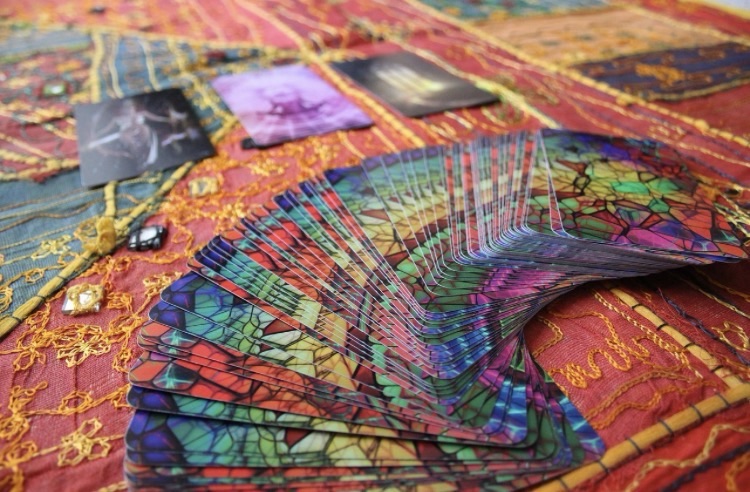
The Rhines set out to rigorously test and document evidence for anomalous communication or conveyance of information that didn’t involve usage of the physical senses. J.B. created a series of card-guessing tests involving a deck of cards which were designed by the psychologist Karl E. Zener. Zener cards are a five-suit deck of 25 cards with simple symbols on them, e.g. a circle, a square, wavy lines, etc.
A typical test consisted of someone guessing the order of the cards after they had been shuffled and concealed from their eyes or placed in sealed envelopes. The experimenter took note of the subject’s guesses as they made them, then they were checked by the experimenter against the cards after the test, with the subject still there. There was a 1/5 or 20% chance of guessing the right answers.
Later tests involved a “telepathy procedure” where a “sender” looked at the cards one by one behind a screen or in another room. Results showed the clairvoyance procedure had as much success as the telepathy one, which led Rhine to test clairvoyance with the Zener / ESP cards more.
Early group testing of Duke University students in a classroom gave little more than chance results.
Then something odd happened. One of the class members, A.J. Linzmayer, scored strangely highly in an individual test. In further testing, Linzmayer carried on guessing the cards at a rate significantly above the 20% chance rate. By the end of the last two weeks of the school year, he estimated 404 of 1,500 cards correctly (if he was guessing only by chance, he would have guessed 300 of them).
Rhine and his team of two graduate students continued testing people one by one, and discovered other high-scoring test subjects, the most notable of which was divinity student Hubert Pearce, who got even higher scores than Linzmayer and kept them without decline for a longer amount of time.
By 1932, Rhine thought they had obtained good evidence of the existence of psychic phenomena or ESP. They also found ESP seemed to have natural relationships similar to ordinary psychological phenomena.
For example, both Linzmayer and Pearce temporarily lost their abilities when given the drug sodium amytal. Their performances also appeared to follow predictable patterns found in conventional psychology, e.g. the temporary decrease of scores under intense testing.
In three years, Rhine’s team found eight high scorers, about 1 in every 5 students tested. These college students scored, on average, more than 50% greater than the chance amount. As the experiments carried on, lab conditions were increasingly tightened to exclude the chances of the subjects being able to cheat.
An important finding of the early tests was that distance didn’t seem to have an effect on the results. This was shown in the Pearce-Pratt Series of 1933–1934, which was a clairvoyance test involving Hubert Pearce as the subject and Rhine’s research assistant J. Gaither Pratt as the experimenter. The subject and the cards were put in two different buildings on the university’s West Campus. For three series, Pratt was placed with the cards in the Physics Building, a hundred yards from Pearce, who stayed in a Duke Library cubicle. In a fourth series, Pratt was 250 yards distant from Pearce, in the Duke Medical School.
The method was as follows: Pratt would pick up a card once a minute from a pre-cut and pre-shuffled pack, and put the card face-down onto a book without peeking at it. At that minute Pearce, who had a synchronized watch in the Library, would guess the face of the far-off card. After the test, both men would take the sealed records of their cards and guesses and bring them to Rhine so he could check them at the lab (while keeping copies of their own records).
Pearce’s total score for the four tests was 558 correct answers out of 1,850 (370 would be expected by chance). His accuracy in guessing the order of the unseen cards was 30%, compared to the 20% chance rate.
All data was reported and nothing was withheld. (In those days, social scientists would sometimes hide results that didn’t match logical expectations under the assumption that their methods were flawed – J. B. Rhine didn’t do this.)
In the years following the publication of their findings, other researchers attempted to replicate the experiments. About 60 articles on it were written by 40 different authors, mostly in American psychological journals. Fifty other experiments into ESP were done, and 61% of these were statistically significant. If the results were down to only chance, then that figure would be 5%.
In J. B. Rhine’s Extra-Sensory Perception After Sixty Years in 1940, he made one of the first “meta-analyses” of several different experiments.
Later on, there was a general consensus that Rhine’s experiments were somehow flawed or fraudulent, and that the results couldn’t be replicated. However, even today, sceptics are still trying to explain just how the fraud could have been done. One sceptic went so far as to suggest that one of the test subjects kept crawling through a ceiling-space to sneak a glimpse at the cards through a trapdoor over the lab!
From 1934 until 1941 (after which many lab members were called to fight in the war), Rhine’s lab at Duke University performed experiments into psychokinesis, in which people were encouraged to try to influence the outcome of random dice throws. Devices were soon used to throw the dice to make sure it was genuinely random and the experiment was done tens of thousands of times. A similar statistical result to that of the Zener card experiments was found, with some individuals showing a deviation of several percentage points in their success rate.
For a more detailed history of J. B. Rhine, read this: https://psi-encyclopedia.spr.ac.uk/articles/jb-rhine/
Ganzfeld
Aged 13, the self-taught psychical researcher Charles (or Chuck) Honorton began exchanging letters with J. B. Rhine after he read all the parapsychology books in his local library. Aged 15, he did an internship with the Parapsychology Laboratory in Durham, and eventually started working with Rhine. Honorton was interested in studying psychic phenomena under hypnosis. In the 1960s and 70s, he conducted research into dreams and ESP and designed the ganzfeld experiment.
You’ll probably be familiar with the concept of ganzfeld if you’ve watched Stranger Things. Ganzfeld means “whole / open field” and it involves entering into a state of relaxed sensory deprivation with a view to telepathic communication or remote viewing. Honorton believed that every human being might be capable of ESP if placed in the right conditions.
People were seated in a recliner in a soundproofed, dimly-lit room and wore eyeshades and headphones that emitted white noise. This set-up induces the state of hypnagogia, the phase we all get shortly before falling asleep at night which often involves snatches of hallucinatory images and sounds. This state can be used for waking hypnosis or auto-suggestion.
While one person was in this sensory-deprivation room, a second person would sit outside it and attempt to “transmit” a pre-selected image into their mind. Once the person in sensory deprivation emerged, they had to try to choose which image the other person had tried to send them, out of a total of four images.
There was a one in four or 25% chance of guessing the right image. However, the test subjects surpassed the 25% guessing rate on average. In a 1994 meta-analysis of experiments, it was found that there was an overall hit rate of 32 – 35%. Since the mid-1970s, this data has been replicated by different labs in different nations. Honorton teamed up with a well-known sceptic named Hyman to look at these experiments and Hyman stated that Honorton’s methods were sound and that the data held significance.
Resonance and Psi
Rupert Sheldrake, a Cambridge biochemist and parapsychology researcher who was named one of the top 100 Global Thought Leaders by Switzerland’s Duttweiler Institute in 2013, has theories about biological resonance and psychic ability. He has been described as a New Age author.
Sheldrake’s theory on morphic / biological resonance is that memory is “inherent in nature” and that “natural systems… inherit a collective memory from previous things of their kind.” (This reminds me of Carl Jung’s idea of the Collective Unconscious). Sheldrake goes on to suggest that this inherited memory is responsible for telepathic connections between organisms.
He first had this idea while at Cambridge, then went on a trip to India where he later developed the theory, noticing a similarity between morphic resonance and the “akashic records” in Hinduism. He took the French philosopher Henri Bergson’s concept of memories not being physically in the brain and ran with it, as the saying goes.
He wrote about this theory in a book, A New Science of Life. After it was published, New Scientist magazine sponsored a competition to invent scientific tests for morphic resonance. The winning concept involved learning Turkish nursery rhymes, and the psychologist Sue Blackmore came second with an idea involving the behaviour of babies. (Blackmore’s test results didn’t support the theory of morphic resonance, if you were wondering.)
Sheldrake believes that DNA doesn’t include a “recipe” for morphological development. He and the developmental biologist Lewis Wolpert have a scientific bet going on. Wolpert bet Sheldrake a case of fine port that by May the 1st 2029, given the genome of a fertilised animal egg or a plant, humanity will be able to predict in at least one case all the details of the organism that grows from it, including any unusual features. The Royal Society will be asked to determine the winner if the winner isn’t obvious!
Sheldrake has also done experiments regarding the “telepathic” sense of knowing who is calling you shortly before picking up the phone, and the sense of being stared at by someone. For more information go here: https://www.sheldrake.org/research/morphic-resonance/introduction
Sources:
https://www.britannica.com/biography/J-B-Rhine
Joseph Banks Rhine
Extrasensory Perception
https://en.wikipedia.org/wiki/Rupert_Sheldrake
https://www.sheldrake.org/research/morphic-resonance/introduction

