Part XVI of Amulets & Talismans
The Chaldeans were an ancient race who migrated from the Levant into Assyrian lands in 940 – 855 BC, and are famous for their contributions to writing, mathematics, and astronomy. They were the first to have a seven-day week and introduced the concept of there being 60 seconds in a minute and 60 minutes in an hour. But who exactly were they?
Also variously known as “The Sealand” and the “Sea of Kaldu” or “Kasdu,” Chaldea was a kingdom established near Babylon, in the land bordering the top of the Persian Gulf, between the Arabian desert and the Euphrates delta. (Delta = triangular bit of land where a river splits.) It was rather marshy.
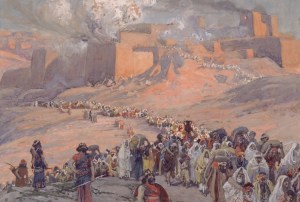
Chaldea was now where modern southern Iraq is.
The kingdom was mentioned in the Old Testament and in the annals of the Assyrian king Ashurnasipal II, who ruled from about 883 – 859 BC.
The word “Chaldean” was sometimes used by ancient authors (Cicero, Pliny the Elder, etc) to mean priests or other people educated in classical Babylonian literature, astronomy, and astrology.
This is because Chaldea became synonymous with Babylon. In 721 BC, when Sargon II was on the Assyrian throne, a Chaldean governor — then king — of Bit Yakin (named after one of the main five Chaldean tribes) known as Marduk-appladdina II (or Merodach-baladan in the Bible), seized hold of the Babylonian throne.
(He ruled until 710 BC, and finally scarpered when his district fell back under Assyrian control.)
With the decrease in Assyrian power, the Neo-Babylonian Empire began under a probably Chaldean dynasty — until the Persians invaded in 539 BC, that is, but by then the idea of the Chaldeans being a specific ethnic group had faded away — although there are still Chaldean Catholics in Iraq and some parts of America.

Not much is known about Chaldean magic, but they believed in the existence of three heavens. They worshipped the sun god Shamash (later Mithras / Anahita) and had a shamanistic, animistic religion, believing that everything possessed a spirit.
For a detailed look at ancient Babylonian magical beliefs and practices (including divination by hepatoscopy and the flight of birds), see this page.
For the Persians (who came after the Chaldeans), Mithras was the God of Light, who was said to appear before sunrise in a chariot pulled by four white horses. He was omniscient, and a god of fertility and plenty. He became linked to the Taurus constellation — which was where the sun entered at the start of spring — and was known as a slayer of the bull.
Magic Circles
The usage of magic circles in medieval times was heavily influenced by magic circles used by the Chaldeans / Babylonians.
The magician would draw the circle and surround it with seven small winged figures, which he put in front of an image of the god Nergal. After that he would cover the figures in dark robes and bind them with coloured cord, also setting tamarisk and the heart of a palm beside them. He surrounded them with a sprinkling of lime and flour.

The following is an excerpt from “Myths and Legends of Babylonia and Assyria” by Lewis Spence, describing where to construct such a circle:
In the first place the magician is supposed to fix upon a spot proper for such a purpose, which must be either in a subterranean vault, hung round with black, and lighted by a magical torch, or else in the centre of some thick wood or desert, or upon some extensive unfrequented plain, where several roads meet, or amidst the ruins of ancient castles, abbeys, or monasteries, or amongst the rocks on the seashore, in some private detached churchyard, or any other melancholy place between the hours of twelve and one in the night, either when the moon shines very bright, or else when the elements are disturbed with storms of thunder, lightning, wind, and rain; for, in these places, times, and seasons, it is contended that spirits can with less difficulty manifest themselves to mortal eyes, and continue visible with the least pain.
When the proper time and place are fixed upon, a magic circle is to be formed within which the master and his associates are carefully to retire. The reason assigned by magicians and others for the institution and use of the circles is, that so much ground being blessed and consecrated by holy words and ceremonies has a secret force to expel all evil spirits from the bounds thereof, and, being sprinkled with sacred water, the ground is purified from all uncleanness ; beside the holy names of God being written over every part of it, its force becomes proof against all evil spirits.
The Hemispherium & Hemicyclum:
The Chaldeans were also the first people to say that a circle had 360 degrees.
Early mathematicians in Chaldea invented the time-system of sunrise to sunrise being in twelve equal parts.
The Chaldean priest Berosus (356 – 323 BC) was an astronomer who invented the hemispherium and hemicyclum, two kinds of sundial. They both used a concave hemisphere to mimic the dome of the sky but in reverse.
As the sun travelled across the sky, the shadow of the gnomon would show the reverse of its journey over inscriptions carved below.

The hemispherium was made from a stone block, its inner surface marked with eleven lines. Those lines separated the hemisphere and the passing of the gnomon’s shadow into twelve equal parts.
The gnomon / pin of the hemispherium cast a shadow from the hemisphere’s middle, so that the midday sun cast no shadow at all.
The hemicyclium worked in much the same way but part of the hemisphere was removed to make reading the shadow easier, and the gnomon was installed horizontally, at the edge of the dial.
Astronomy
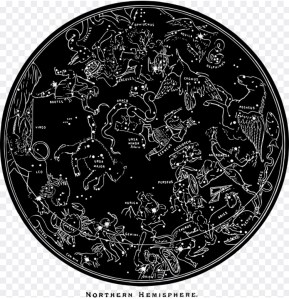
The Chaldeans’ understanding of astronomy and prediction of the heavenly bodies’ movements was something that might have begun the first scientific revolution. They thought that changes in the sky forecast the plans of the gods, and they made maps showing the positions of the stars and phases of the moon.
To start with, the Chaldeans built ziggurats, or stepped pyramids, to help them get closer to the sky, as well as to house their city gods. They could be up to 150 feet high, and were centres of religion and community.
Then, from the tops of their ziggurats, the priests started to study the stars and planets, becoming the first astronomers. The Chaldean religion was essentially astronomy, and they came to worship the sun, moon, and planets as deities.
They believed each phase of the moon controlled women’s fertility.
They saw the moon as a god named Sin, who was there to banish the darkness and control dreams.
The moon was also associated with changes and the feminine. Therefore, the Chaldeans thought the moon controlled when a baby was conceived and when a woman was fertile (according to them, this occurred in the same phase of the moon in which she was born.)
The Chaldeans also thought the traditional definitions of “positive” or “negative” to each sign in the zodiac decided the sex of a baby.

They saw the sun as another planet and considered it the king of the gods, naming it Shamash. They saw Shamash as the one in charge of life and justice.
Another one of their gods was Aires, the god of spring. His symbol was a ram, so the Chaldeans sacrificed a ram at the start of the spring planting in March.
Mercury was named Nebo and he was “the announcer.” He had the responsibility to write down all the good deeds done by humans. Nebo was the god of wisdom, learning, and writing.
Venus was then known as the goddess Ishtar, responsible for the earth, love, (and sometimes war), and marriage.
Mars, the god of war and death, was known by the Chaldeans as Nergal. He had a fiery appearance.
Saturn was the god “Ninid,” and he was seen as the evil god.
The Chaldean Oracles
The original text of the Chaldean Oracles has long been lost to time. Fragments exist in the form of quotes and commentary by Neoplatonist philosophers in the 3rd to 6th centuries AD.
The quotes were likely drawn from a single mystic poem, at least partly compiled (or received) by “Julian the Chaldean” while he was in a trance, in the 2nd century AD.
It is unknown whether Julian the Chaldean actually came from Chaldea, or if he was merely called “Chaldean” meaning magician or mystic.
According to what can be gleaned from the surviving quotes and commentary, the Oracles claim there is an absolute transcendent entity (the Father) whose power is Intellect, which contemplates pure intellectual forms in the Father’s realm, whilst also creating and ruling over the material world. The dual aspect of this power is known as the Demiurge.

The boundary between the intellectual and material worlds is personified by Hecate, a kind of membrane that separates the fire of the Father from the fire of the material cosmos. Hecate mediates divine influence on the lower realm.
The World-Soul emanates from Hecate, which then emanates Nature, which governs the sub-lunar realm (the sphere of the cosmos below the moon which contains the four elements — Earth, Air, Fire, and Water).
Fate comes from Nature and Fate enslaves the human soul. The aim of existence, according to the Chaldean Oracles, is to purify the human soul of the influence of Fate and Nature through a life of austerity and contemplation.
Salvation is gained via an ascent through the planetary spheres, shedding various aspects of the soul until it becomes pure Intellect. The Oracles seemed to contain information on how to do this while protecting oneself from the influence of demons and other spirits.

Beneath the Triad of the Father, Hecate (or Magna Mater according to the Romans), and Intellect are three descending worlds: the Empyrean, the Ethereal, and the Elemental.
These are ruled by a Second, Third, and Fourth Demiurgic Intellect.
Another Elemental world is governed by a being named Hypezokos, or “Flower of Fire.”
In the 19th century, The Order of the Golden Dawn published a “translation” of the Chaldean Oracles.
The Hanging Gardens of Babylon
The Babylonian King Nebuchadnezzar II married the princess Amyitis, who came from Media. It was a political marriage.
Around 600 BC, the princess — or the Queen of Chaldea — was homesick. The King decided to build her a garden resembling the Median landscape: mountains and green vegetation everywhere.
This garden was named the “Hanging Gardens” and is sometimes said to be a myth as it’s only written about in the journals of ancient philosophers and scholars.
The Hanging Gardens were known as one of Herodotus’s Seven Wonders of The World.

Other parts of Amulets & Talismans:
 Nightwalks
16 thoughts on “The Chaldeans and their Magic Circles”