Part IX in Amulets & Talismans
Also known as adder stones or dobby stones, are stones or pebbles that have holes naturally going right through them. These stones were — and sometimes still are — thought to possess magical qualities.
These include the ability to heal snake bites, or to see through the disguise or glamour of a faery or that of a witch if you gaze through the hole.
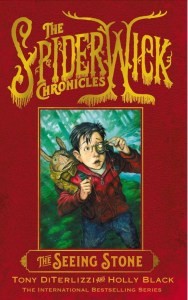
The idea of looking through a hagstone (or “Seeing Stone”) in order to see the realm of Faerie was used in Holly Black and Tony DiTerlizzi’s fantasy series The Spiderwick Chronicles, one of many fantasy series I was crazy about as a kid.
Sometimes stones with holes in (usually flints or grey chert) would be hung up in the pig-sty to ward off diseases in the pigs, or carried by a shepherd to prevent foot-rot from affecting the sheep.
Other reasons for carrying a holed stone included preventing nosebleeds, protecting oneself at sea, and protecting oneself against lightning.
Hagstones are found in places such as East Devon, the Chalk Country in the UK, the Peak District, and North Germany at the coasts of the North and Baltic seas.
Other names for them: witch stones, serpent’s eggs, snake’s eggs. In Wales, they call them Glain Neidr. In Cornwall they are known as milpreve, and in the south of Scotland they are adderstanes. In North Scotland, they are Gloine nan Druidh or “Druids’ glass.” In Germany they call them Huhnergotter or “chicken gods”.
Ancient Origins of Hagstones
In Pliny’s Natural History, the Druids held the adder stones in high regard. Pliny described rituals they used to obtain the stones and the magical traits the stones were supposed to have:
“There is a sort of egg in great repute among the Gauls, of which the Greek writers have made no mention. A vast number of serpents are twisted together in summer, and coiled up in an artificial knot by their saliva and slime; and this is called “the serpent’s egg”. The druids say that it is tossed in the air with hissings and must be caught in a cloak before it touches the earth. The person who thus intercepts it, flies on horseback; for the serpents will pursue him until prevented by intervening water. This egg, though bound in gold will swim against the stream. And the magi are cunning to conceal their frauds, they give out that this egg must be obtained at a certain age of the moon. I have seen that egg as large and as round as a common sized apple, in a chequered cartilaginous cover, and worn by the Druids. It is wonderfully extolled for gaining lawsuits, and access to kings. It is a badge which is worn with such ostentation, that I knew a Roman knight, a Vocontian, who was slain by the stupid emperor Claudius, merely because he wore it in his breast when a lawsuit was pending.”
— Pliny (Natural History, Book 29)
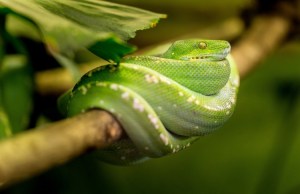
In Welsh mythology, the Glain Neidr or Maen Magi were also to do with snakes — believed to be created by a meeting of snakes, often in spring, but usually on May Eve.
Certain magical stones exist in stories such as The Mabinogion, though those ones aren’t named glain neidr. E.g. the stone that Peredur / Percival used to see and kill the monster known as the Addanc (or avanc), and the stone Owain son of Urien was given that could make him invisible, allowing him to escape the gatehouse of a castle.
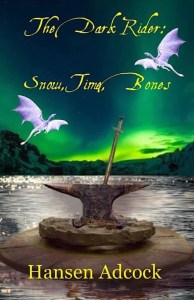
(If you like Arthurian tales and books based on old stories from the time of King Arthur, just a reminder that my book “The Dark Rider” is still available to read for free on Wattpad):
According to Russian folktales, hagstones were the homes of spirits called Kurinyi Bog or “The Chicken God.” They were the protectors of chickens, funnily enough, the stones put into farmyards to counteract the influence of the kikimora (the wives of the house spirits or domovoi). Kikimora also took care of chickens but had a nasty habit of plucking out the feathers of hens they didn’t like.
There is an English custom in the seaside town of Hastings. There is a legend — the legend of Crowley’s Curse — that maintains that Aleister Crowley, who used to live there before his death, cursed the town. The curse forces everyone who has lived in Hastings to always return there, no matter where they go or for how long they leave. The curse can only be ended by taking a stone with a hole in it from Hastings beach.

As to what creates hagstones in reality, the holes are likely to be eroded by rainwater or the sea, there is a theory that they are drilled through by bivalve molluscs known as pholads, piddocks, and “angel wings” (that last name is due to their elongated, white, somewhat wing-shaped shells). The molluscs bore into various types of rock, clay, and peat, making non-branching burrows which they live in permanently. The burrows are usually narrower at the entrance than on the inside.
Next week: the art of crossing your fingers and other strange hand signs.
Other parts of Amulets & Talismans:


16 thoughts on “All About Hagstones”