Part XI of Amulets & Talismans
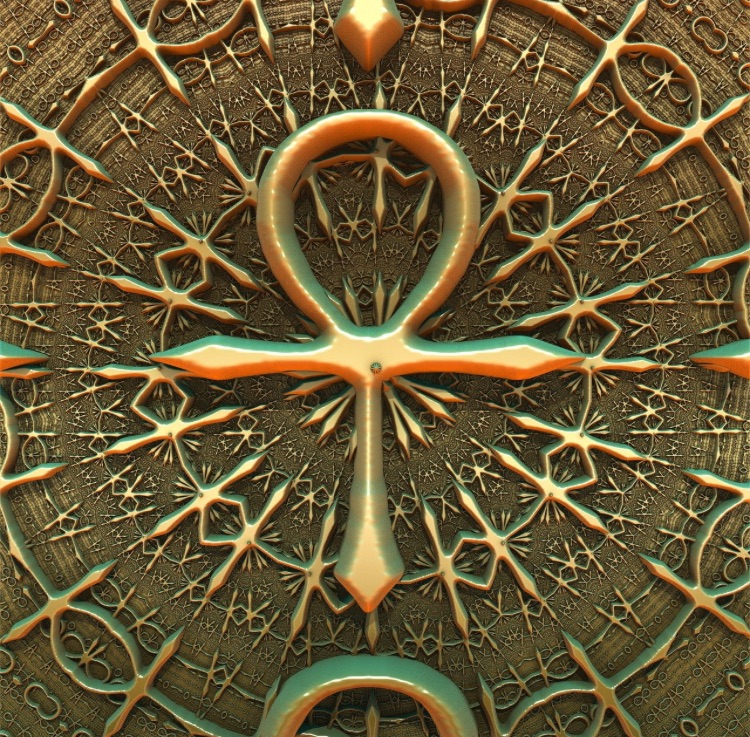
Also known as the Key of the Nile or the Key of Life, or the Crux Ansata in Latin (meaning a “handle-shaped cross”) the Ankh is an object that originates from ancient Egypt. It may have come from the 30th – 29th century BC. An ankh looks similar to a Christian cross, but the top part is a loop.
The loop represents the sun, the horizontal bar of the cross represents the horizon, and the vertical part of the cross is the path of the sun as it rises over the horizon.
As well as representing Life, the Ankh symbolises the sun, water, and air — things necessary for life to exist. The Ankh was often found carved on stone sarcophagi, which led some people to believe it represents a union between heaven and earth. It might also be a symbol combining the signs for male and female.
The Ankh was a sign meaning lengthy or eternal life — either in heaven or the underworld — immortality, and reincarnation. It was often painted onto tombs or death masks — in blue or black — to help the deceased person (known as the “ankhu”) pass from the material world into the afterlife.
Some scholars believe the Ankh may have first represented the belt-buckle of the goddess Isis.
When shown in art with an image of a pharaoh — usually in the grasp of a major deity such as Osiris, Isis, and Ra — the Ankh symbolises a blessing or wish for longevity. The symbol of the Ankh contained the letters used to spell the word “life” and that word was sometimes included in pharaoh’s names, e.g. King Tutankhamun.

The Ankh was also cast into golden or electrum amulets and used for protection. Later ankhs were made out of faience, a type of blue-green ceramic.
Usage of the ankh became more popular and widespread in the Western world from the 1960s onwards, as a symbol of African cultural identity, in neopaganism, and in the Goth subculture later on.
The Eye of Horus

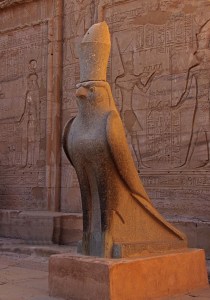
Also known as the Wadjet, Udjat, or the Eye of Heru, this is a protective and magical symbol depicting Horus’s eye. It looks like the eye of a falcon (as Horus was falcon-headed), with some markings resembling a human eye.
Horus was the ancient Egyptian god of the sky, justice, royalty, and protection. He was the son of Osiris and Isis. His magical eye could see anything, both on the material and the spiritual planes.
The Eye of Horus symbolises supernatural healing as well as the ability to see beyond the physical realm. It was thought to ward off evil, bring health and prosperity, and protect and guide those who had died and were on their journey to the afterlife.
Horus’s Eye also represents the sun and the moon, their cyclical nature, and the constant balance between the light and the dark.
It has six parts which each stand for a certain concept:
- The Pupil – this depicts the falcon-headed god’s eye, to do with protection and healing.
- The Eyebrow – this symbolizes the mind and mental concentration, intellect, and the search for knowledge and higher awareness.
- The Sclera – this symbolises the ability to discern between right and wrong.
- The Right or Left Eye – the right eye is connotated with logic, order, and male vitality. The left eye is associated with the moon, femininity, and creativity. Both eyes represent the union of duality and contrasting energies.
- The Teardrop – this is the grief of Horus for the death of his father Osiris (who was murdered by his uncle Set). It means sacrifice and rebirth.
- The Wedjat Markings – these are lines that extend from the eye’s outer corners, depicting falcon feathers and the concept of protection.
Horus gained the magical eye from the god Thoth after losing an eye in battle against his uncle Seth, following Osiris’s murder.
Some ancient mythologies maintain that the Eye of Horus is the Eye of Ra.
Ra was the god of the sun, rebirth, creation, and life. The Eye of Ra was shown as fierce and burning, representing the sun’s vigilance, light, and wisdom. The Eye of Ra also represented Ra’s ability to burn enemies and bring wrongdoers to justice.
The Nazar

Otherwise known as the Eye Bead, a nazar (meaning sight, surveillance, or attention) is an amulet, shaped like a blue eye, which is purported to protect one against the evil eye or bad / evil luck.
In Turkey, it goes by the name of nazar boncugu. The Greeks call it a mati.
Usually a nazar is made of handmade glass with concentric circles or teardrop shapes in deep blue, light blue, white, and black, sometimes with a yellow or golden edge.
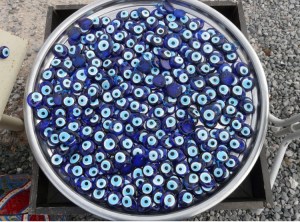
The “bead” is made out of a mix of molten glass, iron, copper, water, and salt. These substances are believed to protect people from evil.
In the Middle East and the Mediterranean, blue eyes were so rare that the ancient peoples there believed that anyone with blue or light-coloured eyes could curse someone just by glancing at them. As a result, even Assyrians wore blue-eye amulets.
If a nazar bead breaks, that means a strong nazar (a usually unintentional evil force generated by excessively adoring or jealous looks or stares) has hit it, building up until the bead breaks to protect the person carrying the bead.
What is the Coven Stone?
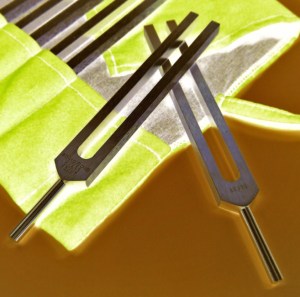
The Coven Stone is half of a whole, though it is still powerful by itself. Its twin is the Corverus Stone, and both stones are roughly shaped like two-pronged forks.
In book two of The Nighthunter series, the mysterious and perhaps evil character of Norra wears the Coven Stone around his neck, which was most likely gifted to him by the Lady of a Thousand Faces — and she definitely is evil.
The Coven Stone appears to amplify Norra’s already potent magecraft (or ability to use magic). However, that power comes from death-magic rather than anything positive. The stone also protects him to some degree from trickery and small spells.
Completely loyal to the Lady of a Thousand Faces, Norra’s main aim is to obtain the Corverus Stone and reach the place of the altar to join the two stones together, where he can use them to transform unwanted children into vessels for an army of the Grim.
The Grim are a host of tortured, warped souls who return from death with little or no memory of who they used to be in life — all they remember is pain — and they are suffused with greed to consume all life. Needless to say, allowing them to inhabit living people’s bodies is a nefarious and foolish idea, one which the Nighthunter has to put a stop to.
The first book in the series, A Dark Heritage, is available on Amazon and from Golden Storyline Books:
Other parts of Amulets & Talismans:
 Nightwalks
16 thoughts on “All About Ankhs, Horus’s Eye, the Nazar… and the Coven Stone?”