
Part VII of Amulets & Talismans
Witch dolls — otherwise known as poppets, poppits, moppets, mommets, pippies, or kitchen witch figures — are small dolls or figures made to represent someone in order to either help that someone or cast a spell on them.
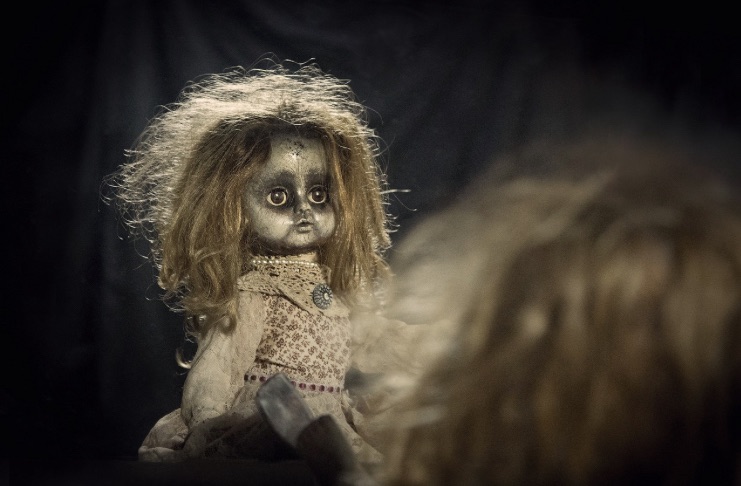
They are sometimes discovered hidden in chimneys.
Witch dolls have been fashioned out of such materials as carved roots, grains, corn shafts (think “corn dollies”), paper, wax, fruit, potatoes, clay, tree branches, and fabric stuffed with herbs.
They are supposed to work in the same way as voodoo dolls (using sympathetic magic).
The German kitchen witch poppet or cottage witch (which may be either German or Scandinavian in origin) is designed to bring positive energy and good luck — and to prevent accidents such as food burning or being undercooked — in kitchens. The kitchen was seen as the most important place in the home, as it was the source of nutrition and remedies for illnesses.
It was seen as good luck to gift a kitchen witch to a friend or family member. Sometimes a note would be hung around its neck explaining what it was for those unfamiliar with its purpose. The witch was supposed to keep roasts from burning, pots from boiling over, and sauces from spilling.
The kitchen witch was used in England during Tudor times.
Corn Dollies
Otherwise known as corn mothers (as they were sometimes dressed in feminine clothing and seen as “old women”) these were straw effigies made as part of harvest traditions in Europe before farming was mechanised at the start of the 20th century. In pagan times it was believed that the spirit of the crop lost its home during the harvest, and so the last sheaf of grain to be harvested was shaped into a humanoid figure for the spirit to take shelter in during the winter. The corn dolly would be placed in the barn to repel mice, then be ploughed into the first furrow of the field in the spring.
Corn husk dolls were also made by Native Americans that served a similar purpose.

Hoko Dolls
In Japan, these are soft-bodied dolls given to young women of childbearing age and pregnant women, with the belief that they will protect the mother and unborn child.
Originally hoko dolls were made of silk and human hair, then stuffed with cotton. The dolls were made for both mothers of boys and mothers of girls, only boys’ dolls were consecrated and given to a shrine once the boys came of age at 15. The girls would give up their dolls to a shrine once they got married and would receive new ones to protect themselves and their unborn child once they became pregnant.

The dolls were given to the children at birth or shortly after.
Motanka Dolls
These were made in Poland, Belarus, the Ukraine, and Russia. They were amulet dolls, part of folk culture (referencing the fairy tale “Vasilisa the Beautiful”). The dolls had to be made and tied without the use of needles or any sharp object so as not to poke or hurt the “fate”. Traditionally they had no facial features and might even have a cross in the place of the eyes, nose, and mouth.
“Motanka” means “to tangle, spool, or wind”. The dolls were made to grant various wishes, such as guarding the family or ensuring a good marriage.
Voodoo Dolls
These are effigies created to stick pins in with the idea that this will cause harm or pain to the person the effigy represents. However, voodoo dolls are not actually used in Louisiana or Haitian Voodoo and never have been! Voodoo dolls became associated with that area in the U.S. after 20th-century media kept showing the practice being done by Afro-Caribbeans and other black people.

Worry Dolls / Trouble Dolls:
Small, usually hand-made dolls of wire, wool, and other bits of textiles, originally by the indigenous folk of Guatemala.
The dolls were half an inch to 2 inches tall, dressed in a Mayan style.
Worry dolls were often given to anxious or melancholy children. The children would tell the dolls all their worries and fears then hide the dolls under their pillows before going to sleep at night. They believed the dolls would take away their fears and worries, leaving them with a clean slate come the morning.
Worry dolls are still made and sold today to tourists. They are also used in child psychology as an imaginary listener or “agent” between the child and the counsellor.

Modern / Wiccan poppets:
A love poppet can be used to change something about your own health or show affection to a loved one. It can also be used to encourage a relationship between couples. The doll can contain small items that belong to the target of the love spell.
Prosperity poppets are used to bring luck in school, work, and / or financial status.
Healing poppets are intended to give good health mentally, physically, and emotionally and are usually intended to heal someone from a distance. Objects associated with healing can be included in the poppets, e.g. rose quartz, rose petals, or sage (sage is believed to cleanse).
Protection poppets are meant to protect a person’s loved one or family member, and to remove curses or bad luck from them. These dolls may be created to look like their intended target and might include things such as amethyst, hematite, basil, patchouli, and coffee.

Rowan Trees
Rowans or mountain-ashes are shrubs or trees in the rose family Rosaceae. They are attractive to fruit-eating birds, hence their old name “bird-catcher”.
The fruit of the European rowan is bitter and can be turned into a jelly eaten as an accompaniment to game, or used in jams. The fruit can also be used instead of coffee beans and is used to flavour alcoholic drinks. (The Welsh used to make a rowan wine called diodgriafel).
But why is the rowan tree commonly believed to ward off evil?
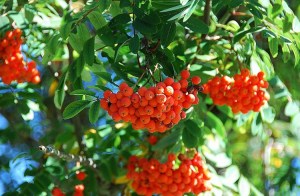
In European folklore, the rowan is also named the wayfarer’s tree or traveller’s tree, as it prevents those on a journey from becoming lost.
In England, it was also said that the Devil hanged his own mother from a rowan tree.
There was a belief that rowan trees repelled witches, especially if planted near a gate or front door.
Birds’ droppings often contained rowan seeds, and if the droppings chanced to land in a fork or hole in an old, larger tree such as an oak or maple, that may have resulted in a rowan growing on that larger tree as an epiphyte. Rowans growing in that way were seen as extremely special and potent against black magic, witches, and sorcery. They were known as flying rowans.

Rowans were also seen as protection against fairies. According to Thomas Keightley (an Irish writer of books on folklore and myth), humans could safely watch fairy processions (or rades) if they hung a rowan branch above their doors.
In Sweden, it was thought that if rowan trees grew pale or lost their colour, then autumn and winter would bring a lot of illness.

Rowans in Myth
In Norse mythology, the thunder god Thor has a wife named Sif. According to the “Language of Poetry”, the rowan tree is called “The Salvation of Thor” because that god once saved himself from danger by clinging to it. The idea has been stated that Sif was once conceived in the shape of a rowan tree, to which the thunder god clung.
In the Fenian cycle of Irish mythology, two eloping lovers — Diarmuid and Grainne — were fleeing from Fionn Mac Cumhaill (whom Grainne had spurned) and they came to a forest guarded by Searbhan the giant. Searbhan allowed the couple to rest and hunt in the forest provided they didn’t eat any berries from his magical rowan tree. Grainne, being pregnant, had an insatiable craving for rowan berries, so Diarmuid killed the giant to get the berries!
Diarmuid and Grainne climbed high into the rowan’s branches to get at the sweeter berries, then slept in the branches. This went against the advice of Aengus, the Irish god of love, who had warned them not to “eat where they cooked nor sleep where they ate” amongst other things.
Fionn Mac Cumhail tracked them down and tricked Diarmuid into revealing himself using a chess game.
Next week, stay tuned for a post exploring lucky cats and some extremely unfortunate cats…
Other parts of Amulets & Talismans:
 Nightwalks
16 thoughts on “Witch Dolls & Rowans”