The belief in carrying a rabbit’s foot amulet for good luck is held in a lot of places including Europe, Africa, Australia, North America, and South America.
In some cases, the rabbit from which the foot came must have certain attributes, for example meeting its demise in a particular place or having been killed using an exact method. Or, the person that killed the rabbit must have certain attributes such as having crossed eyes.
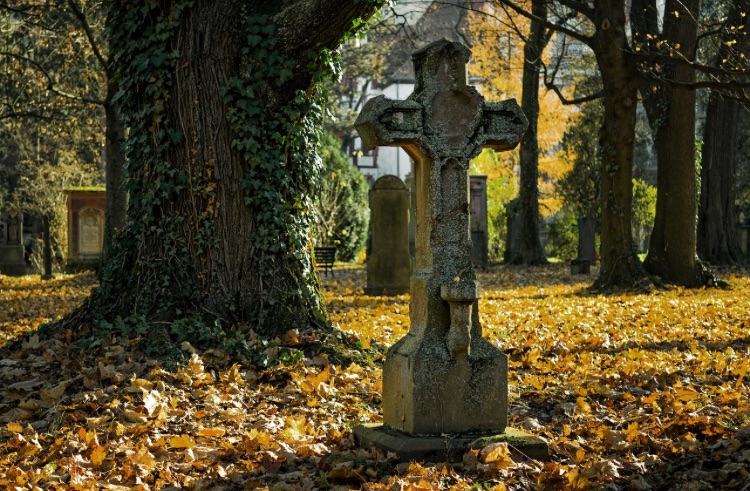
According to North American folklore or “hoodoo” or “hoodoun,” the foot has to come from the left hind leg of a rabbit that was shot or captured in a graveyard, sometimes during a full moon or new moon.
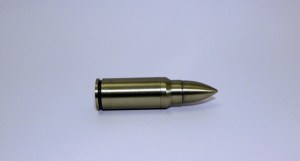
Some people say the rabbit must be killed on a Friday, a rainy Friday, or even Friday the 13th in order for the foot to be lucky. Some say the rabbit has to be shot with a silver bullet, and others maintain that the foot has to be amputated while the rabbit is still alive!
This is interesting as witches such as Isobel Gowdie claimed they could shapeshift into rabbits (amongst other creatures — the hare is more often associated with shapeshifting witchcraft). Witches were believed to be more active during full or new moons.
So, it may be that a lucky rabbit’s foot was originally cut from a shapeshifted witch.
Image by BRAIN_PAIN on Pixabay.com
Therefore a rabbit foot could be viewed as a substitute for part of a witch’s body (according to sympathetic magic).
Rabbit’s feet were also seen as lucky because they could be associated with the dead body of a criminal.
“The more wicked the person who is dead, the more effective the charm associated with his remains.”
During the election of Grover Cleveland in 1884, Grover was gifted the foot of a rabbit that was supposedly killed on the grave of Jesse James (a famous American outlaw).
Once a rabbit’s foot is obtained, it gets dried out and preserved. There are Victorian rabbit’s foot charms mounted in decorative silver. These days, both authentic and imitation rabbit’s feet (made of fake fur and latex bones) are on sale in shops, sometimes dyed different colours or attached to keyrings.
President Roosevelt – image by PublicDomainPictures on Pixabay.com
President Theodore Roosevelt received a gold-mounted rabbit’s foot from John L. Sullivan.
A related superstition in both America and Britain is for the first thing you say on the first day of the month to be “rabbit rabbit rabbit” for good luck during that month.
Frog Coffins
image by zdenet on Pixabay.com
Frogs in miniature coffins have been found buried in churches around East Finland from the 12th century. The coffins were usually around 15 cm (5.9 inches) long.
These coffins may have been placed as magical objects to “steal the luck” of rival fishermen, as many of the frogs were buried with bits of fishing equipment.
There have also been small coffins found containing puppets made from birch or alder bark, bits of fishing net, and textiles.
Folklore regarding the burial of frog coffins exists in eastern Finland including central Finland, Savo, Karelia, North Ostrobothnia, Kainuu, and sometimes as far up as South Lapland.
Lapland in winter. Image by adege on Pixabay.com
The frog coffins are usually intended as protection and counter-magic meant to reflect evil intent back onto the culprit(s) sending those intentions.
However, a subset of these small ritual burials were malicious. Those ones often included the burial of an item belonging to their intended victim. Frogs were usually buried but sometimes it would be squirrels, pikes, or even a human foetus.
The coffins would sometimes contain other things such as milk, feathers, hooves, or grains – it was believed to be possible to ruin a neighbor’s field by “borrowing” some grain from his harvest and secreting them in the frog’s mouth.
image by shogun on Pixabay.com
This powerful magic was thought to be able to kill its supposed victim.
On the other hand, these ritual burials were also used for healing. There was one cure for epilepsy that was performed under the assumption that the fits were a result of dark sorcery which could be deflected back to the witch or warlock.
Epilepsy was healed in the Kuopio region of Finland by getting the sufferer to sit, undressed, on the threshold of a house which had been moved three times.
The healer would then throw cold water on the epilepsy sufferer to startle them. After that they would go into the forest, capture a frog, kill it, and put it in a small coffin made from alder wood.
The frog was wrapped in shrouds made from a piece of the patient’s underwear. Then the coffin was placed under a church through a hatch in the church’s foundations.
image by Pexels on Pixabay.com
After that they would go to the churchyard, open a recent grave, and exhume a body. A hole would be dug into the side of the grave and the cadaver split so the epilepsy sufferer could be pulled through the hole in the side of the grave, then pulled three times through the split corpse, switching between clockwise and counter-clockwise directions.
During this macabre practice the healer would chant: ‘Rise all people, people of the air, people of the dead! Come to protect the unprotected, to help the endlessly suffering!’ At the end of the rite, the grave would be restored to its previous state.
Frog coffins were sometimes buried near cattle sheds to keep cattle healthy. A “cunning man” named Mikko Koljonen, born in 1812, described a frog coffin ritual to ensure that cows returned home at night:
…Before this the frog must be found – it should be a reddish one – and it should be caught with mittens or something else covering the hands; since if the coffin is made before the frog has been caught, what will happen is that no frog will be found at all. Otherwise the coffin will be prepared as explained before.
image by miniformat65, Pixabay.com
(First a coffin must be made from a single-growing alder. It should be trough-shaped and the lid, which should have nine holes along the mid-ridge, should be made from the same tree as also eight wooden nails. The red frog, which has not been touched with bare hands, is put on its back in this coffin with its hind legs bound with red thread. Then the lid is put on and fastened with the eight wooden nails and a ninth tar or coffin nail, which is driven in the third hole counted from the head-side, which coincides with the heart of the frog. The lid is not fastened by its rims, only with the nails that have been nailed through the frog all the way into the bottom of the coffin.)
Then some hairs are pulled off each cow three times and put in a rag which is closed with red thread; then the frog-coffin, cow-hair-pouch, and three sharp tools with unknown makers are carried while circling the cowshed twice clockwise and once counter-clockwise while reciting a spell…
Miniature coffin rituals often took place in Christian holy places (churches and churchyards) to utilise the “vaki” or power held within those areas, and elements of Christian practice, such as intoning fragments of the Lord’s Prayer, would sometimes be carried out during the rites.
image by creisi, Pixabay.com
Frog Coffin discoveries:
Kuopio Cathedral – At least 32 have been found here, first in 1895, then in 1901. Coffins pushed into space through ventilation hatches. Two of them were kept by the National Museum of Finland in Helsinki and another in Kuopio Museum. The coffins were alder wood with frogs inside, fishing net covering or wrapping the frog, a needle going through the frog with a white thread going through the needle. In one case, the mouth of the frog seemed to have been sewn shut!
Another 100 were found in a nearby church in North Savo.
Tuusniemi church, 1818 (in the bell tower) and in 1907. These coffins also contained bedbugs, animal hair, and grains. Another one was found under the church foundation in the 1930s.
Kiihtelysvaara church – a cat was found in an alder coffin,
old church of Pielavesi (these were not frogs but could be related to frog coffins – some 20cm long alder coffins were found containing carved humanoid figures.
Turku Cathedral in the west of Finland: this was a discovery of a varnished pine coffin with cloth, the initials H.M. on its base, during renovations in 1923.This coffin was perhaps from the late 17th or early 18th century.
Helsinki Cathedral, image by tap5a on Pixabay.com
Before the coming of Christianity to Finland, everyone practiced this sort of magic. However, people believed that good fortune or luck was limited and that you could not increase your share of luck without stealing it from other people.
It was approved magic to protect your own luck against witches or anyone who might try to take it, but it was forbidden witchcraft to take good luck from others.
Causing illness or bad luck to someone using curses or negative rituals was not socially acceptable and was often condemned.
Next week we will have a look at witch dolls and why rowan trees are supposed to protect buildings from evil…
Author of short stories, longer short stories and poetry. Passionate about music, doing various creative things, and making people laugh! An amateur artist and occasional book reviewer, he runs, edits and illustrates Once Upon A Crocodile e-zine.
View more posts








 Nightwalks
12 thoughts on “Rabbit’s Feet & Frog Coffins”