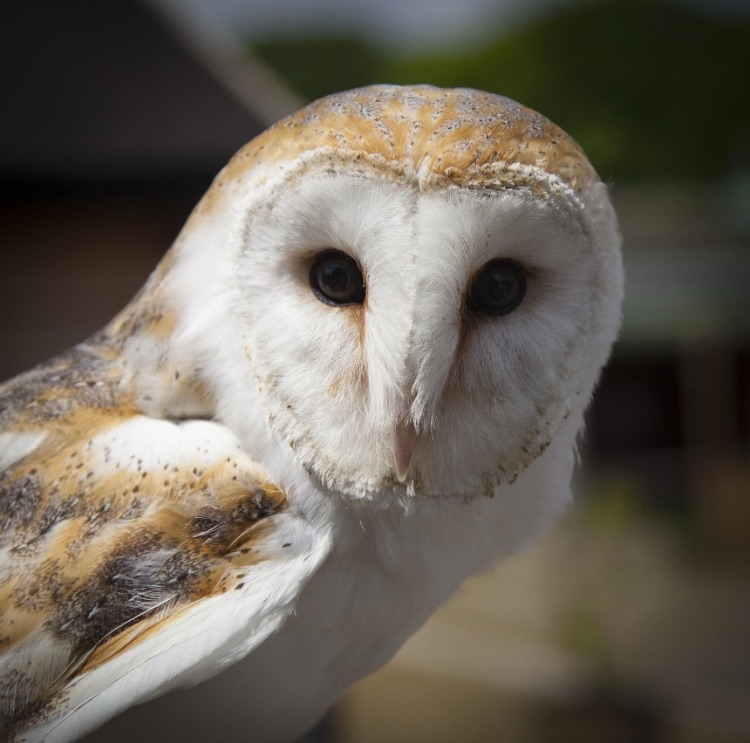
After reading Alan Garner’s “The Owl Service” recently I went on to learn about the Welsh myth of Blodeuwedd. Then I went on a deep-dive into the folklore surrounding owls…
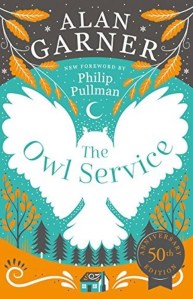
For those that don’t already know, Alan Garner (the author who gave us The Weirdstone of Brisingamen, one of my all-time favourite books) wrote a short novel called The Owl Service, published in 1967. The plot was based on one of the Welsh myths from The Mabinogion, the story of Blodeuwedd (lit. “Flower Face”), a woman made out of flowers by a magician so that his cursed nephew could have a wife.
In the novel, three teenagers are on holiday in Wales – Alison, her stepbrother Roger, and Gwyn, the son of the housekeeper of the house Alison has inherited – and they unwittingly trigger off a repeat of the events in the Welsh myth after they discover a pile of old plates in the attic, which appear to have a floral pattern on them in the shape of owls’ faces and bodies.
The Myth
Arianrhod (goddess of the moon, fertility, fate, and reincarnation) placed a tynged (a fate, curse, taboo, or vow) on one of her sons, Lleu Llaw Gyffes. The tynged was that Lleu would never marry a human woman.
Lleu’s uncle Gwydion, a powerful wizard and brother to Arianrhod, got wind of this and created Lleu a wife by his magic, using the flowers of oak, broom, and meadowsweet. He named her Blodeuwedd.
Blodeuwedd and Lleu were married, but obviously in these kinds of tales nobody bothers to ask the woman what she wants for herself. Blodeuwedd fell head-over-heels for Gronw Pebr, a warrior and hunter from Penllyn.
Blodeuwedd and Gronw plotted to murder Lleu so they could be together at last…
However, Lleu was only vulnerable to death in certain circumstances. He had to have one foot on a bath and one foot on a goat. He then had to be stabbed with a spear — and not just any spear, but one created for a year during Mass.
Blodeuwedd asked Lleu to show her exactly how he’d have to stand for someone to be able to kill him. Lleu had no inkling about his wife’s true motives — he and Blodeuwedd had been happily married so far.
As Lleu stood on the bath and the goat, Gronw appeared from somewhere and threw the requisite spear at him. Lleu escaped by changing into an eagle and flew away.
Blodeuwedd and Gronw lived together for a while after Lleu’s disappearance. But Lleu asked Gwydion to help him get revenge, and he returned and killed Gronw Pebr, making him stand in the same spot that Lleu was stabbed in. Gronw tried to use a large stone in the ground as a shield to hide behind, but Lleu’s spear miraculously passed through the stone and killed Gronw anyway, leaving a hole in the rock.
Gwydion then changed Blodeuwedd into an owl, which meant she was never able to show her face in daylight ever again and all other birds would shun her.
Interestingly, Arianrhod herself is sometimes symbolised by an owl, representing wisdom, though in Welsh tradition the owl is often seen as a bird of ill omen, darkness, and death. Sometimes, if an owl is heard amongst houses, the Welsh believe that an unmarried girl has lost her virginity, and if a pregnant woman hears an owl call, that means her child will be blessed.
In The Owl Service, Alison, Roger, and Gwyn find themselves re-enacting this love triangle, betrayal, and perhaps transformation (the ending was kind of a cliffhanger that could be interpreted either way, in my opinion). Alison was the reincarnation of Blodeuwedd, though I wasn’t exactly sure whether Gwyn was Gronw and Roger was Lleu, or vice versa, or whether they were swapping between the two as the book continued and their characters evolved over time.
Owls were first depicted in cave art 30,000 years ago, drawn upon the rock walls in Chauvet Cave in France.
In ancient cultures, the owl was symbolic of the afterlife and was believed to escort deceased souls to the underworld. It was also a guide or helping spirit according to Siberian and Inuit shamans, who wore owl feathers in their caps or on their collars. The Inuits had a story explaining the features of the owl, where a beautiful girl was transformed into an owl with a long beak, then in her owl guise she took fright at something and flew into the wall of her house, squashing her face and beak flat.
In many Indigenous North American cultures, owls were a connection to the mystical and otherworldly, with the power to bestow good luck on anyone who came across them. They were associated with magic and the supernatural, believed to be able to converse with spirits and the afterlife. Sometimes they were seen as the souls of living or recently deceased people. Some tribes saw owls as incarnations of gods, for example the Hopis thought the Burrowing Owl was the god of the dead.
Some of the Indigenous North Americans also viewed owls as creatures of safety and protection, able to guard the home and ward off evil spirits, and saw them as fierce warriors, allies, and protectors of the people.
Other Indigneous tribes saw owls as harbingers of disease and death. Some tribes referred to dying as “crossing the owl’s bridge.”
For other Indigenous peoples of the Americas, the owl is also associated with their god of death, The Skeleton Man. However the owl does not just symbolise death but also rebirth and regeneration – their Great Goddess has an owl companion too.
The Newuk tribe believed that when a bad person died, he became a Barn Owl, but if a good person died, he became a Great Horned Owl.
A common belief amongst the Zuni tribe was that putting an owl’s feather under a woman while she was in labour would help her deliver a healthy baby, and that placing an owl feather in a baby’s cot would ward off evil spirits.
For more about what the different Indigenous Americans believed about owls, visit https://www.owlpages.com/owls/articles.php?a=62
In Mexico, owls are associated with the underworld because they burrow underground. Hearing an owl’s hoot is believed to predict a death. The Mexican folk saint, Santa Muerte, is sometimes shown with an owl who helps her to find her way in the darkness. In Mexican folklore, La Lechuza, a shape-shifting witch, has the body of an owl and the face of an old woman.
In Guatemala, owls are associated with prosperity and abundance. People there store money in owl-shaped banks rather than piggy-banks.
In Peruvian art, owls carry defeated warriors to the world of the dead and occasionally they personify shamans, whose power to cure supernatural illness is strengthened by the strong vision of the owl.
The Greek goddess of wisdom and intellect, Athena, had a Little Owl as a companion. It sat on her blind side so she was able to see the whole truth. This owl was protected and lived in the Acropolis in large numbers. It was believed a magical “inner light” gave owls their night vision. The ancient Greeks therefore looked upon the owl with reverence and the backs of Athenian coins often had owls engraved on them. The owl’s sharp senses and intelligence mirrored Athena’s, and the bird’s nocturnal life represented the pursuit of knowledge even in dark times. The owl’s hoot was a call to learning.
The Romans thought owls were omens of coming disaster. Hearing an owl call meant there would be an imminent death – it’s said that the deaths of many famous Romans were predicted by an owl’s hoot, e.g. Julius Caesar, Augustus, and Agrippa. Whilst the Greeks thought that seeing an owl meant victory in battle, the Romans saw it as a presentiment of defeat. To them, a dream of an owl was an omen of shipwreck for sailors or of robbery. To prevent the evil “caused” by an owl, the Romans believed the owl should be killed and nailed to the door of an affected house.
Both Greeks and Romans believed that witches shape-shifted into owls to drink the blood of babies. In some other cultures, owls were thought to be the messengers of witches, and their calls heralded the approach of a witch.
In medieval Europe, the owl was a sign of doom, a harbinger of death. It was shown in art and literature as a messenger of the underworld. In Germany and East Europe, if an owl was found in a barn it was a sign of imminent death.
In British folklore, a screeching Barn Owl predicts an incoming storm or cold weather. During a storm, if a Barn Owl is heard, it is a sign the storm is almost over.
Odo of Cheriton, a preacher in Kent in the 12th Century, said the owl is nocturnal because it had stolen the rose – a prize awarded for beauty – and other birds punished it for that by only allowing it to come out at night.
In Malaya, it was thought that owls ate new-born babies, the Swahili people believed they brought sickness to children.
In Arabia, it was said that owls were evil spirits who abducted children in the night. At the same time, they thought that every female owl laid two eggs – one that could make hair fall out, the other egg having the power to restore lost hair.
In Algeria, they believed that if the right eye of an Eagle Owl was put into the hand of a sleeping woman, that woman would tell you the entire truth about whatever you wanted to know.
In Yorkshire, England, owl broth is seen as an old remedy for whooping cough, and the powdered, charred, hard-boiled eggs were meant to improve eyesight.
Until recently, owls were still being nailed to barn gates in the UK to protect barns from lightning strikes and bad luck. Having or carrying around owl feathers, eyeballs, hearts, bones, or even entire owl corpses was supposed to give protection against rabies or epilepsy in the old days, and give qualities such as courage, energy, or wisdom. Healers in medieval Europe would prescribe owls to their clients, including warriors who needed strength, and lovers who wanted to win the affections of someone using magic.
18th and 19th-century UK poets such as Robert Blair and William Wordsworth used the Barn Owl as a “bird of doom” in their writing.
People in those centuries also believed that the screech of an owl flying past the window of a sick person meant they would shortly die.
Alcoholism was treated with owl eggs in old folk remedies. The person who drank a lot of alcohol was prescribed raw owl eggs, and it was also believed that if a young child was given this treatment, it gave them a lifetime of protection against becoming an alcoholic.
In India, food made from owls was thought to have medicinal properties, effective for curing seizures in children (owl’s eye broth) and healing rheumatism (owl’s meat). Eating the eyes of an owl was said to make a person able to see in the dark, whilst owl’s meat was also believed to be an aphrodisiac. There was also a superstition about the number of owl hoots predicting certain events (which has a parallel to seeing numbers of magpies in the UK):
Numbers of Hoots:
1 = impending death
2 = success in imminent venture
3 = a woman will enter the family through marriage
4 = disturbance
5 = imminent travel
6 = guests will arrive
7 = mental distress
8 = sudden death
9 = good luck
Because the owl is able to rotate its head so far, it was believed you could get an owl to wring its own neck by walking in circles around it! (Owls can actually rotate their heads 270 degrees, not 360.)
Another odd belief: it has been suggested that a Barn Owl’s breath might glow in the dark and that, along with its silent flight, could be the reason behind certain sightings of UFOs! Another theory is that the glowing comes from the owl’s body, due to luminous mould or fungi sticking to its plumage.
Some cultures (like the Babylonians and the Romans) tried to augur the future by watching owls’ flight patterns.
In India, the owl is often associated with the goddess of learning (Saraswati) and with Kali (the goddess of death and destruction).
Perhaps over a thousand owls, including the endangered Brown Fish Owl, are killed every year during Diwali by black-magic wizards to try to ward off evil luck and obtain powers. However, owls are associated with the goddess of wealth (Lakshmi) who is the one the celebration is held in honour of. (When Lakshmi travels without Vishnu, she rides upon an owl – her vahan or vehicle – but when she journeys abroad with Vishnu they both ride on the eagle known as Garuda). Black magic and voodoo practitioners make amulets from the bones, beaks, and talons of owls. In some parts of India, wearing owl feathers or talons as talismans are thought to guard against evil or ward off illness.
The owls are also hunted during Diwali because during that festival, Lakshmi is believed to descend to Earth, and the idea is to get rid of the vehicle she would use to depart, thereby trapping her – and the resulting good luck – inside the home. Owls with ear tufts, like the Indian Eagle Owl, are often targeted.
In Russia, hunters used to carry owl claws around with them so their souls could use them to climb up to heaven if they died. The Kalmuks held owls as sacred because one was said to have saved the life of Genghis Khan.
While many cultures believe owls are bad (in Cameroon, it’s only referred to as “the bird that makes you afraid”), other cultures see owls as benevolent. For example, in Babylon, owl amulets were used for protection by pregnant women, the French people of Lorraine think owls can help spinsters find husbands, and in Romania, the souls of repentant sinners are believed to ascend to heaven in the form of Snowy Owls.
In France, owls were also looked upon with much esteem, for example the European Eagle Owl was named Hibou Grand-Duc and the long-eared owl was called Hibou Moyen-Duc. This may have originated from the Middle Ages when nobles below the rank of Duke weren’t allowed to wear plumes of feathers, so the “eared” owls must have the rank of a Duke. However this attitude of reverence changed, as the European Eagle Owl was known as vermin by the French until the late 1960s.
Blakiston’s Fish Owl is one of the most important gods of the Ainu peoples of Hokkaidu, in Japan. They call it kotan kor kamuy, or “god of the village” / “god who defends the village”. Owls are seen as incredibly lucky in Japan, featuring a lot in Japanese art. Japanese people may carry an owl-shaped good luck charm.
In China, a common moniker for owls, (especially “eared” owls) is “cat-eared hawk.” Another Chinese name for the owl is xiao. These owls have a legend attached to them – the story being that they were evil birds which consumed their own mothers. The Chinese character representing xiao is utilised in expressions to do with bravery but also ferocity. In China, the owl was also the bird of a storm god.
The hooting of an owl is hu in Chinese, which means “digging”. In China, hearing the owl hoot is a sign to begin digging a grave. Owls here are believed to have powers, such as the ability to steal your soul. If an owl is seen near a house in China, they burn dried bushes to scare it away.
In Poland, it was said that girls who died with no husbands changed into doves, and those who died as wives changed into owls. It was also believed that owls didn’t emerge in daylight because they were too beautiful and prone to being mobbed by other birds out of jealousy.
In Etruscan culture owls were associated with their god of darkness.
In Slavic mythology, the owl was one form assumed by Strzyga, a female vampiric demon who flew through forests and attacked unsuspecting travellers. She was said to relish blood and entrails.
The Mayan god of darkness, Ah Puch, was sometimes depicted with an owl’s head.
Some African tribes saw owls as the messengers of witches and wizards (hello, Harry Potter?) and the ancient Egyptians described them guiding souls to the afterlife in their Book of the Dead. In South Africa, many believe when an owl lands on the roof of a house or building and hoots, it has been sent by a sangoma (witch doctor) to deliver a terrible curse.
There are still superstitions about owls in parts of North America, for example in the Ozark Mountains, the sound of a screech owl can signify illness or approaching death. Children are warned never to imitate the owl’s call for fear that the owl will keep returning to the house, or even descend the chimney into the house and scatter the fire onto the floor, thereby burning the house down!
In New Hampshire, big owls were unlucky and meant death, but small owls such as screech owls were lucky and were thought to bring presents.
More information about species of owls and the legends associated with them:
Sources / Further Reading:
http://www.pauldfrost.co.uk/intro_o2.html
What Does The Owl Symbolise?
8 Myths about Owls | Superstitions about Owls
https://www.houseofgoodfortune.org/bonheur-blog/owls-good-or-bad-luck
 Nightwalks