
Digitally travelling back to a less complicated epoch, I found old reviews I wrote for books on Goodreads in 2013, when I was but a callow youth of 21.
A Trick of the Dark by B. R. Collins
5 out of 5 stars

I actually read this two or three times. It is amazing. Think Jekyll and Hyde crossed with something by Philip Pullman, with a little bit of J.M. Barrie thrown in, and you’ll come close to what this novel is like.
Strange Tales by Rudyard Kipling
4 out of 5 stars
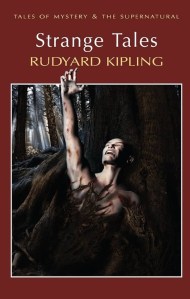
When I was ten or eleven, I remember reading a story called “The Mark of the Beast.” I never forgot the experience, so you can imagine the shiver of recognition I got on discovering it to be the very first strange tale in this book. And it isn’t the strangest. For irony (and clouded tigers) my other favourite was “The Tomb of His Ancestor.”
Junky by William S. Burroughs
4 out of 5 stars

An honest, straightforward, interesting, and often disturbing account of a man’s experiences with drugs and addicts, of heroin in particular. It’s not sentimental. It doesn’t need to be – it’s truthful and open enough for the truth to make you think. And it’s not just concocted by a random author with no first-hand experience.
Although the main character is called William Lee, he is based on the author William Burroughs, who used his own experiences in creating this short, to-the -point story. Though it’s autobiographical, the book only focuses on one aspect of his life, not the whole, hence the fact that his wife and family do not make an appearance unless mentioned briefly. Neither is his writing or time at college described, because he wanted to distance his main character from any sort of literary background.
Exquisite Corpse by Poppy Z. Brite
3 out of 5 stars

I enjoyed this book for its descriptions of and contrasts between New Orleans and London. Poppy Z. Brite writes from the point of view of two different serial killers, one of their victims, and his ex-boyfriend who is dying of AIDS.
Of course, being an erotic horror novel, it’s bound to get grisly and really weird. BUT the use of violence and so on isn’t used gratuitously and the characters, their memories, motivations, and (sometimes confusing, to me) thought processes are written with serious empathy.
The issues surrounding the AIDS epidemic and homophobia are another theme of the story and this is handled with tact and great depth of understanding.
Tunnels (Tunnels, #1) by Roderick Gordon and Brian Williams
4 out of 5 stars

I read this book many years ago, but I still remembered it vividly enough for me to glance at it in a library sale and go “A-ha!” then buy it and spend three days with my nose stuck in it.
It started life as a self-published book that grew to be very popular, and I’m not surprised it did. The characters are charming and peculiar, from the eccentric Dr. Burrows and his taciturn, albino son Will who both like digging to unearth abandoned underground railway stations, to the bizzarely, scarily practical Rebecca, his sister (twelve years old) and the people who make up the Colony.
The Colony is a race of old-fashioned, quite puritan people who live far below London and are convinced that “Topsoilers” are the spawn of the Devil, and who are also controlled by the cruel tyranny of the Styx, a group of precise, coldly logical people with mysterious origins who use inhumane, alien methods of extracting information out of anyone who isn’t toeing the line – kind of like the Nazis.
And I had a little chuckle to myself when, after reading about a humanoid creature from deep below the Colony called a ‘Coprolite’ I looked up the word in the dictionary. I love a dark story with humour.
The League of Extraordinary Gentlemen, Vol. 1 by Alan Moore
4 out of 5 stars
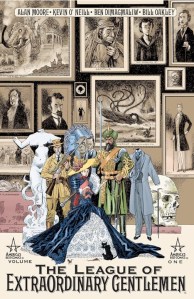
It’s not often that I read a comic (OK, OK, graphic novel) and feel some kind of connection to the characters. There was one author who did this for me, but it wasn’t until I read a Swamp Thing story by that author, then learned Alan Moore had written most of the Swamp Thing stories, that I thought I should read them.
Still haven’t found The Swamp Thing, but by weird coincidence, I found a copy of League of Extraordinary Gentlemen vol. 1 the day after, in the charity shop where I used to work. I was pleased I decided to buy it!
Set in the later half of the 19th century, this book weaves together different characters from stories set in the 1800s: Dr Jekyll and Mr. Hyde, Mina Murray (or Harker) from Dracula, Allan Quartermain, Mycroft Holmes and Moriarty, even the Artful Dodger and his band of pickpockets make an appearance. Add to that an invisible man, Captain Nemo, a scary opium-dealing Chinaman, and a substance that defies gravity, and you have a tale well worth the reading.
The “adverts” at the end were funny too.
The Scar (New Crobuzon, #2) by China Miéville
4 out of 5 stars
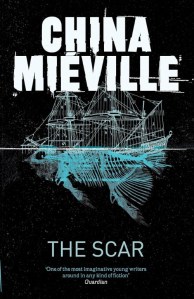
Normally I don’t often read maritime fiction. I know a very great little about boats and I find it hard to visualise the setting, especially when such technical terms as “forecastle” are used. (Yes, I do not know what a forecastle is, a situation which I shall attempt to remedy shortly.)
HOWEVER, in China Mieville’s “The Scar” the plot and strange characters more than make up for that. It’s about a floating city of ships stolen over the years by pirates, called “Armada” and it follows the story of Bellis Coldwine, a lonesome if composed woman running from New Crobuzon, the place she used to live in, for reasons apparent in the previous novel to The Scar, Perdido Street Station. (I have not had the pleasure of reading Perdido yet – doing my old trick of reading things in a funny order.)
There are different species of people living in Armada – cactacae, or “cactus people” – scabmettlers, who have blood which congeals abnormally fast and which they use as armour – and a great many others, e.g. khepri and llorgiss, that I had some difficulty imagining. Maybe they are introduced properly in Perdido. The different species form different factions. Mutiny is involved. A gap in space and time, leaking possibilities, is involved. Pirates, an avanc, a spy, unrequited love, and the “ab-dead” (but not the sparkly Twilight variety).
There’s a little bit of something in here for everyone, whatever floats your boat.
The Gormenghast Novels (Gormenghast, #1-3) by Mervyn Peake
4 out of 5 stars

Aged sixteen, I came across a battered old copy of the Gormenghast trilogy in the sixth form school library one bored lunchtime. I couldn’t get into it, so I left it behind.
Four years later, and I actually enjoyed it!
First, Mervyn Peake was an illustrator. He drew beautifully grotesque (or grotesquely beautiful?) pictures, which are littered throughout his novels. Which matches the kind of prose going on.
He must have had an obsession with finding the divine amongst the dank, because the story, which is mostly set in an ancient, crumbling, lonely, and somewhat sinister castle (Gormenghast) nevertheless is worthy of a film (is there one?) or a series of paintings.
There is a lot of description that sounds like poetry, or almost as if Mervyn were instructing an artist, but it doesn’t get in the way of the characters or the plot.
The story follows that of Titus Groan, the seventy-seventh Earl of Gormenghast, his hatred of the rituals he has to follow, and his eventual escape from the castle.
The third book in the trilogy is shorter and different in tone to the first two. Mervyn died before it was properly finished, and it had to be altered a little by Langdon Jones, and also there is more humour in the third book, a humour reminiscent of Lewis Carroll in some parts.
As a story, and as a rumination of the frictions between life and death, age and youth, tradition and freedom, and sanity and madness, this is one of the most absorbing things I have read for a time.
One Day by David Nicholls
4 out of 5 stars
The first book that I have read in the past few months which affected the way I felt after I finished reading it.
To begin with, I was really frustrated with some of the characters’ actions and words, because I didn’t always understand why they acted like that (hey, this is only the third ‘love story’ I’ve read in my two-decade lifespan. Still have trouble saying the words ‘love story’ with a straight face… but this is not a conventional love story, which makes it fascinating) but as time went on I grew to like them in spite of, or maybe even because of, that. Especially Dexter, which is ironic because he was the character I understood the least!
There was a bit towards the end – where something terrible happens, the subject of which I won’t describe in case any of you haven’t got around to reading the book yet – where I thought David Nicholls hadn’t handled the situation well, he just wrote it so bluntly… but when I read the chapters following on from that, about old memories and how it affected Dexter, I recognised what Mr. Nicholls had done as not being callous, but quite clever.
The way he described the disaster was short and sharp to fit in with what the reader should feel – shock – then the events afterwards build up melancholy and sadness.
But it’s the first time in months where I remember enjoying feeling frustrated, happy, shocked, then sad. Thumbs up to David Nicholls.
The Good Man Jesus and the Scoundrel Christ by Philip Pullman
3 out of 5 stars

This book takes an imaginative view of the New Testament and how it came to be written.
Some parts of it confused me, but I liked the idea of Jesus having a more retiring twin brother called Christ who worked behind-the-scenes to make sure his reckless, outspoken brother didn’t get into trouble…until a mysterious stranger manipulates Christ into doing something terrible, all for the sake of a story that people will remember and believe in for generations to come…
I quite enjoyed the story, although the beginning chapters of it were what confused me, and gave me a sort of wrong impression of what the book would turn out to be like. I at first thought it would turn out to be a retelling of the Nativity for younger readers, and wondered what it had been doing in the adult fiction section of the library, but thankfully it got more interesting after that.
Though I still have a couple of questions circulating in my head: was the angel disguised as a young man who came to visit Mary really an angel? (In the story, I mean.)
And why is it that, although Christ used miracles to get Jesus out of trouble when they were children, as an adult he can no longer do any and expects Jesus to do them?
But stories aren’t meant to answer all of your questions. If anything, they multiply them, and “The Good Man Jesus and the Scoundrel Christ” does that, as well as commenting on the nature of storytelling and how legends come into being.
The Great Divorce by C.S. Lewis
3 out of 5 stars

I’m not a Christian. Well, technically I am, but I’m not sure what I believe in. C.S. Lewis, as many of you will know, was one and this is a very short novella about a man’s journey into the afterlife, starting from the imaginary, antisocial streets of Hell and into the “Valley of the Shadow of Life” the landscape of which has similarities to Narnia (minus the talking animals. We have ghosts and Solid People – i.e. angels – instead).
I understood most of what happened in the book, but there were a few allusions to things I’ve never heard of, or Bible quotations which I found slightly irkulating. (Is that a word? It is now.)
And the fact that the man woke up at the end, and realised it was a dream, seemed somewhat cliched.
But it’s a thought-provoking read and C.S. Lewis had a good grasp of characterisation. The people in it were memorable and realistic.
U2 – A Diary by Matt McGee
4 out of 5 stars
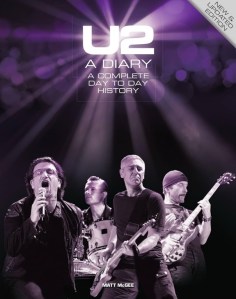
For someone who didn’t directly interview or spend time with U2, Matt McGee has written an incredibly thorough, in-depth account of practically everything the band has done since they started back in the 1970s. Quite a feat.
The edition I read had some corrections and extra additions added on at the end of the book in 2011. It was really interesting for me because I learned some odd things, like the fact that Bono’s very first nickname was… I kid you not… Steinhegvanhuysenolegbangbangbangbang, or that the Edge played guitar on some tracks with Jah Wobble.
The pictures are all in black and white, and it would have been better if some of them were in colour, and there were a lot of typos (but not so much as to make it incomprehensible. Though at one point I did get confused when Joe O’ Herlihy was said to have appeared behind the band on “a video well”) but I would recommend the book to any serious U2 fan.
 Nightwalks