
Delving into the archives of reviews I penned on Goodreads in 2015. (I have ironed out some proofreading mistakes and tweaked them for better wording, but other than that they are exactly as they were originally.)
U2 & I by Anton Corbijn
5 out of 5 stars

Funny and charming, both the photos and the annotations Anton Corbijn wrote for some of them. Occasionally I found his handwriting hard to read, but only with 2 or 3 words. Really interesting, I would recommend this for any U2 fan who’s not read it. N.B. there is a (small) naked Adam in it but not in a sexual way – just standing there really.
We Have Always Lived in the Castle by Shirley Jackson
4 out of 5 stars

This is the first thing I have read by Shirley Jackson and I thoroughly enjoyed it. For such a short book it deals with so much in a short space of time, and the character of Merricat is an interesting one. Her narrative tone is similar to the voice of the main character in Mark Haddon’s “The Curious Incident of the Dog in the Night Time,” but it wasn’t until the second or third chapter, when I noticed how she spoke to her sister, Constance, that I wondered whether she might be autistic (according to the afterword, she actually had paranoid schizophrenia) and I forgot she was eighteen years old. Some of the fantastical things she said – about having a winged horse and living on the moon – could easily have come from the mouth of a seven-year-old. There was a darker side to her as well, quite disturbing… and she knew an awful lot about poisonous plants.
The Three Musketeers by Alexandre Dumas
4 out of 5 stars

I loved the camaraderie and the irreverent humour in the face of danger that the Three Musketeers and D’Artagnan have. I can’t say I liked their attitude to women, but then times were different in the book (France in the 1600s, to be precise).
My favourite character was Athos. To me, he is the most mysterious and sad and seems more three-dimensional, probably because he has a backstory that is gradually revealed throughout the book whereas nothing is really explained about Porthos and Aramis.
I was disappointed that Madame Bonacieux had to meet with the fate that she did, because she felt like the one strong, realistic female protagonist (the Lady de Winter being an excellent villain, of course, similar to Philip Pullman’s Mrs Coulter).
Kitty the maid was so naïve and subservient I wanted to climb inside the book and either give her a hug or strangle her to put her out of her misery, but that was just my personal reaction!
The Once and Future King (The Once and Future King, #1-5) by T.H. White
4 out of 5 stars

As a child, I watched the Disney movie of The Sword in the Stone, and though it was funny, I was never satisfied with the ending. It seemed too short. Imagine my pleasant surprise when I found this book by T.H. White, a collection of five of his books retelling the stories of King Arthur, Morgause, Lancelot, Mordred, etc, with “The Sword in the Stone” being the very first one. I was in for a feast.
The narrative tone is brilliant: amiable, knowledgeable, and with a trace of subtle schoolboy humour and a quirky wit. T. H. White knows what he’s writing about, but never really rubs your face in the amount of research he must have done.
Admittedly, I had to keep looking up about three or four of the words per page (not being conversant in medieval / Old English words) but don’t let this put you off reading it. You don’t actually feel as if you’re learning anything from it until you’ve finished the book, and THEN you realise…
The final book, “The Book of Merlyn” was published after T. H. White died. While it had some interesting philosophical arguments in it, it was more conversation than action. However, I felt so attached to the characters by that stage, it didn’t matter to me.
The Owl Service by Alan Garner
4 out of 5 stars

Brilliant, eerie / beautiful atmosphere. The story was a tad confusing because the narrative style is so sparse, you can’t always tell whether a piece of dialogue is said in seriousness or as a joke and you have to guess what the characters are feeling and what their motives are, quite often.
I loved the fact it was based on an old Welsh myth but was not certain which character was meant to be playing the role of which mythological character. But it wasn’t bad. It brought Susan Cooper to mind.
One Moonlit Night by Caradog Prichard
4 out of 5 stars

Such a strange little book. Most of it is the childhood / teenager memories of the narrator, a boy growing up in a poor Welsh village surrounded by all kinds of things a child should not have to witness, told in a disarmingly frank tone of voice.
Interspersed with that are some chapters of odd, mystic-type poetry which doesn’t make logical sense but seems to echo with the story’s events. Now, I read somewhere (was it in the Afterword?) that all of this story was a run-up to the narrator himself going mad, as his mother did, but I don’t know. The ending is too ambiguous for me to be certain whether he did lose his mind or whether he was just very, very sad.
But the book is not all doom and gloom. If you are careful, you will find a few tongue-in-cheek moments.
The Martian Chronicles by Ray Bradbury
5 out of 5 stars

Fantastic. A man with the same sense of humour and wonder as Roald Dahl takes the hype about colonising the planet Mars and produces a wealth of short stories inspired by it.
Some of them are very short, walking a well-balanced line between flash fiction and prose poetry, and the longer stories are so vividly imagined and strange they are more like paintings turning into a film in the mind’s eye.
If you’ve never read Ray Bradbury this would be an excellent thing to start with.
The Buried Giant by Kazuo Ishiguro
4 out of 5 stars
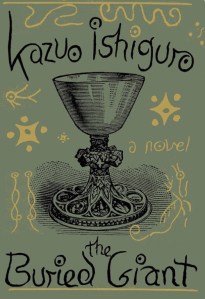
The story was interesting and odd, like a new myth.
The narrative tone was a little like the narrator was a mysterious character in his own right, perhaps telling us the story “orally” by a warm fire – at least, this was the image of him I had in my head – but we don’t really discover who Axl and Beatrice used to be before the mist that wiped out most of their memories. Are they completely invented by Kazuo Ishiguro, or based on little-known characters from Arthurian mythology?
There’s also a Wistan and an Edwin in here, both of which sound curiously familiar… it’s as if we are being made to experience the mist alongside the characters… I think I like that.
The Rituals of Infinity by Michael Moorcock
4 out of 5 stars
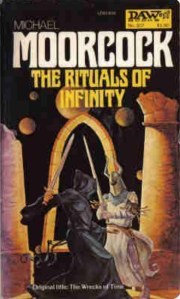
It started off in a vaguely confusing way, but then as the book carried on it got really, really weird. In a GOOD way.
The book’s other title is “Or the Further Adventures of Dr. Faust” and it touches on the Creation Story and stuff to do with angels in a clever, subtle manner, in a science fiction way to begin with, but then in the last few chapters of the story it becomes more like horror. Will definitely be reading more stuff by this man.
Can’t Be Arsed: 101 Things Not To Do Before You Die by Richard Wilson
4 out of 5 stars
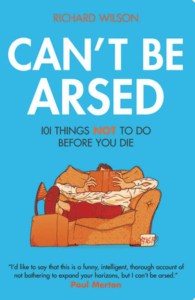
Hilarious, but some of the things Mr Wilson moans about should probably be taken with a pinch of salt. Not everything mentioned in this book is rubbish, but I have to admit that going bungee-jumping and cutting a child’s umbilical cord are not very high on my list of things to do (rather my list of Things to Don’t [and not at the same time!]).
His description of how pointless it is to build an igloo or put up a tent had me rolling around on the carpet in fits.
(N.B.: This writer is not the same person as the actor who played Victor Meldrew.)
Cloud Atlas by David Mitchell
5 out of 5 stars

Incredible. Coils within coils. The experience of reading this book is like watching lives telescoping out through time and often in the same spaces, coincidences, birthmarks, and thoughts overlapping.
This is like a telescopic book, or stories within stories within stories, like a Russian doll. It is hard to explain exactly how David Mitchell did it but once you read it, it makes perfect sense.
A bookscope!
Thus Spoke Zarathustra by Friedrich Nietzsche
3 out of 5 stars
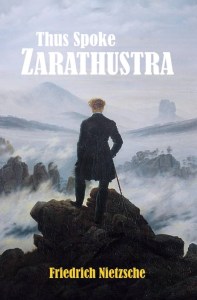
The writing style in this book can be manic and over-the-top, but I soon got used to it and most of the imagery is as vivid as good poetry (there is even some poetry in it).
It pokes fun at religion, namely because Nietzsche believed that people must be in control of their own wills and destinies instead of expecting a God to sort it out for them.
Despite the book’s message that God has died, it was very rarely defeatist. I found most of Zarathustra’s discourses inspiring and uplifting, though there are still a few parts I wasn’t sure I understood. The message seemed to be: go your own way, not anybody else’s; don’t try to be like anybody else, or mind about what they think of you; be confident, and, don’t be a hypocrite. If you are going to do good, or do evil, make sure it is brave and great and not a small, petty action. Fairly sound advice.
An Author’s Guide to Publishing by Michael Legat
3 out of 5 stars
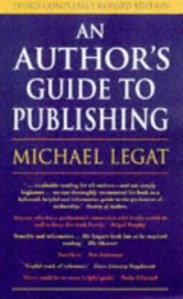
Really helped me to understand some of the twists and turns of manuscript submissions, contracts, and the publishing process.
However, as it was written back when most people were still using typewriters, I’m not sure which bits still apply today and which bits have changed, so I would find a similar book that was written in the 00’s, just for comparison.
Michael Legat’s voice in this book is both friendly and straightforward, and also rather witty.
Raven Summer by David Almond
5 out of 5 stars
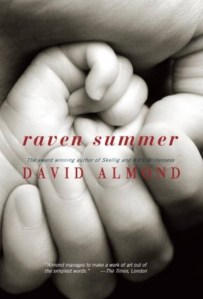
I think I’m not the only adult out there who loves David Almond’s writing. His sparse and elegant prose explores some deep, thought-provoking issues without getting sentimental or “mushy”.
There’s all the beauty of summer and the danger of wilderness in this book. This is probably the third time I’ve read it, and would heartily recommend it to anyone who likes Maurice Sendak, Roald Dahl, or Michael Morpurgo.
The Universe Versus Alex Woods by Gavin Extence
5 out of 5 stars

Gavin Extence’s first novel tackles a range of complicated stuff – epilepsy, astronomy, euthanasia – but does it in a really accessible way, through the eyes of Alex Woods, an intelligent but somewhat naive 17-year-old who was knocked unconscious by a meteorite aged ten and had to learn to live with the consequences.
The tone is straightforward, often funny, and towards the end, incredibly sad, but throughout Alex acts according to his own integrity. Even when death and the law get involved.
 Nightwalks