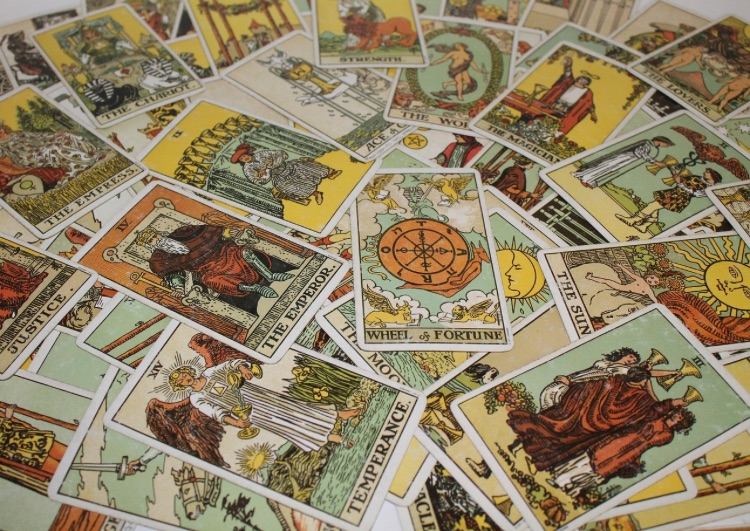
A further dive into what they are and how they changed through history.
Before the psychologist Carl Jung adopted the term “archetypes” for the unconscious patterns of thought he proposed that all humans share, his friend and fellow psychologist Sigmund Freud tentatively named them “archaic remnants.”
What is even more archaic is the word “archetype” and the concept itself.
The term “archetype” (arche = Greek for beginning / origin, typos = Greek for pattern, model, or type) was first used by a man called Philo, an ancient Hellenistic-Jewish theologian and philosopher who lived in Alexandria (the Roman part of Egypt) in 20 – 50 AD.
Philo
Philo interpreted the Torah (the Jewish Bible) in an allegorical way, seeing its characters as parts of the human being and the stories in it as representing things that happen in universal human experience. He maintained that the human mind was depicted by Adam, and the human senses were represented by Eve. Noah stood for “tranquillity.”
He found symbolism in objects and numbers, and found a lot of symbolism in many different proper names.
Like the philosopher Plato, Philo equated physical matter with nothingness, seeing it as destruction and the decay of things. To him, only God could be said to definitely exist, but in a region beyond space and time. God did not make any interventions in what was happening on Earth because God’s being encompassed the whole universe.
Philo also believed humans were simply unable to “behold an ineffable God.” He found the “anthropomorphism” of God in the Torah (descriptions of him having hands and feet, eyes and ears, etc) to be something that didn’t agree with Plato’s concept of God in opposition to matter. Instead, he said that God was described as looking man-shaped for teaching purposes only.
As Philo saw matter as “evil” and thought God could not have contact with it, he came up with the idea of “divine powers” sometimes coming from God but also separate from him. Philo saw these divine powers as patterns or “archetypal ideas” that not only caused things but continually produced and maintained those things. Philo equated these divine powers with angels.
However, Philo also grouped all the divine powers together into one being or “demiurge” he called Logos, and said it was the “first-born” of God and the highest intermediary being between God and matter. Logos was the “idea of ideas” or “the archetypal idea,” a thing that bound everything together, a receptacle of ideas both separate from the world but also woven into it, providing its structure. It was almost like a second God, a form of high priest, or God’s shadow upon creation. Logos was responsible for putting the human mind in order.
Philo, like Jung, had some interest in dreams. He wrote several allegorical commentaries on the Torah that included five books about dreams mentioned in it, called De Somniis books 1, 2, etc, but three of those books have been lost to history.
Plato’s Forms / Ideas
Though Plato did not use the word “archetype,” his theory of Forms or Ideas was rather similar. He lived before Philo, in about 430 – 350 BC, and was an ancient Greek philosopher.
His theory of Forms or Ideas postulated that everything in the physical world was not truly real but an echo of its true, perfect “Form” which was in the heavens, or somewhere outside of space and time, and our souls knew these perfect Forms before we were born, which was why humans had a common ideal as to what certain things should look like, e.g. a line or a circle, even though there is no such thing as a perfect line or a perfect circle in reality.
Irenaeus
Another person who used the term “archetype” was Irenaeus, specifically in his descriptions of Gnostic beliefs.
Irenaeus was a Greek bishop hailing from Smyrna. He lived from about 125 – 202 AD and he wrote a book called Against Heresies which was about Gnosticism and why it was bad / untrue.
Gnosticism, which comes from a Greek word meaning “having knowledge” was a set of philosophical and religious ideas developed by early Christian sects and other religious sects. They focussed on thinking about the nature of existence and believed that personal knowledge was more important than the authority of religious institutions / traditions.
Gnostics usually believed in a higher being, called the Monad, who produced other divine beings, one of which was Sophia, or the personification of Wisdom, who then created the imperfect demiurge which made the physical world, trapping souls within that world until they regained divine knowledge or “gnosis.”
Gnostics saw material existence as flawed or even evil and thought salvation could be reached through direct knowledge of the hidden divinity, gotten through mystical insight.
Gnosticism was pronounced as heresy by the early Church in the second century AD. (Heaven forbid that people learn how to think for themselves!)
The Corpus Hermeticum
The Corpus Hermeticum is a mysterious collection of 17 Greek writings which is said to be written by “Hermes Trismegistus” a character based on the gods Thoth and Hermes. Originally written about 100 – 300 CE, it was first compiled in medieval times and also mentions archetypes.
Treatises in the book include:
- I. Discourse of Poimandres to Hermes Trismegistus
- II. Hermes to Asclepius
- III. A sacred discourse of Hermes
- IV. A discourse of Hermes to Tat: The mixing bowl or the monad
- V. A discourse of Hermes to Tat, his son: That god is invisible and entirely visible
- VI. Hermes to Asclepius: That the good is in god alone and nowhere else
- VII. That the greatest evil in mankind is ignorance concerning god
- VIII. Hermes to Tat: That none of the things that are is destroyed, and they are mistaken who say that changes are deaths and destructions
- IX. Hermes to Asclepius: On understanding and sensation: [That the beautiful and good are in god alone and nowhere else]
- X. Hermes to Tat: The key
- XI. Mind (Nous) to Hermes
- XII. Hermes to Tat: On the mind shared in common
- XIII. Hermes to Tat, a secret dialogue on the mountain: On being born again, and on the promise to be silent
- XIV. Hermes to Asclepius: health of mind
- XVI.[a] Asclepius to King Ammon: Definitions on god, matter, vice, fate, the sun, intellectual essence, divine essence, mankind, the arrangement of the plenitude, the seven stars, and mankind according to the image
- XVII. Asclepius to King Ammon
- XVIII. Tat to a king: On the soul hindered by the body’s affections
Chapter 15 didn’t survive, but excerpts from the missing chapter can be found in Anthology by Joannes Stobaeus / John of Stobi, including the longest one (Korē kosmou [The Daughter of the Cosmos or The Pupil [of the eye] of the Cosmos] which was compiled in the 5th century.
No one is entirely sure whether the Hermetica was originally Greek or ancient Egyptian, or a mixture of the two. The dialogue format from “father” to “son” of each chapter echoes the ancient Egyptian sybat or wisdom literature.
In Muslim tradition, Hermes Trismegistus has been associated with the prophet Idris (or the Biblical Enoch, whom the magician John Dee said was the last mortal man to understand and speak the language of the angels.)
Hermeticism was developing at around the same time as Gnosticism but wasn’t exactly the same thing.
Hermetic writings from the Egyptians were about summoning spirits and getting statues to come to life, and those writings influenced the oldest texts on Greco-Babylonian astrology and on alchemy (which was a fairly new “science” at the time).
Hermetic philosophy influenced religious or cult practices and gave the one practicing them a means to “ascend” from the constraints of the physical body.
Jung’s Archetypes
Jung’s archetypes were mental rather than religious, but they also existed in a world outside of normal chronology and were changing on an evolutionary timescale. He also called them “dominants” because of how much they affect human mentality. It is impossible to list absolutely all the archetypes or completely differentiate between each one, because they can appear in myriad forms in people’s dreams, in literature, art, myths, and religion. Though people have tried to list some of them. Jung’s main ones were:
Animus – the masculine archetype within a woman’s mind. Both her own potential for masculine qualities and her own expectations of men.
Anima – the feminine archetype within a man’s mind, his potential for feminine qualities and his own expectations of women.
(The above two definitions are obviously the classical definitions, which were thought of during a time when gender roles were a lot more restrictive than they are today. Given what is known now about gender identity and equality, Jungian psychologists say that everyone has both an Animus and an Anima to varying degrees, regardless of sex or gender. It is more accurate to say the Animus or Anima is the opposite thing to the person’s Persona.)
The Shadow – the other, or fear of the unknown / death, what we dislike about ourselves, the personal unconscious, the direct opposite of the Persona. It can degrade the person’s ego and cause damage to their relationships with other people if it isn’t acknowledged and integrated with the rest of the personality.
The Persona – the public front we use to conceal our true selves when interacting with other people.
The Self – the ultimate goal of a person’s psychological development. Unity, wholeness. The integration of all the different parts of the personality. According to Jung, this manifests during a person’s middle-age.
The Mother – represents nurturing, forgiveness, and protection. Love, compassion, patience, caring. Manifests as your mother or maternal figures in life.
The Maiden
The Father – represents strength, anger, the protector, the provider, wisdom. Manifests as not only father figures but kings, chiefs, etc.
The Child
The Trickster
The Flood (there are several stories or myths about a flood or deluge across different cultures).
The Wise Old Man
The Animal
The archetype of Initiation – life transitions, rites of passage
The Oedipus Complex (the “first and only” archetype discovered by Freud before he and Jung parted ways)
Many of the archetypes form a “syzygy” or opposing pair, or two sides of the same coin, e.g. The Wise Old Man is complementary and opposite to The Trickster, and the Animus is complementary and opposite to the Anima.
According to Jung, as we grow, the archetypes unfold through a programmed series of events which he called the stages of life, e.g. being raised by parents, initiation, courtship, marriage, and preparing for death.
In 1986, Cann & Donderi did a study, the findings of which showed that memories of archetypal dreams were correlated with Jungian personality type.
This suggested that not only do environmental and biological factors influence what archetypes are expressed, but personality might play a role in how archetypes crop up in the stages of life.
Next week we’ll be exploring how the idea of archetypes ties into the study of myths, language learning, marketing, and ultimately storytelling, and whereabouts in the human body or mind archetypes could originate from. Is it in the DNA? Part of the brain? Find out next Wednesday at 3.30p.m. (GMT)!
Sources:
- appliedjung.com
- iaap.org
- crossdreamers.com
- Wikipedia
 Nightwalks
2 thoughts on “Where did Archetypes come from?”