
Last week we delved into the scientific process of Kirlian photography / electrophotography and how pseudoscience has adapted it into a method of “reading people’s auras” — guessing their emotions, thoughts and health according to the colours shown around them.
I decided to experiment with different aura photography apps available on the iOS app store, making sure to remain in the same area of the room while being “scanned” for each one, with no change in other variables (didn’t ingest or drink anything, didn’t smile, kept my mind blank [which wasn’t so difficult, it being a Sunday].)
What follows is a document of my experiences with AURLA, Aura: Energy Detector with AI, Aura Pro: Elite Aura Analysis, and AURA – Astrology & Horoscope.
AURLA
4 out of 5 stars
This app asks you to place both thumbs on the bottom of the screen while it does its thing, then you take a photo of your face. According to the app description, you can “take beautiful aura portraits and selfies right from your phone” and each session includes “a photo and reading derived from our advanced biofeedback algorithm”. This author wasn’t sure how it gets biofeedback from a pair of thumbs, but had a go anyway.
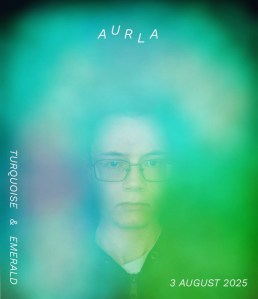
This was an informative app with some type of logical method behind it. It kept personal information to a minimum and maintained that it doesn’t save your photos or photo data on its servers.
The reading was in three parts: colours, alignment chart, and a general reference guide for all the colours in case the AI missed a subtle tone that was in the photo (which it did in mine).
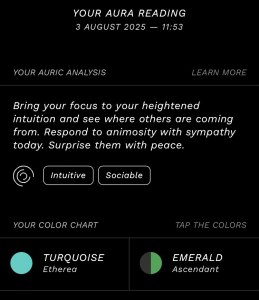
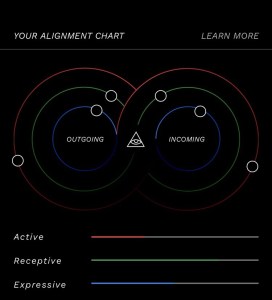
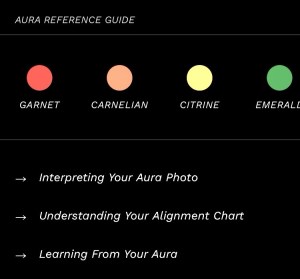
There were a few specific terms for different areas of the aura reading, and the positions and shades of the colours in the “aura” had an effect on the aura’s meaning:
- ascendant (on the subject’s right-hand side, or in the right “energy field”) — what is incoming / what the subject is receptive to
- descendant (on the subject’s left-hand side or left “energy field”) — what the subject is expressing / giving out to the world
- cathedra (the bottom half of the photo)
- coronation (the top half of the photo)
- etherea (on all sides of the subject)
The app also detected a percentage of what colours were present, whether in a majority, moderate, or minority, which gave more nuance to the reading as well.
Overall, this app was easy to use and had clear and well-written instructions and descriptions as to what everything meant.
Cons: you get one free photo and reading to begin with, then you have to either pay 99p for single photos & readings or subscribe for £72 a year, with a limit of 5 photos a day.
There are certain hues in the photo that can be missed by the algorithm and you can’t always be 100% sure what shade of which colour from the list of hues it is that you’re looking at.
Other users mentioned the colour of the “aura” changed within seconds from one photo to the next, so it was extremely likely to be fake. However, determined to keep an open mind, this author moved on to…
Aura: Energy Detector with AI
2 out of 5 stars
I was intrigued by this app’s inclusion of “aura healing sound frequencies” (hey, I am a fan of Brian Eno) along with solfeggio frequencies (what are those??) so this was the next one I decided to try.
According to the description, the app claimed to be able to read a person’s aura from a recording of their voice. When I tried it, the app said my voice was inaudible despite me giving it microphone access. Hmm.
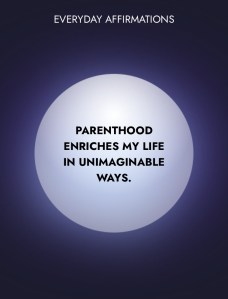
The app also included descriptions of what each colour meant, a personal spiritual AI assistant, guidance on what auras are compatible with each other or not, random daily affirmations that you tap to reveal, um…
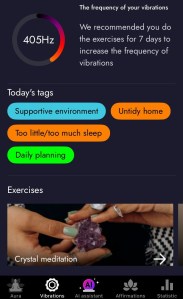
…also a way to measure your “daily vibrations” in Hertz by selecting different tags that describe your day, which then gives you different self-help and mindfulness exercises to “raise your vibrations.” These Hertz readings were recorded as a bar chart over time under the Statistics tab which I thought was interesting. However it didn’t say whether the Hertz number was good or bad.
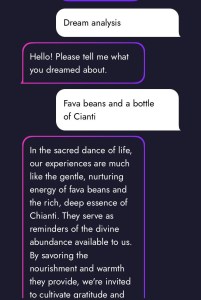
The AI assistant could be asked questions or provide guidance on “increasing frequency of the soul’s vibration”, what aura colours depend on, what aura colours say about the user, vibration frequencies and food, dream analysis (now dreams are something that I find really interesting), compatibility of auras, managing stress, health and wellness, and life balance for a healthy mind. A lot of the advice given was more or less common sense and I could only consult with it three times a day on the unpaid version.
As is often the case these days, some features were locked behind a subscription paywall — I couldn’t read the full description of the colours found in my “aura” or listen to any of the sound therapy tracks.
So what were my results?
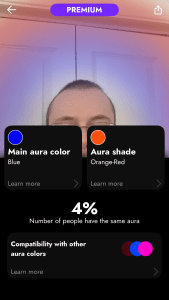
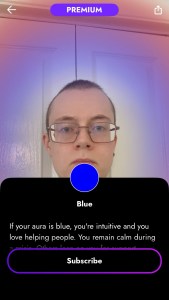
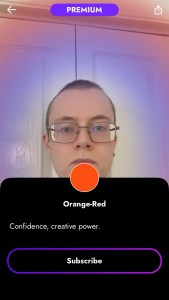
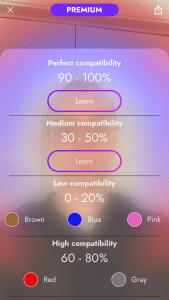
Blue and orange/red. On one hand, turquoise and emerald (i.e bluish-green) and on the other hand, blue and orange-red. OK. Moving on then…
Aura Pro: Elite Aura Analysis
2 out of 5 stars
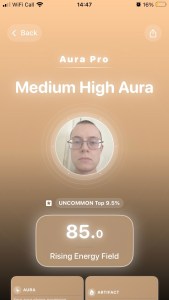
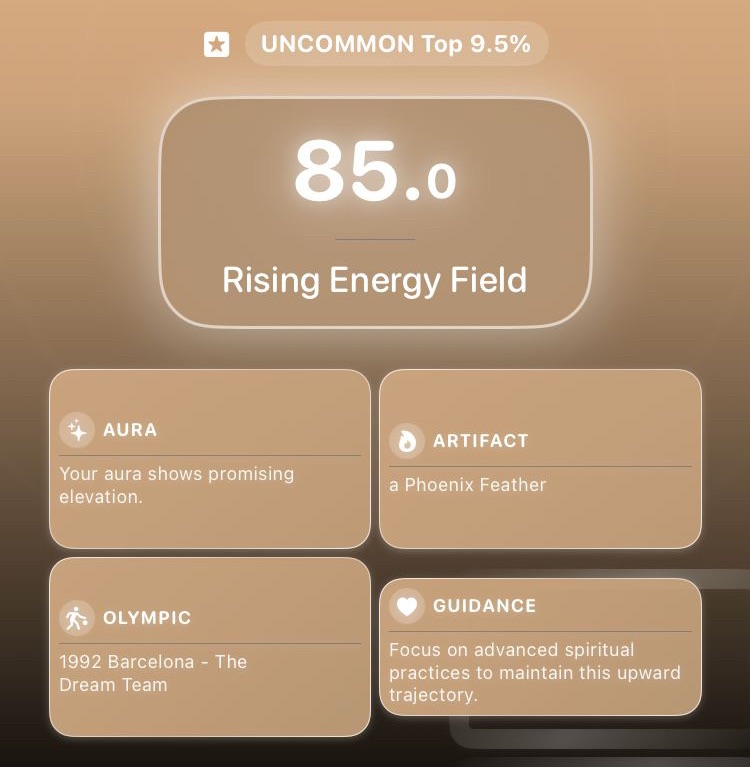
Whatever this app was meant to be doing it wasn’t measuring the colour of my aura – it gave me a number.
Cons: there was no free option. I paid 99 pence for a single scan, then it got stuck on the “advanced aura scan” screen which was reminiscent of the loading screen in the Sims computer game, but didn’t generate anything. I had to exit the app and go back into it, then redo the scan (but thankfully it didn’t charge me a second time).
The end result was a weird numerical rating with an “artifact”, “olympic” etc underneath that. I didn’t understand this – maybe it’s something to do with DnD instead?
Result: 85.
AURA – Astrology & Horoscope
1 out of 5 stars
This app supposedly gives you a daily horoscope reading, astrology wallpapers for your phone, breathing exercises and mindfulness practices to help you control your energy, and meditative soundscapes.
My experience: The app uses AI to measure “energy” and doesn’t even require a photo or any obvious data from you and fabricates your “aura” from nothing and your answers to a couple of questions e.g. “Are you adventurous?”
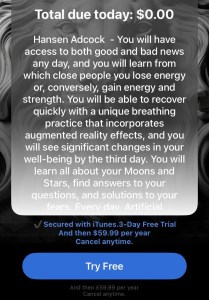
When giving you the results, you get a vague “good and bad news” message asking you which one you want to read first, then it only lets you read the one you picked before prompting you to subscribe for $59.99 a year. Not on your nelly.
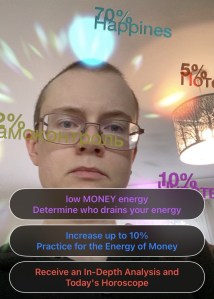
Then it shows you a screen of your face, surrounded by a halo of colours and percentages of what I assume are meant to be emotions, only most of them look like they’re written in Russian. All other features are locked behind a subscription paywall. The layout was confusing and not very professional.
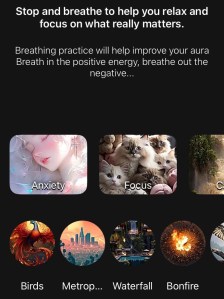
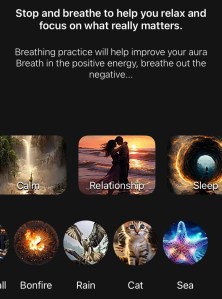
There was some nice-looking artwork for the different menus of breathing exercises and soundscapes, most likely AI-generated.
So, what were my results?
Light blue, yellow, green, and orange (from what I could see), and 70 percent happines, whatever those are.
(N.B.: I found out what solfeggio frequencies are. They are tones set to Hertz numbers that resonate with the Schumann resonance (or 8Hz) that are supposed to bring the body and mind into certain states, e.g. alpha, beta, gamma, theta, or delta brainwaves. More info at this site here.)
The findings of this aura-reading experiment are as follows:
My aura is:
- turquoise and emerald with a note of pink / brown
- blue and orange-red
- light blue, yellow, green, orange, Russian, and 70% happines.
So there we have it. I am a flipping rainbow.
 Nightwalks