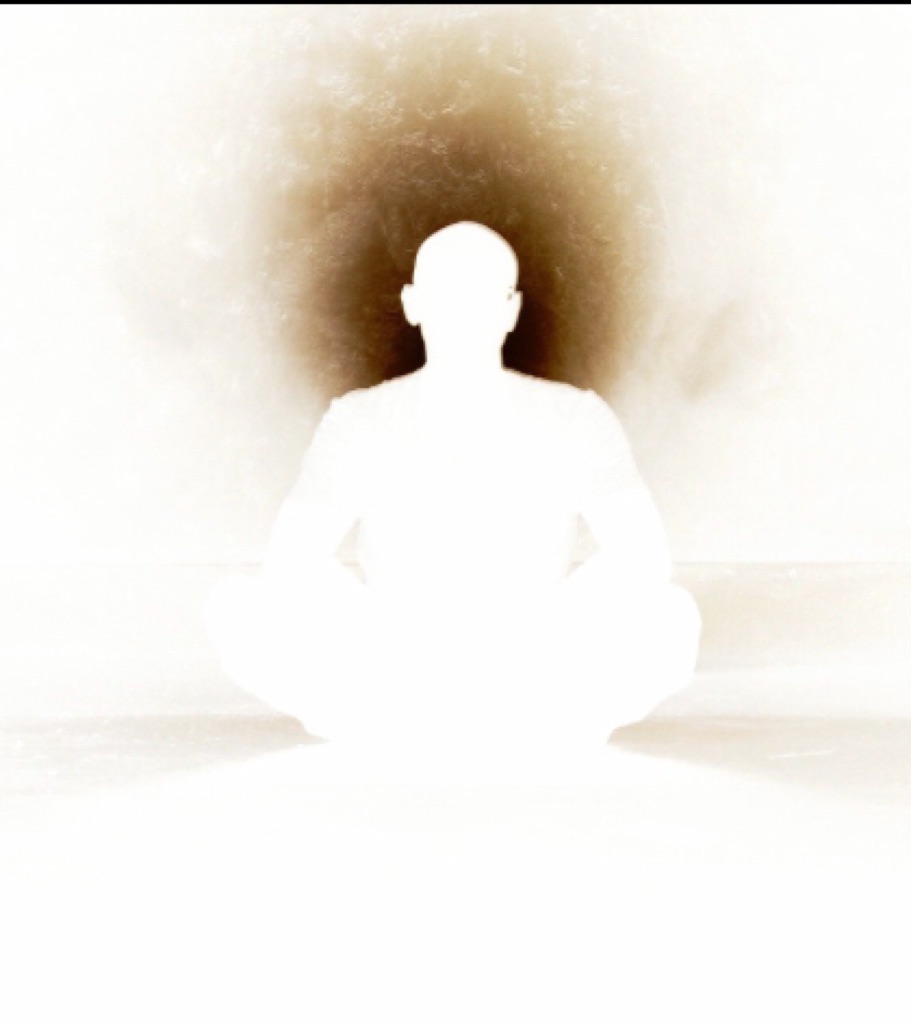

Back in 1939, Semyon Kirlian, (a Soviet electrical engineer and scientist) and his wife Valentina discovered a bizarre photographic phenomenon.
Someone in Krasnodar Hospital was receiving a treatment which involved a high-frequency electrical generator. Semyon and Valentina noticed that whenever the electrodes were near the patient’s skin, there was a glowing light similar to the one found in a neon discharge tube.
The Kirlians started to perform some experiments. They placed photographic film on top of a conducting plate, then attached another conductor to either a hand, a leaf, or another bit of a plant. The conductors were both charged with a high-frequency, high-voltage power source. The end results were images on the film — usually silhouettes of the objects, surrounded by auras of light.
The Kirlians began reporting their findings in 1958 but they were more or less unknown until 1970, when their electrophotography was mentioned in a book, Psychic Discoveries Behind the Iron Curtain by Lynn Schroeder and Sheila Ostrander.
High-voltage electrography was soon named Kirlian photography. The glowing around the objects became known as a Kirlian aura.
In the early 1970s, Thelma Moss and Kendall Johnson at the University of California in Los Angeles’ Neuropsychiatric Institute did more detailed research on Kirlian photography. The Neuropsychiatric Institute had an independent, unfunded parapsychology laboratory staffed by volunteers, which the university closed down in 1979.
People used, and still use, Kirlian photography to make art.
George Harrison had his hand Kirlian photographed at the UCLA parapsychology lab holding a medallion. The image from that became the front cover of his Living in the Material World in 1973.
In 1975, David Bowie, who was interested in the paranormal, visited the UCLA parapsychology lab and had his crucifix and the end of his finger Kirlian photographed, both before and 30 minutes after taking cocaine. The resulting images were used as artwork for his 1997 album Earthling.
Other artists who have used Kirlian photography include Robert Buelteman, Dick Lane, and Ted Hiebert.
To begin with, it was believed that the aura around objects was an image of an actual energy field possessed by all living beings, a life force which showed their physical and emotional states — their aura. The Kirlians conjectured that these coronal images could be used to diagnose illnesses.
To demonstrate their hypothesis, they would electrophotograph a picked leaf at set intervals, saying the leaf’s withering would correspond with a decline in strength of its aura. Sometimes, if a section of the leaf had been torn off, its aura still showed a faint image of the missing section.
However, if the plate was cleaned of any residual moisture, the missing section of the leaf wouldn’t appear.
The amount of moisture inside the leaf was having an effect on the coronas. The more moisture there was, the more light was visible in the aura. As the leaf dried out over time, less light would be given off. Obviously, water increases electrical conductivity.
Other things that affect the corona in electrophotography include how well-grounded the object is, the voltage and frequency of the charge, how hard the object is pressed onto the film, oils, sweat, bacteria, and other ionising substances found on living tissues.
Colour photographic film is manufactured to create faithful colours when exposed to natural light. The corona discharges or Kirlian auras interact with tiny variations in different layers of dyes in the film, creating a variety of colours depending on the intensity of the electrical discharge.
Scientists like Beverly Rubik have looked at the idea of a human “biofield” using Kirlian photography research to try to explain the ancient Chinese discipline of Qigong, which teaches that all living things possess an energy named qi or chi.
Even today, there is a belief that people and other living beings have auras, and that colours found or “seen” in auras show what people / beings are thinking and feeling, and what their physical health is like. There are people who profess to be able to “see” and read auras, sometimes with their naked eyes, other times with special photographic apparatus.
There are even apps that supposedly read and analyse auras. Next week, this author will be testing and reviewing some of them.
 Nightwalks
One thought on “Is it Kirlian or Aura Photography?”