
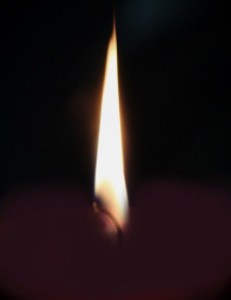
Latin – English translation: “Foolish Flames.”
Known in the UK as hinkypunks, friar’s lanterns, or jack-o-lanterns, ignes fatui or ghostlights / will-o-the-wisps appear in certain areas and are believed to lead travellers astray in folklore (or, sometimes, to show them the correct route to take if they are already lost). Last week’s post covered the possible scientific causations of such lights.
The French class will-o-the-wisps as feu follet, and in Germany they are known as irrlicht (meaning “wandering light” or “deceiving light”) or irrwisch. They are abu fanous in Arabic folklore.
Will-o-the-wisps are often attributed to elemental spirits, alien / UFO activity, ghosts, or fairies / hobgoblins / hobs. Depending on the location of the light, the will-o-the-wisp can be called something else, e.g. if seen in a graveyard it’s known as a ghost candle or a corpse candle.
But it’s not just the UK that has these ghostlights. They are found under different names all around the world, with different ideas as to what is generating them.
Ireland
The Irish origin story of the will-o-the-wisp concerns a fellow named Drunk Jack or Stingy Jack. The Devil came to collect his soul and he got out of it by tricking the Devil into turning into a coin, then used that coin to pay for one last drink. He put the coin in his pocket next to his crucifix, which prevented the Devil from changing back to his usual form.
In exchange for his freedom, the Devil gave Jack ten more years to live. After the decade had passed, Jack tricked the Devil into climbing a tree then carved a cross under it, which stopped him from being able to climb back down. In exchange for erasing the cross, the Devil cleared Jack of all debt to him.
However, because of his character, Jack wasn’t allowed into Heaven. This meant he had to travel to Hell upon his death and ask for a place there. The Devil denied Jack entry to Hell in revenge, giving him only an ember from the infernal fires to light his way on his journey to limbo or wherever it is that lost souls go. Jack put the ember in a lantern made from a carved turnip (which is probably what inspired the practice of carving pumpkins on Halloween).
Mexico
Strange lights in Mexico are explained in folklore as follows: there are witches that transform themselves into lights. Or, the lights signify where gold or other hidden treasure is buried. If so the lights are named luces del dinero (money lights) or luces del tesoro (treasure lights) and the hoard can only be found with the help of children.
Bridgewater Triangle, Massachusetts
This swampy area has been home to a vast array of paranormal or unusual sightings, some of which are ghostly lights, sometimes attributed to UFOs.
Louisiana
Known as the fifollet or feu follet, this otherworldly light is said to be a soul sent back from the dead to do God’s penance, but instead it gets its revenge by attacking people. Usually it only pulls mischievous pranks, but it is claimed to drink children’s blood. Some folks say it’s the ghost of a child who died before it could be baptised.
Brazil
Here the will-o-the-wisp is the boi-tata, from the old Tupi language meaning “fiery serpent.” The serpent’s great burning eyes are said to blind it by day, but at night it can see absolutely everything.
According to myth, the boi-tata serpent, a cave anaconda, survived a deluge and left its cave afterwards. In the darkness, it ate every animal and corpse it found, especially devouring its favourite part — the eyes. The accumulated light from all the swallowed eyes gave the snake its burning glare.
Argentina / Uruguay
Here the ghostlight is called luz mala or “evil light” and is mostly seen as a shining ball of light floating a few inches above ground in rural areas. It is greatly feared.
Colombia
Known as La Bolefuego or Candelija, the light is said to be the ghost of an evil grandmother who raised her grandchildren to be bad, and they grew up to be thieves and murderers. After death, the grandmother was condemned to wander the earth surrounded in flames.
Trinidad
The soucouyant / soucriant or “fireball witch” is an evil ghost that looks like a flame at night. During the day it looks like a reclusive old woman or man, but at night it removes its skin and puts the skin inside a mortar, then flies into the sky as a fireball. It slithers into homes through any gap it can find and drinks the blood of the inhabitants.
It sucks the blood from soft parts of the body, (e.g. arms, necks, legs) leaving black and blue marks which the victim notices in the morning.
If too much blood is exsanguinated, the victim either becomes another soucouyant or their skin is assumed by the killer. Practitioners of black magic, soucouyants trade the blood of the victims with Bazil, the demon who resides in the silk cotton tree, for evil powers.
To defeat a soucouyant, you are supposed to pile rice around the house or at the village crossroads. Like vampires, soucouyants have the compulsion to stop and gather the rice grain by grain. Coarse salt must be put in the mortar that contains their discarded human skin, so the creature becomes unable to put it back on.
Soucouyants are part of a class of spirits called jumbies. Belief in them may have originated from French vampire-myths. In the French West Indies, there is a legendary Soukougnan or Soukounian that is a person able to shed their skin and become a vampiresque fireball. It is also known as loogaroo which is similar to the French word for werewolf (Loup-garou).
The Bahamian Hag is very similar — an elderly female humanoid being that sheds its skin to become a fireball or disembodied candle-flame. In some way she sends her victims to sleep, then resumes her usual body shape (minus the skin), lies on top of her victims while they sleep, and drinks every drop of their blood.
Bangladesh & West Bengal
The marsh ghost-light known as Aleya is observed by the people of Bengal, especially people out fishing. They are said to be marsh gas or apparitions of fishermen who died. They confuse fishermen and make them lose their bearings, possibly even drowning those who would decide to follow the lights over the marshes.
However, sometimes the lights are believed to protect the fishermen against future danger.
Banni Grasslands, Gujurat, India
The chir batti or chhir batti (“ghost light”) is a dancing light that appears on dark nights here, on its seasonal marshy wetlands and also the nearby desert of the salt flats of the Rann of Kutch, which lies between India and Pakistan.
Tamil Nadu and Karnataka
Here the lights are called Kollivay Pey, which suddenly appear and vanish in the darkest parts of the night in the marshes and hills, along with stacatto flickers of flame, tricking travellers into pursuing them up winding and rocky roads, higher and higher, until they issue a last blazing light in front of the travellers, who leap to catch it, only to realize they have leaped off a precipice.
Kerala
Here, they are known as Kuliyande Choote.
See here about a book covering a vast array of Indian ghosts, from A to Z
Kashmir
The Bramrachokh / Bramaracokh / Rachok carries a pot of fire on top of its head and has a strong, shining eye in the middle of its forehead. This creature / demon lives in solitary regions and lures travellers — by pretending to be a light — into a ditch or a cave, often to their deaths.
Japan
In Japanese folklore, the lights are the hitodama or “human soul” as a ball of energy, hi no tama or “ball of flame,” or aburagae, koemonbi, or ushionibi. All of these strange lights are commonly associated with graveyards.
The hitodama may be the phosphorus in a buried dead body reacting to water on rainy nights to produce light. Or they could be fireflies, misrecognitions of shooting stars, swamp gasses, light bulbs, and even hallucinations.
Kitsune (a form of yokai / demon spirit that usually has the shape of a fox but can shapeshift, beguile, and disorientate people) produce kitsune-bi or “fox fire” whenever two of them get married.
Korea
Dokkebi bul or “goblin fire” or “goblin light” (a glimmering light or tall blue flames) are seen around rice paddies, mountains, old trees, and some houses here. They are seen as malevolent, causing people to lose their bearings or fall into pits at night.
China
The earliest reference to ghostlights in China was the now almost out-of-use letter known as lin. The character looked almost like a stick figure surrounded by dots which might have represented will-o-the-wisps. At the bottom of the character were “feet” similar to the “feet” at the bottom of the character wu (meaning “to dance”). Over time, the top part of the letter became corrupted to resemble fire, then later changed again to resemble mi, the letter for “rice.”
The “ghost fire” was claimed to come from the blood of dead men, horses, and cattle that had soaked into the ground during war then resurfaced as a kind of fire after many years.
Germany
The irrlicht or irrwisch in Germany was held to be the soul of a non-baptised child, but apparently the soul could be redeemed by burying the child’s remains close to the eaves of a church so that once rainwater splashed onto it from the church roof, a clergyman could speak the baptismal formula over the grave.
Sweden
Here the will-o-the-wisp was also the soul of an unbaptised person, trying to lead travellers to water in the hope of being baptised.
Finland
The Finns believed that will-o-the-wisps denoted the location of treasure hidden deep underground or underwater, which could only be retrieved when the light / fire was visible. According to superstition, early autumn was the best time of year to go hunting for such paranormal treasure, though some folk believed whoever had hidden the treasure had made it available only on the summer solstice, and deliberately set a will-o-the-wisp to mark the exact spot.
Sometimes other magical procedures were required to get the treasure, such as using a “dead man’s hand”.
The places that had an eternal flame in Finn mythology were the Aarnivalkea (also named virvatuli, aarretuli, or aarreliekki) and were said to mark the place where faerie gold was buried. These places were concealed by a glamour preventing anyone from stumbling upon them by chance, but if someone were to obtain a fern seed from a mythical flowering fern (ferns don’t grow flowers!) the seed would lead them to the right places.
Wales
The lights are thought of as “fairy fire” held in the hand of a pwca, a type of goblin (part of the Tylwyth Teg family of fairies) that leads travellers off the path at night. After following it for a while, the traveller is left stranded in a bog or marsh when the light suddenly extinguishes itself.
Also, the light is thought to signify a funeral is soon to take place in that area.
“A peasant travelling home at dusk sees a bright light travelling along ahead of him. Looking closer, he sees that the light is a lantern held by a “dusky little figure”, which he follows for several miles. All of a sudden he finds himself standing on the edge of a vast chasm with a roaring torrent of water rushing below him. At that precise moment the lantern-carrier leaps across the gap, lifts the light high over its head, lets out a malicious laugh and blows out the light, leaving the poor peasant a long way from home, standing in pitch darkness at the edge of a precipice. This is a fairly common cautionary tale concerning the phenomenon; however, the ignis fatuus was not always considered dangerous. Some tales present the will-o’-the-wisp as a treasure-guardian, leading those brave enough to follow it to certain riches – a form of behaviour sometimes ascribed also to the Irish leprechaun. Other stories tell of travellers surprising a will-o’-the-wisp while lost in the woods and being either guided out or led further astray, depending on whether they treated the spirit kindly or harshly.”
— Wirt Sikes, British Goblins
Devon & Cornwall
The pixy-light leads travellers astray and into bogs with glowing lights, and they are capable of creating strange sounds similar to poltergeists. They were thought to be able to blow out candles held by courting lovers or make vulgar kissing noises, which were often misconstrued by the lovers’ parents!
Pixy-light is associated with “lambent light” which the Old Norsefolk may have seen watching over their tombs.
The pixy-light is also associated with the “colt pixie”, that takes the shape of a horse and plays pranks such as neighing at other horses to lead them into getting lost.
Guernsey
Known as the faeu boulanger, or “rolling fire”, this light is thought to be a wandering soul. On being confronted with it, one should turn their coat or cap inside out or stick a knife into the ground blade-upwards. These folk remedies serve to stop the faeu in its tracks and then impale itself on the knife to try to kill itself.
Scottish Highlands
Known as the spunkie, this being would take the form of a linkboy (a boy that carried a lit torch for paying pedestrians so they could see) or just the form of an always receding light.
The spunkie was also blamed for shipwrecks at night, as their light could be spotted from the sea and mistaken for a harbour light.
Other stories from Scottish folklore say that the strange lights are omens of death or the spirits of once living humans. They were often seen over lochs or on roads that funeral processions had travelled on.
The Hebrides
Here the lights are called teine sith or “fairy light”, though there’s no explicit connection between the lights and the “fairy race.”
Oceania
The Australian version of the ghostlight is the min min light, seen in parts of the Outback after dark.
Most of the sightings take place in the Channel Country area.
Tales about the min min lights can be found in aboriginal myths from before Australia was settled by Westerners.
Some indigenous Australians say the number of the lights seen has increased as the number of Europeans entering the region has increased.
The lights have been said to follow or approach people but disappear if fired upon / shot at, only to reappear later.
Next week: more stories of ghostlights from around the world, including a Canadian “ghost-ship” and a Devil’s Lantern…
 Nightwalks
One thought on “Ignes Fatui Around the World”