

The term “seance” comes from the French word meaning “session,” (from Old French seoir, meaning “to sit”).
These days, practically everyone knows a seance involves meeting with a group of like-minded people (or curious sceptics) in a dimly-lit or darkened room to try to communicate with the deceased or other denizens from the “spirit world.”
However, this post will be delving into the old tools and techniques used by mediums in seances in the Victorian era and some of the history and psychology surrounding the practice.
Are you ready? Place your fingers on the metaphorical planchette and I will begin…

Seances became popular with the beginning of Spiritualism as a religion in the 19th century and into the early 20th century. Spiritualism holds the belief that individual consciousness lives on after death and can be spoken with. It also believes that the afterlife or “spirit world” is a dynamic place where spirits continue to change and evolve, with some spirits being more advanced in wisdom and intellect / power than living humans.
Spiritualists believe that spirits can give advice on moral and ethical problems and explain the nature of God. Some spiritualists have a “spirit guide” a special spirit assigned to them which teaches and gives them direction.
Spiritualism first appeared in New York in the 1840s, and was most likely inspired by the old writings of Emmanuel Swedenborg (1688 – 1772) and Franz Mesmer (1734 – 1815), who invented mesmerism, or hypnotism.
Swedenborg, an inventor and scientist, had claimed that he talked to spirits whilst awake, and described the spirit world as having an hierarchical structure of several lower and higher heavens and hells. Although he warned people not to try communicating with spirits, his works seemed to inspire people with the want to do so!
Franz Mesmer invented what later came to be called hypnotism, which could apparently induce trances and cause the hypnotised person to have contact with paranormal entities. Demonstrations of Mesmerism throughout North America involved a lot of showmanship and was a method of entertainment as well as teaching ways to contact with “the divine”.
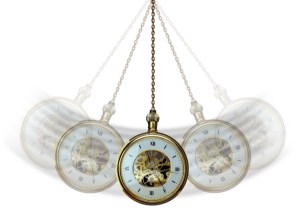
Andrew Jackson Davis then invented his system of “harmonial philosophy” based on Mesmerism and Swedenborg’s ideas. He dictated a book while in a trance state to a friend in 1847 – The Principles of Nature, Her Divine Revelations, and a Voice to Mankind – which eventually turned into the closest thing to a canonical work in the Spiritualist movement.
The movement properly began in March 1848, when the Fox sisters Kate and Margaret said they had contacted a spirit which spoke to them using “rapping” sounds that were audible to witnesses. The spirit was later said to be a peddler who was murdered, and whose body was discovered in their house in Hydesville, New York.
Quakers Amy and Isaac Post took the sisters into their home in the late spring 1848. They were immediately convinced and introduced the sisters to their circle of Quaker friends.
The Fox sisters quickly became a celebrity sensation, conducting seances in public. In 1888, the sisters finally admitted that their initial contact with the “peddler’s spirit” had been a hoax, though shortly after that they withdrew this admission.

Many early Spiritualists were radical Quakers involved in the mid-19th century reform movement — trying to abolish slavery, increase women’s rights, and improve conditions for the Native American people.
Other mediums:
— Cora L. V. Scott or Cora Hatch (her surname changed four times with marriage) before the American Civil War. She was a trance lecturer.
— Achsa W. Sprague, who became ill with rheumatic fever aged 20, and said her recovery was due to spirits interceding on her behalf
— Paschal Beverly Randolph, a mixed race abolitionist, spiritualist and trance medium before the American Civil War.
— Maria B. Hayden (who introduced Spiritualism to England)
— The Davenport Brothers (who were exposed as frauds by the professional conjurer John Nevil Maskelyne).
— Emma Hardinge Britten – trance lecturer and organiser. Chronicled the spread of the movement
— William Stainton Moses – an Anglican clergyman who filled 24 notebooks with automatic writing (but was suspected of trickery)
— Eusapia Palladino – an Italian medium from the slums of Naples who toured several countries and was said to levitate tables and make objects and spirits appear in the darkness (later found to have used trickery).
— William Eglinton – a British medium who also used tricks
— The Bangs Sisters – based in Chicago, they did “spirit portraits” or painting the dead
— Mina Crandon – in the 1920s was known for producing an “ectoplasm” hand in her seances. Later exposed as a trick which used a piece of animal liver.
— Etta Wriedt – an American voice medium who produced noises using chemical explosions (more details under the Tricks section)
— Helen Duncan – a Scottish materialisation medium- her “spirits” were artificially made from painted papier-mache masks draped in old sheets (more details under the Tricks section).
Following on from the success of the Fox sisters, mediumship (including seances) became a profitable thing and was soon a popular entertainment and form of catharsis.
Visible, audible, and tangible proof of spirits was increasingly important as various mediums competed with each other. Independent investigations, such as the 1887 Seybert Commission, found that fraud was widespread, and some cases were prosecuted in courts.
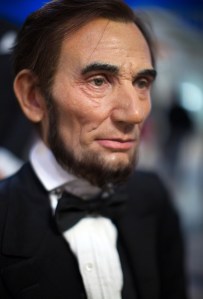
Despite the prevailing trickery, mediumship still had a strong appeal. The wife of Abraham Lincoln, Mary Todd, organised seances in the White House while they were grieving for the death of their son.
Some scientists investigated mediumship and Spiritualism and became converts, including physician and author Sir Arthur Conan Doyle, who lost his son Kingsley and was a member of “The Ghost Club” founded in London in 1862. (Other members included Charles Dickens).
Thomas Edison wanted to invent a “spirit phone” — a device that would bring the voices of the dead to the living and record them.
The Society of Psychical Research was founded in London in 1882, which even had a Committee on Haunted Houses!
Both psychical researchers and magicians or writers about magic exposed multiple cases of charlatans and fakers. During the 1920s, Harry Houdini started a well-publicised campaign exposing fraudulent mediums.
In February 1921, spiritualist Thomas Lynn Bradford committed suicide (aged 48) by extinguishing the pilot light on his heater and turning on the gas in his flat. He did this as an experiment to try to prove the existence of an afterlife. He recruited Ruth Starkweather Doran to receive information about the spirit world from him once he had passed. Ruth received no communication from him, and the New York Times ran a story about it titled “Dead Spiritualist Silent.”

The Spiritualist movement spread through the world, most popular in the UK and the US. By 1853, the wealthy and fashionable in England were attending or hosting teas that involved table-turning (a seance where spirits communicate with the living by floating or rotating the table at which they sit). Most followers of Spiritualism were upper or middle class.
American spiritualists congregated in private houses for séances, or at lecture halls for trance lectures, at conventions, and at summer camps, especially in New England and the upper Midwest.
The movement was occurring around the same time as the development of photography and Darwin writing about the theory of evolution, both of which possibly influenced the movement from a psychological perspective.
Tricks
A number of different methods were used by different mediums to provide physical “proof” of spirits and / or ectoplasm materialising.
- RAPPING. The Fox sisters’ “rapping” was produced by them clicking their toe joints against a hardwood floor, cracking their knuckles, and tapping on different surfaces with their fingers.
2. APPORTS (transference of an object from one place to another, ostensibly by paranormal means, most often stones, flowers, perfumes, and animals such as live birds, or fruit):
— objects would be hidden in the clothing of the medium and secretly brought out.
— small stones could be attached to the back of the medium’s ears with flesh-coloured tape.
— Some female mediums went so far as to hide objects inside their anatomical orifices downstairs, including the gauzy fabric “ectoplasm” as these were areas no Victorian sceptic would have likely asked to search.
— other objects were smuggled into the room.
3. MATERIALISATIONS of spirits and ectoplasm:
— dolls were used made from painted papier-mache masks, draped in old sheets.
— Helen Duncan’s ectoplasm was made from cheesecloth, rubber gloves, and heads cut out from magazine covers.
— ectoplasm was made out of fine white gauzy material such as muslin, which could be squashed up small into a hiding-place on the medium’s body, then released, e.g. swallowing then regurgitation
— ectoplasm was also made from textiles smoothed with potato starch, or
— paper / tissue paper,
— cloth and egg white,
— glue
— gelatin
— butter muslin
— Mina Crandon’s “ectoplasm hand” which issued from her stomach region and waved about during seances, was made from a carved piece of animal liver.
4. TRUMPET MEDIUMSHIP (the medium holds and manipulates a “trumpet” which is supposed to be a conduit for direct voice communication from spirits as well as amplifying them. Sometimes the trumpet appears to levitate or move of its own volition.):
— noises were made using a chemical reaction by mixing potassium and water or with lycopodium powder
5. TABLE-TILTING / TURNING / LEVITATING (the seance members had to lay hands on top of a table and wait for the table to move whilst they slowly recited the alphabet out loud. The table was supposed to be moved by a spirit on hearing the correct letter, thus gradually spelling out words and sentences):
— This could have been the ideomotor effect at play (see PSYCHOLOGY section) or deliberate trickery
— two early scientists attributed the table movements to a physical force from the bodies of the sitters, which they named “ectenic force” which was later supposed to emit from an unknown fluid in the human body called “psychode,” (or, later on, “plasma”) that produced “psychic” or “ecteneic” forces that influenced external matter — what we know today as “telekinesis.”
— the tables used would have been lightweight with a pin or nail discreetly put in. The medium would wear a ring with a notch on it and the pin would fit inside that notch, so the medium could secretly move the table with their hand.
6: SLATE-WRITING: (a writing-slate and implement would be placed on a table with the writing implement hidden underneath, or the slate would be laid under the table and spirits were claimed to “write” upon them, and words would appear on the slate):
— if the slate was laid under a table, the medium would wear shoes easy to slip off and write words on the slate with his / her toes.
— a metal instrument could be used to scratch words on the slate beforehand, then the slate would be washed both sides (careful not to show the scratched side until it was wet) and as soon as the slate was dry the words would appear.
7: SPIRIT PHOTOGRAPHY: (capturing images of ghosts).
— As cameras became available to the public, phenomena such as the flash reflecting off particles of dust, a camera strap or hair close to the lens, lens flare, or pareidolia (seeing faces in inanimate objects — see PSYCHOLOGY) were attributed to spirits.
— Photography started with the daguerrotype process in 1839. Images were developed straight from the exposure plate, but as it needed long exposure-time, any passing movement could leave a faint image in the end result. This was later used as a deliberate technique to make such images as “The Ghost in the Stereoscope” in the 1850s.
— In 1859, glass-plate negative processes made it easier to reuse an exposure plate, which meant that previous images could still be faintly visible in a picture. Early spirit photographers used this trick.
— photographers could also simulate a spirit using dolls wrapped in gauze with photos of faces attached.
— light painting (moving a source of light while photographing it with long exposure).
8. SPIRIT CABINETS (cabinets that the medium would be placed into, seemingly tied and gagged and / or blindfolded, so the audience would think they couldn’t possibly be creating the phenomena using trickery).
— these were in fact useful to hide props, costumes, and mechanisms in
— ropes could easily be slipped out of
— the medium would often have an accomplice or “bodyguard” who would slip in through a secret entrance once the room was in darkness to help the medium produce the “phenomena”.
PSYCHOLOGY
With the coming of photography and the American Civil War — and later, World War One — people were able to see disturbingly realistic images of battlegrounds for the first time. Perhaps the revelation that loved ones could be “seen” as if they were present (in photographs) even when they were no longer there, combined with the grief suffered by thousands of people who had lost husbands, sons, fathers, and other relatives to war in harrowing circumstances meant that people turned to an idea which would help them reach out and connect and possibly see their departed loved ones once again.
Part of what was convincing the believers in spirits to keep believing in them, despite the evidence of fraudulence, was their suggestibility caused by heightened emotions.

The Ideomotor Effect
On top of that was the ideomotor effect — unconscious muscular movements influenced by expectation or suggestion. Our bodies respond to thoughts without us even realising a lot of the time, in small, almost imperceptible ways. This gives rise to such things as the planchette on a Ouija board, or a lightweight table, seeming to move at the behest of a strange external force — when in fact it’s being nudged by the tiny unconscious movements of all the living bodies present.
This is may also be the effect behind automatic writing, when a medium holds a writing tool on paper and goes into a trance, “allowing” a spirit to take control of their hand and write arbitrary words and phrases.
Pareidolia
This is a common human tendency to see faces (usually faces and not other body parts) in patterns or inanimate objects that have patterns, e.g. knots in wood, shadows in foliage, cloud formations, patterns in wallpaper or on a carpet, etc. If the brain sees something it can’t quite make sense of in a photograph, such as a strange shape in a patch of fog or someone’s cloudy breath on a cold night, it will automatically try to see a face or head without much conscious thought behind it. This is the effect at play behind most ghost photographs.
A Desire for Change
Many mediums in the 19th century had Native American spirits “coming through” during their seances. These spirits were perhaps a symbol of the mistreatment of the Native Americans by the US and the mediums’ subsequent white guilt about it. Many mediums were driven by this and the fear of divine judgement towards political activism — helping to further the cause of Native Americans’ rights.
Books and Publications
The Principles of Nature, Her Divine Revelations, and a Voice to Mankind – Andrew Jackson Davis, 1847
The future of the Human race; or great glorious and future revolution to be effected through the agency of departed spirits of good and superior men and women (pamphlet written by Robert Owen, 1850s)
Is Spiritualism Based on Fraud? (1920) Joseph McCabe
Nineteenth Century Miracles: Spirits and Their Work in Every Country of the Earth (1884) by Emma Hardinge Britten
Modern American Spiritualism (1870) by Emma Hardinge Britten
World of Life (1911) by Alfred Russel Wallace
Man and the Universe (1908), Making of Man (1924) and Evolution and Creation (1926), Raymond, or Life and Death (1916) by Oliver Lodge
Mysteries by Charles Elliott (1852) which included accounts of the Salem witch trials
The Night Side of Nature by Catherine Crowe (1853) which gave definitions and stories of wraiths, doppelgängers, and haunted houses
Periodicals:
- The Light (newspaper) published by the London Spiritualist Alliance, which featured articles such as “Evenings at Home in Spiritual Séance”, “Ghosts in Africa” and “Chronicles of Spirit Photography”, advertisements for mesmerists and patent medicines, and readers’ letters about personal experiences with ghosts.
- Banner of Light (Boston)
- Spiritual Magazine (Boston)
- The Religio-Philosophical Journal (Chicago)
- Mind and Matter (Philadelphia)
- The Spiritualist (London)
- The Medium (London)
- the Revue Spirite (France)
- Le Messager (Belgium)
- Annali dello Spiritismo (Italy)
- El Criterio Esperitista (Spain)
- The Harbinger of Light (Australia)
- Human Nature
- In 1891, the Chicago Daily Tribune ran a story of a house supposed to be haunted by the ghosts of three murder victims trying to get revenge on their murderer’s son, who eventually went mad.
 Nightwalks