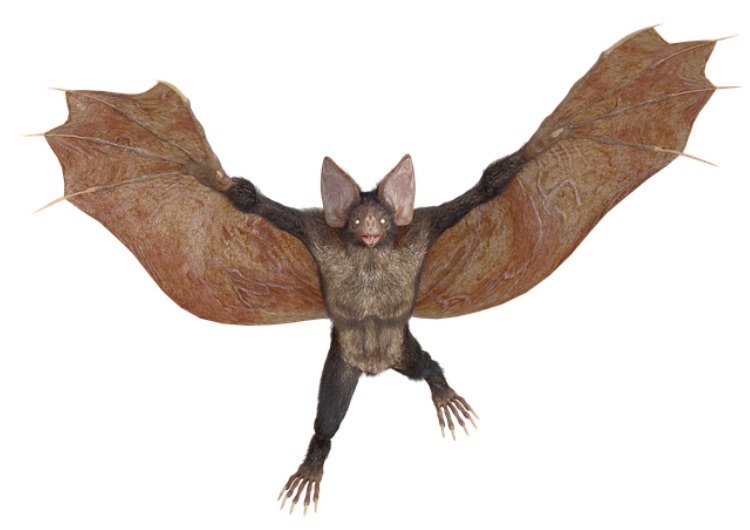
In 1751, an Abbot wrote a treatise on ghosts, vampires, and revenants.
Dom Calmet, or the Abbot Antoine Augustin Calmet, wrote the book in two volumes.
It was called “Treatise on the Apparitions of Spirits and on Vampires or Revenants of Hungary, Moravia, et al”
In it, Calmet described a vampire as a “revenant corpse” differentiated from incorporeal entities such as ghosts.

He conducted a kind of meta-analysis of studies on the subject of vampires. As he gathered plentiful reports on cases of vampirism, his attempts to discern false claims of vampires was rather challenging:
“…They see, it is said, men who have been dead for several months, come back to earth, talk, walk, infest villages, ill-use both men and beasts, suck the blood of their near relations, make them ill, and finally cause their death; so that people can only save themselves from their dangerous visits and their hauntings by exhuming them, impaling them, cutting off their heads, tearing out the heart, or burning them. These revenants are called by the name of oupires or vampires, that is to say, leeches; and such particulars are related of them, so singular, so detailed, and invested with such probable circumstances and such judicial information, that one can hardly refuse to credit the belief which is held in those countries, that these revenants come out of their tombs and produce those effects which are proclaimed of them.“
Calmet studied many well-known vampirism cases including that of Arnold Paole.
Dom Calmet also investigated the “Lettres juives” where an account of a vampire had been recorded in Hungary in 1732, seen by officers of the tribunal of Belgrade and an officer to the emperor’s troops at Graditz.
Although those letters were published as a novel, they were widely held as accurate and genuine by the people at that time.
Calmet also looked at judicial cases of dead people said to have returned from the grave to attack and drink the blood of living individuals.
One case of this happened in 1730. A soldier lodged at a peasant’s home in Hungary, and as he joined the homeowner and his family at the dinner-table, a man he didn’t know entered the house and silently joined them at their meal.
The peasant seemed frightened and was found dead the day after.
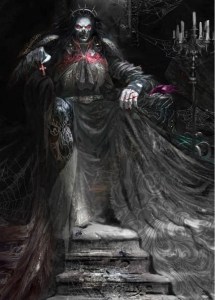
The soldier learned the father of the peasant had passed away and been interred in the ground a decade previously, and the family believed that the mysterious stranger who sat at the table with them had been the father’s body.
The soldier informed his regiment and the captain of the infantry conducted an investigation, along with other officers, a surgeon, and an auditor who recorded dispositions of the family (who affirmed the soldier’s report) and also received dispositions of all the village inhabitants.
The corpse of the father was exhumed and discovered to look like a man only recently dead, but with the blood circulation of a living body.
The corpse’s head was cut off and the body reinterred.
There was further information of another man, deceased for more than thirty years, who (his family members claimed) returned to his old house three times, during a family meal.
The first time, he sucked blood from his brother’s neck, the second time from one of his sons, and the third time from a servant.
All three of his victims had died straight after he fed on them.
Upon receiving this account, the commissary of the regiment took the man’s corpse out of its grave and found it to be in a similar condition to the first corpse, with the blood-flow of someone still alive.
He ordered his men to pierce the corpse’s temple with a large nail, then replace the body in its grave.
Calmet also looked at a report, written by a priest who obtained information about a town that was plagued by a vampiric entity three years before.
After journeying to that town to investigate, the priest learned that a vampire had visited many of the locals at night by emerging from a nearby graveyard to haunt them in their beds.
A mysterious Hungarian came to the town aroundabout this time and helped the people by setting a trap in the cemetery, which led to the vampire being decapitated, thereby curing the town of its suffering.
This particular tale was retold by Sheridan Le Fanu and adapted into the thirteenth chapter of the book Carmilla, which later inspired Bram Stoker’s Dracula.
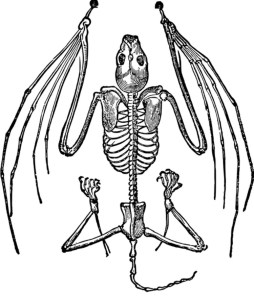
Dom Calmet’s book is a similar thing to “The Book of Nighthunting,” a sort of guide to the different species of Ghosts that Nighthunters have and consult frequently. Pages from it can be found here:
 Nightwalks