
“George strode behind Mr. Peterson’s desk and broke open the drawers, riffling through them and pocketing a couple of items. He moved around the benches, calm and methodical, turning on the gas taps one by one.
“Ready?” he said.
“But… what…?”
“Office now, yes? Let’s take a peek at those filing cabinets.”
He shut the door tightly behind them. Warren glanced back helplessly.
The doors leading to the staff room and the reception desk were locked. The only way to gain access was by typing a code into a keypad on the wall. George keyed in a string of numbers, the doors gave a sticky schunk, and they were in.
“Did Jake tell you the code, too?”
“What do you think? God, they never lock anything in here.” So saying, George pushed open the door to the office without needing to use the wrench. “Keep watch out here, in case.”
“What if somebody comes?”
“Click your fingers and run. Hide, even. I’ll be five minutes.”
Metallic, popping sounds, George grunting, then sounds of paper and folders being flipped through and things being thrown onto the carpet. Warren stood with his back to the wall next to a rubber plant and wished his brother would hurry up so they could go home. Something in the darkness moved, in the corner of his eye. He snapped his head around in time to catch a more fluid darkness peeling away from the glass set in the staff-room corridor doors. He forgot how to breathe. He clicked his fingers but they were too sweaty to create a noise.
At last, George emerged, the address they needed scrawled in biro on the back of his hand.
“Got it.” He looked at Warren’s face. “What’s the problem?”
“Th– th–” Warren pointed to the doors.
George crept along the wall and flattened himself against the wood. He took a quick glance through the glass. His eyes were wide, then he relaxed.
“Nothing there,” he sighed. “Numbskull.”
“But–”
“Come on. We need to get out of this garbage-heap.”
They managed to get as far as the fire exit without any problems or interruptions. Warren let the tension mounting in his jaw and shoulders go. Perhaps George was right. Nobody was there. It was too late at night. Even the Dark Rider had to sleep at some point, what with having a human shell to maintain–
A tall shadow melted out of the night and Mr. Rye stepped in front of the exit. He grinned at them with yellowed, wolfish teeth.
“It seems I have a couple of visitors,” he drawled. “Deary me.”
A Little Bit about Arthurian myth and Thomas Malory
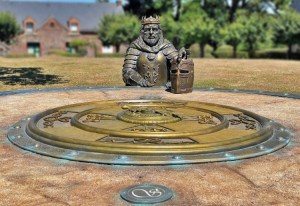
The Romano-British / Celtic legends of King Arthur are a significant part of Britain’s national mythology, containing a mix of the ancient Celtic tales and medieval Romance, featuring the strange sword Excalibur, the Lady of the Lake (Nimue), Merlin, the Knights of the Round Table including some well-known characters such as Lancelot, Gawain, and Galahad.
Another important figure is the witch named Morgan or Morgana Le Fey. In some stories, she is King Arthur’s half-sister.
In some of the stories, Arthur gains Excalibur by drawing it from an enchanted stone. In other versions of the tale, Merlin takes Arthur to a certain lake and the Lady of the Lake (perhaps a Celtic water spirit?) gives him the sword from under the water’s surface.
Many early histories of Britain mention an Arthur, suggesting he could have been a Celtic war leader who defended Britain against the Anglo-Saxons in the 400s or 500s AD. Many of the characters and adventures in Arthurian legend originated from older myths. Arthur might have a basis in the fabled Welsh priest-king Gwydion, and Merlin comes from “Myrddin” (said “Mirth-in”) who’s both a prophet and a madman in Welsh and Scottish stories.
Some scholars see similarities between King Arthur and ancient solar gods, who die and sink into the West to be reborn, as at the end of Arthur’s story arc he is killed in battle and sent to the western island of Avalon for his wounds to repair, with the expectation that he will return again when Britain needs him most.
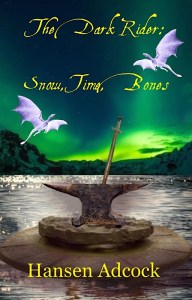
Many different versions of the old Arthurian myths were produced in the Middle Ages, e.g. Chretien de Troyes (who wrote poems to do with Arthur between 1155 and 1185), Wolfram von Eschenbach (who wrote the epic poem Parzifal in 1200), and Sir Thomas Malory, who wrote Le Morte d’Arthur (the Death of Arthur) in 1485. This was one of the most known versions of the story of King Arthur and was the basis for a lot of the more modern interpretations, including the book “The Dark Rider” by yours truly, available on Wattpad. It isn’t a retelling, but characters from Thomas Malory’s book appear in it, dusted off and given a new sheen of life, a few of them children and young teenagers as “The Dark Rider” is primarily aimed at young adults. Other influences went into the book, which I shall cover next week, along with my own lop-sided sense of humour and irony.
 Nightwalks